
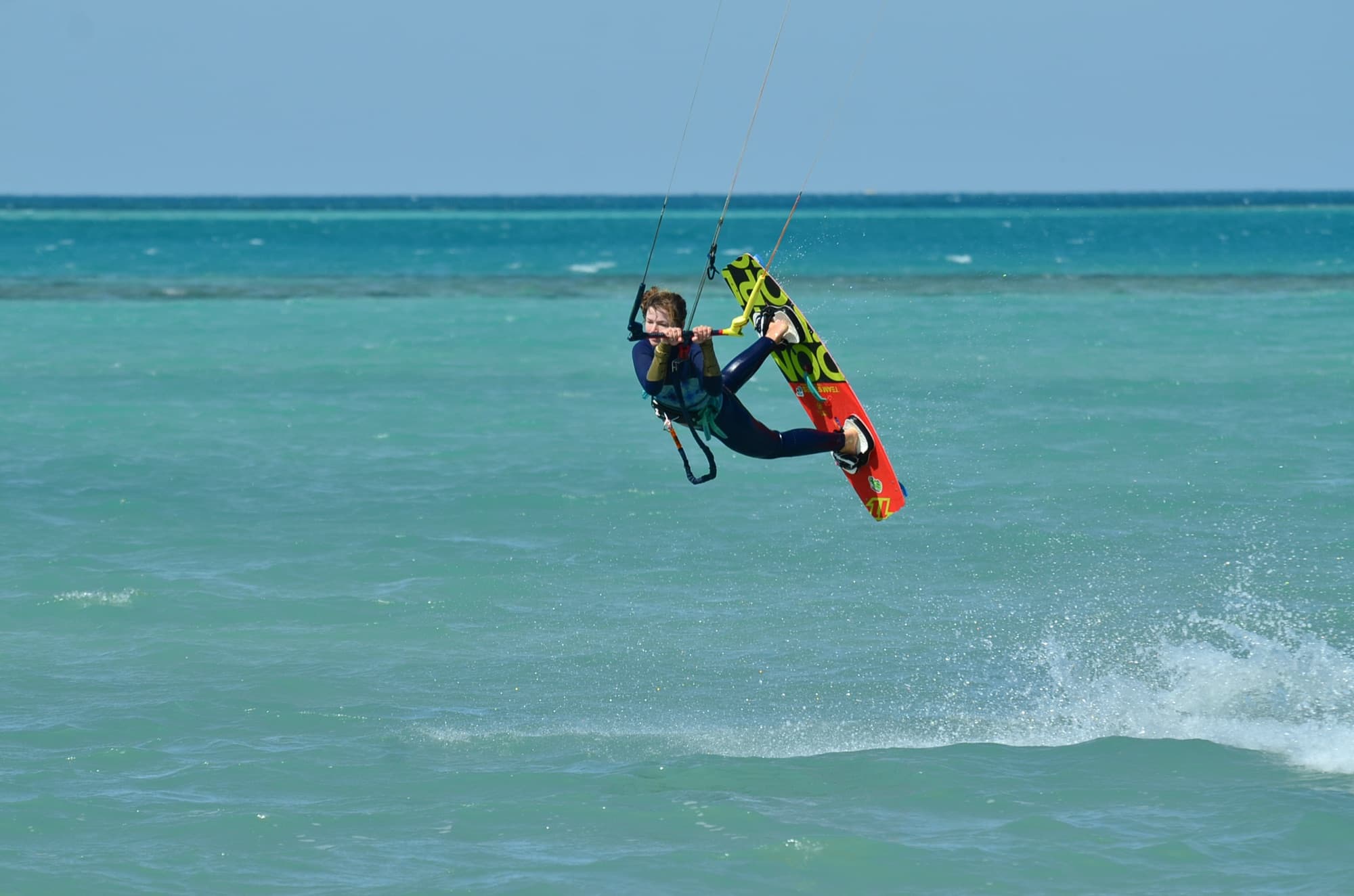
Рэли (raley) на кайте: классический мощный анхукед-трюкThe raley on a kite: the classic powerful unhooked trick
Рэли (raley) — анхукед-трюк, в котором тело и доска вытягиваются в одну линию параллельно воде. Со стороны это выглядит как «супермен», летящий горизонтально над поверхностью. Если бэкролл и фронтролл — первые шаги в мир вращений, то рэли — вход в настоящий вейкстайл: чисто исполненный, он даёт один из самых узнаваемых силуэтов в кайтсёрфинге и задаёт эталон того самого «плоского» стиля.The raley is an unhooked trick in which your body and board stretch into a single line parallel to the water. From the side it looks like a "superman" flying horizontally above the surface. If the backroll and frontroll are your first steps into the world of rotations, the raley is your entry into real wakestyle: executed cleanly, it gives you one of the most recognizable silhouettes in kiteboarding and sets the benchmark for that "flat" style riders chase.
9 июля 20269 July 2026 · JollyKite
Что нужно уметь до рэлиWhat you need before the raley
Рэли — не трюк «с нуля», а надстройка над уверенной анхукед-базой. Прежде чем пробовать, закройте три предусловия:The raley isn't a "from scratch" trick. It builds on an already confident unhooked base. Before you try it, cover three prerequisites:
- Сильный, контролируемый поп. Рэли живёт на энергии, которую вы собираете закантовкой и сбрасываете в момент отрыва. Без чёткого мощного попа тело не спроецируется вперёд — вы просто проедете по воде. Поп должен быть стабильным и предсказуемым.A strong, controlled pop. The raley lives on the energy you gather by edging and release at takeoff. Without a clean, powerful pop your body won't project forward — you'll just ride through the water. The pop has to be stable and predictable.
- Уверенный анхукед. Вы спокойно отстёгиваетесь от трапеции, катаетесь и держите тягу на руках без паники, чувствуете планку и управляете кайтом одними руками. Если анхукед пока даётся тяжело — рэли рано: вся тяга трюка пройдёт через ваш хват.Confident unhooked riding. You calmly release from the harness, ride and hold the pull on your hands without panic, feel the bar and control the kite with your hands alone. If unhooked riding is still hard, the raley is too early: all the trick's pull will go through your grip.
- Умение идти против ветра на скорости. Заход на рэли — это скорость и закантовка. После трюка вас сносит по ветру, и нужно уметь вернуться апвинд. Если вы теряете точку с каждой попыткой, вы быстро уедете к препятствиям или на мелководье — это и неудобно, и небезопасно.Riding upwind at speed. The raley approach is speed and edge. After the trick you get pushed downwind, and you need to ride back upwind. If you lose your spot with every attempt, you'll quickly drift toward obstacles or shallow water — inconvenient and unsafe.
Все три пункта про вас — переходите к технике. Какой-то проседает — сначала добейте его. С анхукед-трюками это особенно важно: они прощают меньше, чем прыжки с крюка.If all three describe you, move on to the technique. If one is weak, fix it first. With unhooked tricks this matters even more: they forgive less than hooked-in jumps.
Рэли по шагамThe raley step by step
Главная идея, которую держим в голове всё время: рэли — это проекция тела вперёд, а не подброс вверх. Вы не выпрыгиваете вверх — вы собираете энергию закантовкой и выстреливаете себя горизонтально, в линию с доской. Ключевой инструмент управления здесь — положение кайта. Вот последовательность:The main idea to keep in your head the whole time: the raley is a projection of the body forward, not a launch upward. You don't jump up — you gather energy by edging and fire yourself horizontally, in line with the board. The key tool for managing this is the kite's position. Here's the sequence:
- Заход с хорошей скоростью. Разгонитесь и идите ровно. Кайт держите невысоко, но безопасно — примерно на 10–11 часов (или, если читать как стрелки, на 1–2 часа от горизонта), не выше 12. Именно низкий кайт проецирует вас вперёд, а не подбрасывает вверх. Контринтуитивно, но «плоским» рэли делает как раз низкое положение кайта.Approach with good speed. Build up speed and ride steady. Keep the kite low but safe — at roughly 10–11 o'clock (or 1–2 o'clock read from the horizon), not above 12. A low kite is what projects you forward instead of throwing you up. It's counterintuitive, but it's exactly the low kite position that makes the raley "flat."
- Слегка увалитесь по ветру и отстегнитесь. Чуть уйдите носом по ветру, чтобы набрать давление и скорость, и отстегните трапецию (анхукед). Теперь вся тяга на ваших руках — вы перешли в режим вейкстайла.Bear off slightly downwind and unhook. Point the nose slightly downwind to build pressure and speed, and release the harness (unhook). Now all the pull is on your hands — you've switched into wakestyle mode.
- Откиньтесь назад и сильно закантуйтесь против ветра. Это сердце трюка. Резко закантуйтесь против ветра, откиньтесь корпусом назад и загрузите стропы — вы буквально натягиваете систему, собирая энергию. Чем чище и резче закантовка, тем мощнее сброс. Важно: именно откинуться назад, а не присесть.Lean back and edge hard against the wind. This is the heart of the trick. Edge sharply against the wind, lean your body back and load the lines — you're literally tensioning the system, gathering energy. The cleaner and sharper the edge, the more powerful the release. Important: actually lean back, don't squat down.
- Сбросьте кант и выстрелите телом вперёд. В момент сброса отпустите руки вперёд, выпрямите ноги и уведите их назад за собой — тело и доска вытягиваются в одну линию. Слегка тяните переднюю руку, чтобы тяга шла больше вперёд, чем вверх. Это и есть «супермен»: вы летите горизонтально над водой, вытянувшись в струну.Release the edge and fire your body forward. As you release, let your hands go forward, straighten your legs and take them back behind you — body and board stretch into a single line. Pull the front hand slightly so the pull goes more forward than up. This is the "superman": you fly horizontally above the water, stretched out like a string.
- Держите позицию, затем приземляйтесь. Плечи назад, бёдра вверх, тело вытянуто — задержите этот силуэт. На снижении потяните планку к ведущему колену, подтяните колени, направьте нос доски по ветру. Приземляйтесь мягко, на согнутые ноги, держа планку близко к себе. Затем проедьте по ветру, восстановите равновесие и пристегнитесь обратно в трапецию.Hold the position, then land. Shoulders back, hips up, body extended — hold that silhouette. On the way down, pull the bar toward your leading knee, tuck your knees, point the board's nose downwind. Land softly, on bent legs, keeping the bar close to you. Then ride off downwind, recover your balance and hook back into the harness.
Поначалу рэли ощущается одним слитным резким движением — это нормально. С каждой попыткой вы начнёте различать фазы: загрузку строп, сброс, проекцию, удержание позиции. Первые чистые рэли обычно получаются тогда, когда появляется ощущение, что вы летите вперёд и плоско, а не вверх.At first the raley feels like one fused, sharp movement — that's normal. With each attempt you'll start to tell the phases apart: loading the lines, the release, the projection, holding the position. The first clean raleys usually come when you get the feeling that you're flying forward and flat, not up.
Частые ошибкиCommon mistakes
Почти все сложности с рэли сводятся к нескольким типичным ошибкам. Зная их заранее, вы пройдёте трюк заметно безопаснее и быстрее:Almost all raley difficulties come down to a few typical mistakes. Knowing them in advance, you'll get through the trick noticeably more safely and faster:
- Кайт слишком высоко. Самая частая и самая опасная ошибка. Высокий кайт подбрасывает вверх, а не проецирует вперёд: вместо плоского «супермена» получается высокий неконтролируемый полёт. Держите кайт низко (около 10–11), но безопасно — это основа правильного рэли.Kite too high. The most common and most dangerous mistake. A high kite throws you up instead of projecting you forward: instead of a flat "superman" you get a high, uncontrolled flight. Keep the kite low (around 10–11) but safe — it's the foundation of a proper raley.
- Слишком долгая закантовка. Затянете фазу закантовки — потеряете поп: энергия утекает, и сброс получается вялым. Закантовка должна быть резкой и короткой: собрал и выстрелил, а не вытаскивал себя из воды.Edging too long. Drag out the edging phase and you lose the pop: the energy leaks away and the release comes out limp. The edge should be sharp and short — gather and fire, not haul yourself out of the water.
- Приседают вместо того, чтобы откинуться назад. Многие инстинктивно приседают, готовясь к отрыву. Рэли требует обратного: откинуться корпусом назад и загрузить стропы. Присед убивает проекцию тела вперёд.Squatting instead of leaning back. Many people instinctively squat as they prepare for takeoff. The raley demands the opposite: lean your body back and load the lines. Squatting kills the forward projection of the body.
- Тянут планку рано. Потянете планку к колену слишком рано — доска не успеет оторваться и выпрямиться в линию, и трюк не раскроется. Планку тянут только на снижении, когда позиция «супермена» уже набрана.Pulling the bar too early. Pull the bar toward your knee too early and the board won't have time to lift off and straighten into the line — the trick doesn't open up. You only pull the bar on the way down, once the "superman" position is set.
БезопасностьSafety
У рэли своя специфика рисков, и относиться к ней нужно серьёзно. Главная опасность простая: перетянутые рэли отправляют вас высоко и плоско — а это прямой путь к жёстким ударам спиной и голеностопом при приземлении. Чтобы этого избежать, держитесь нескольких правил:The raley has its own risk profile, and you need to take it seriously. The main danger is simple: over-powered raleys send you high and flat — a direct route to hard back and ankle impacts on landing. To avoid that, stick to a few rules:
- Слабый или умеренный ветер. Не учите рэли в сильный ветер. Чем сильнее ветер, тем выше риск, что трюк перетянет и отправит вас слишком высоко. Первые рэли — только в комфортный, умеренный ветер.Light or moderate wind. Don't learn the raley in strong wind. The stronger the wind, the higher the risk the trick over-powers and sends you too high. First raleys — only in comfortable, moderate wind.
- Кайт ниже 12. Правило и техническое, и защитное: низкий кайт проецирует вперёд, а не вверх. Кайт выше 12 — это и неправильный рэли, и повышенный риск высокого полёта.Kite below 12. This is both a technical and a protective rule: a low kite projects forward, not up. A kite above 12 is both a wrong raley and a higher risk of a high flight.
- Не перетягивайтесь. Не делайте первые рэли на максимум. Перетянутый трюк — главный источник травм. Лучше недокрутить и проехать, чем перетянуть и приземлиться плашмя с высоты.Don't over-power yourself. Don't do your first raleys at maximum. An over-powered trick is the main source of injuries. Better to under-rotate and ride out than to over-power and land flat from height.
- Простор без препятствий. Рэли сносит по ветру, и вам нужно много чистой воды — без других райдеров, лодок, буйков, мелководья и берега по ветру.Open space without obstacles. The raley pushes you downwind, and you need plenty of clean water — no other riders, boats, buoys, shallows or shore downwind.
- Инструктор и постепенность. Анхукед-трюки прощают меньше, чем прыжки с крюка. Ставьте рэли под контролем инструктора, с радиосвязью на воде. Эта статья — разбор техники, а не замена очному обучению.Instructor and gradual progression. Unhooked tricks forgive less than hooked-in jumps. Learn the raley under an instructor's supervision, with radio comms on the water. This article is a breakdown of the technique, not a replacement for in-person coaching.
Что дальшеWhat's next
Когда рэли стал стабильным — вы выходите в чистую плоскую позицию и мягко приземляетесь — открывается дорога в большой вейкстайл. Логичный следующий шаг — s-bend (эс-бенд): по сути это рэли с добавленным вращением, и фундаментом для него служит именно уверенный рэли. Освоив проекцию тела вперёд и контроль позиции в воздухе, вы переносите это ощущение в более сложные анхукед-трюки уже подготовленным.Once the raley is solid — you reach a clean, flat position and land softly — the road into bigger wakestyle opens up. The logical next step is the s-bend: essentially a raley with a rotation added, and a confident raley is exactly what it's founded on. Having mastered projecting your body forward and controlling the position in the air, you carry that feeling into more complex unhooked tricks already prepared.
Если вы ещё только осваиваете анхукед, начните с базы — первый анхукед. Энергия рэли строится на попе, так что не лишним будет разобрать поп в кайтсёрфинге. А чтобы понять, какие трюки и в каком порядке осваивать дальше, загляните в Школу трюков JollyKite. Готовы добавить к рэли вращение — вам сюда: s-bend на кайте.If you're still learning to ride unhooked, start with the basics — your first unhooked. The raley's energy is built on the pop, so it's worth breaking down the pop in kitesurfing. And to figure out which tricks to learn next and in what order, look into the JollyKite Trick School. Ready to add a rotation to your raley — head here: the s-bend on a kite.
Все мощные анхукед-трюки мы ставим под контролем инструктора, с радиосвязью на воде и в безопасной плоской мелкой воде Пак Нам Прана — это резко снижает риски при разучивании рэли. Подробнее о форматах и записи — на странице /obuchenie.We teach all powerful unhooked tricks under an instructor's supervision, with radio comms on the water and in the safe, flat, shallow water of Pak Nam Pran — which sharply lowers the risks while learning the raley. More on formats and booking is on the /obuchenie page.
Поедем кататься?Let's go riding?
Напишите нам даты и уровень — подскажем формат, подберём сезон под ваш ритм и посчитаем поездку под ключ. WhatsApp +66 98 367 9769, Telegram-бот @JollyKite_kite_bot.Send us your dates and level — we'll suggest a format, match the season to your rhythm and plan your trip end to end. WhatsApp +66 98 367 9769, Telegram bot @JollyKite_kite_bot.
Частые вопросыFAQ
Что такое рэли (raley) на кайте?What is a raley on a kite?+
Рэли — это классический мощный анхукед-трюк, в котором тело и доска вытягиваются в одну линию параллельно воде, образуя горизонтальный силуэт «супермен». Это эталон «плоского» вейкстайла: вы не подпрыгиваете вверх, а проецируете себя вперёд за счёт энергии, собранной закантовкой. Чисто исполненный рэли — один из самых узнаваемых трюков в кайтсёрфинге.The raley is a classic powerful unhooked trick in which your body and board stretch into a single line parallel to the water, forming a horizontal "superman" silhouette. It's the benchmark of "flat" wakestyle: you don't jump up, you project yourself forward using energy gathered by edging. A cleanly executed raley is one of the most recognizable tricks in kiteboarding.
Что нужно уметь до рэли?What do you need before the raley?+
Нужна прочная анхукед-база: сильный контролируемый поп, уверенное катание отстегнувшись от трапеции и умение идти против ветра на скорости. Рэли — надстройка над вейкстайл-базой, а не трюк с нуля. Если анхукед или поп пока нестабильны, сначала добейте их, а потом переходите к рэли.A solid unhooked base: a strong, controlled pop, confident riding released from the harness, and the ability to ride upwind at speed. The raley builds on a wakestyle base, it isn't a from-scratch trick. If your unhooked riding or pop are still unstable, fix them first, then move on to the raley.
Почему кайт нужно держать ниже 12?Why keep the kite below 12?+
Потому что положение кайта решает, куда полетит тело. Низкий кайт (около 10–11) проецирует вас вперёд и делает рэли плоским — таким, каким он и должен быть. Высокий кайт подбрасывает вверх: вместо красивого «супермена» получается высокий неконтролируемый полёт и повышенный риск жёсткого приземления. Поэтому кайт держат ниже 12 — это и техника, и безопасность.Because the kite's position decides where your body flies. A low kite (around 10–11) projects you forward and makes the raley flat — the way it should be. A high kite throws you up: instead of a clean "superman" you get a high, uncontrolled flight and a higher risk of a hard landing. So the kite stays below 12 — it's both technique and safety.
Почему доска не отрывается в рэли?Why doesn't the board lift off in the raley?+
Чаще всего потому, что планку тянут к колену слишком рано. Доска не успевает оторваться и выпрямиться в линию, и трюк не раскрывается. Планку тянут только на снижении, когда позиция уже набрана. Вторая частая причина — слишком долгая или вялая закантовка: теряется поп, и на проекцию не хватает энергии.Most often because the bar is pulled toward the knee too early. The board doesn't have time to lift off and straighten into the line, and the trick doesn't open up. You only pull the bar on the way down, once the position is set. The second common reason is an edge that's too long or too limp: you lose the pop and don't have enough energy for the projection.
Опасно ли делать рэли?Is the raley dangerous?+
У рэли своя специфика рисков: перетянутый трюк отправляет высоко и плоско, что грозит ударами спиной и голеностопом. Чтобы снизить риск, рэли учат в слабый или умеренный ветер, с кайтом ниже 12, не перетягиваясь, на просторе без препятствий и под контролем инструктора. При соблюдении этих правил рэли осваивается безопасно. Эта статья — разбор техники, а не замена очному обучению.The raley has its own risk profile: an over-powered trick sends you high and flat, risking back and ankle impacts. To lower the risk, the raley is learned in light or moderate wind, with the kite below 12, without over-powering, in open space free of obstacles and under an instructor's supervision. With these rules followed, the raley is learned safely. This article is a breakdown of the technique, not a replacement for in-person coaching.
Поедем кататься?Shall we go riding?
Напишите даты и уровень — посчитаем поездку под ключ и подберём формат.Tell us your dates and level — we’ll plan the whole trip.