
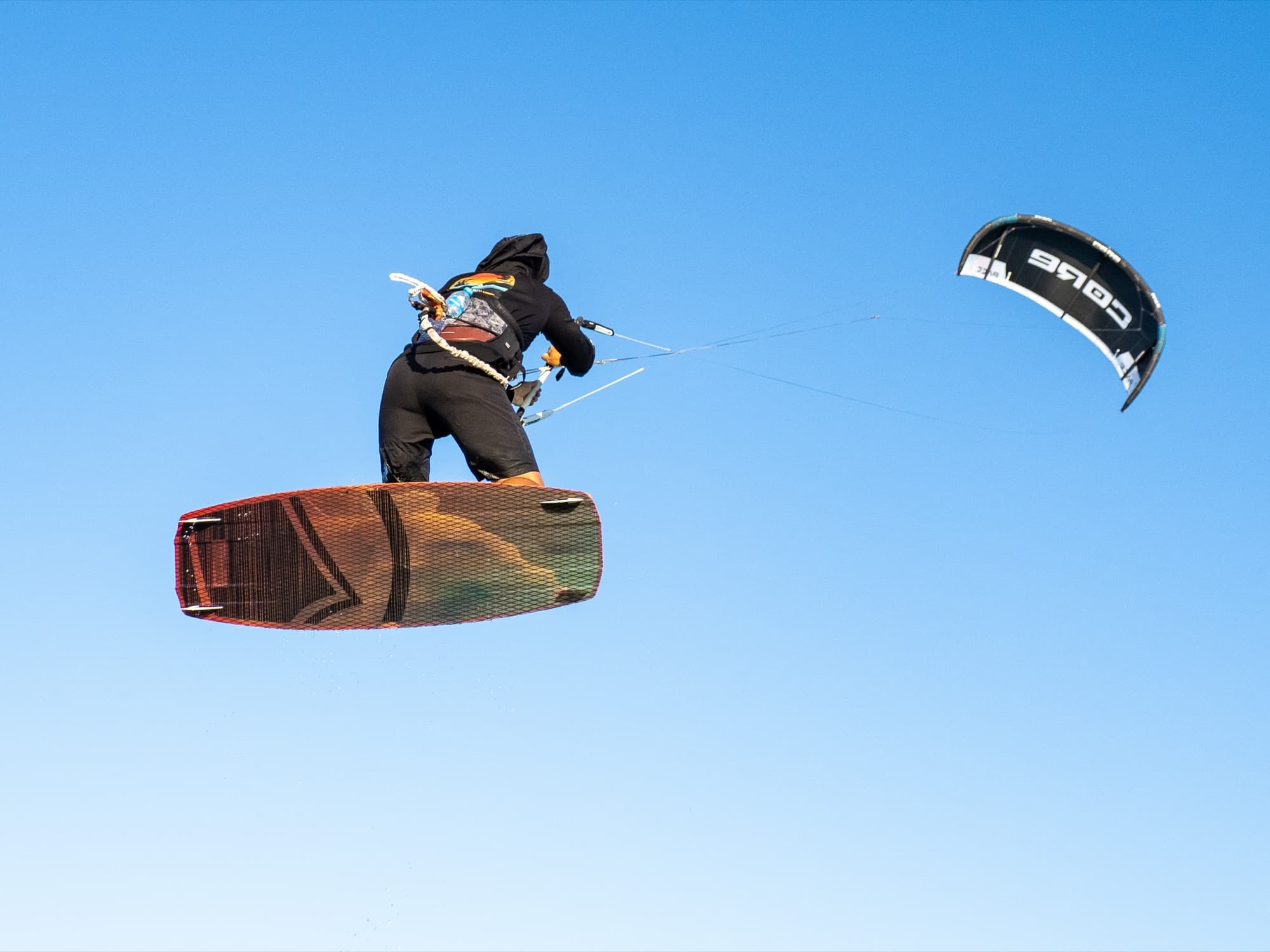
Первый кайтлуп (хукед): как закрутить кайт в петлюYour first kiteloop (hooked-in): how to send the kite through a loop
Кайтлуп — продвинутый и рискованный трюк. Со стороны он выглядит так, будто кайт подхватывает райдера и протаскивает его через половину неба — мощно, зрелищно, ни с чем не спутать. Потому к нему и хочется подойти раньше, чем стоит. Главная опасность — сильный боковой рывок или скоростной краш по ветру, особенно в сильный ветер и на больших мощных лупах. Подходить к нему имеет смысл только с уверенной базой и под присмотром инструктора, в слабый или умеренный ветер, на просторе и с небольших прыжков.A kiteloop looks like the kite scoops the rider up and drags them across half the sky — powerful, spectacular, instantly recognizable. And that's exactly why people want to try it earlier than they should. Let's be clear: the kiteloop is an advanced and risky trick. Its main danger is a hard sideways yank or a fast downwind crash, especially in strong wind and on big, powerful loops. So it only makes sense to approach it with a solid base and under an instructor's supervision, in light or moderate wind, with plenty of space, and from small jumps.
9 июля 20269 July 2026 · JollyKite
Что нужно уметь до кайтлупаWhat you need before the kiteloop
Кайтлуп — надстройка над уверенным прыжком, а не отдельный трюк с нуля. Прежде чем отправлять кайт в петлю, соберите прочную базу:The kiteloop is an add-on to a confident jump, not a separate trick from scratch. Before you send the kite into a loop, you should have a solid base:
- Уверенный стабильный прыжок и приземление. Вы отрываетесь предсказуемо, контролируете высоту и стабильно приземляетесь на доску носом по ветру, не падая. Кайтлуп добавляет к прыжку резкий рывок: если приземление пока «как повезёт», добавлять петлю рано.A confident, stable jump and landing. You take off predictably, control your height, and consistently land on the board, nose downwind, without falling. The kiteloop adds a sharp yank to the jump — if your landing is still "hit or miss," it's too early to add the loop.
- Хорошая закантовка. Чёткое ребро против ветра на заходе даёт энергию для высоты и помогает пройти рывок петли собранно. Слабая закантовка превращает луп в сорванный, неконтролируемый рывок.Good edging. A clean rail against the wind on the approach gives you energy for height and for taking the loop's yank in a compact stance. Weak edging turns the loop into a wrecked, uncontrolled jerk.
- Привычка к рывку. Прокрутите кайтлуп в бодидраге — без доски, в воде, в обе стороны. Так вы привыкаете к ощущению, как кайт протягивает вас по петле, без риска жёсткого приземления. Лучший способ познакомиться с рывком до того, как добавить высоту.Getting used to the yank. It helps to "spin" the kiteloop in a bodydrag first — without the board, in the water, both ways. This gets you used to the feeling of the kite pulling you through the loop, without the risk of a hard landing. It's the best way to meet the yank before you add height.
Все три пункта про вас — можно разбирать технику. Что-то проседает — сначала добейте базу: на кайтлупе цена ошибки выше, чем на прыжке.If all three describe you, you can study the technique. If something is weak, fix the base first: on a kiteloop the cost of a mistake is higher than on a jump.
Кайтлуп по шагамThe kiteloop step by step
Держите в голове главное: вы не дёргаете кайт наудачу, а сознательно ведёте его в полную петлю и удерживаете протяжку до конца. Последовательность такая:Keep the main thing in mind: you don't "yank and hope" — you deliberately drive the kite into a full loop and hold the pull to the end. Here's the sequence:
- Заход как на небольшой прыжок. Разгонитесь и закантуйтесь против ветра. Кайт пошлите примерно от 11 или 1 часа к 12 (зениту) — как на спокойный, невысокий прыжок. Начинать стоит именно с небольших прыжков: меньше высота — мягче последствия любой ошибки.Approach as for a small jump. Build up speed and edge against the wind. Send the kite from about 11 or 1 o'clock toward 12 (the zenith) — as for a calm, low jump. Start specifically with small jumps: less height means softer consequences for any mistake.
- Прыжок и протяжка за заднюю руку. Сделайте отрыв. В момент перед пиком прыжка резко потяните за заднюю руку (back hand) и держите — пока кайт полностью не пройдёт петлю и не начнёт снова набирать вверх. Не «дёрнул и отпустил», а именно протянул и удержал: кайт должен пройти весь оборот. Отпустите протяжку рано — луп не докрутится, а рывок выйдет грубым.Pop and pull the back hand. Take off. In the moment before the peak of the jump, sharply pull the back hand and hold — until the kite completely passes through the loop and starts climbing again. Not "yank and release," but pull and hold: the kite must complete the whole rotation. Release the pull early and the loop won't come round, and the yank will be harsh.
- Соберите корпус и следите за кайтом. Держите корпус собранным (core tight) и не теряйте кайт из виду — ведите его взглядом всю петлю. Собранное тело помогает пройти рывок и не разложиться в воздухе, а взгляд подсказывает, когда кайт завершает оборот.Stay compact and watch the kite. Keep your core tight and don't lose sight of the kite — track it with your eyes as it goes through the loop. A compact body helps you take the yank without coming apart in the air, and watching the kite tells you when it's completing the rotation.
- Приземление. Кайт прошёл петлю и снова тянет вверх — готовьтесь садиться: доска плоско, носом по ветру, удар поглощаете ногами. Чем спокойнее и ниже был прыжок, тем мягче приземление.Landing. Once the kite has passed the loop and is pulling up again, get ready to land: board flat, nose downwind, absorbing the impact with your legs. The calmer and lower the jump, the softer the landing.
Поначалу всё происходит быстро, а рывок кажется резким. На первых попытках в правильных условиях это нормально. Если вы заводите петлю вовремя и держите протяжку, с каждым разом рывок становится плавнее и предсказуемее, а приземление — мягче. Ради этой плавности кайтлуп и начинают учить в слабый или умеренный ветер и с небольших прыжков, а не наоборот.At first everything happens fast and the yank feels sharp. That's normal on the first attempts in the right conditions. With each try, if you send the loop on time and hold the pull, the yank becomes smoother and more predictable, and the landing softer. It's precisely for this smoothness that people start learning the kiteloop in light or moderate wind and from small jumps, not the other way around.
Частые ошибкиCommon mistakes
Большинство проблем с кайтлупом сводится к трём типичным ошибкам. Все они дают одно и то же: грубый рывок и жёсткое приземление.Most kiteloop problems come down to a few typical mistakes. They all lead to the same thing: a harsh yank and a hard landing.
- Заводят петлю позже зенита. Кайт послали в луп слишком поздно, когда стропы уже потеряли натяжение: он проваливается, а потом дёргает резко и неприятно. Петля должна начинаться вовремя, пока натяжение строп есть.Sending the loop later than the zenith. If you send the kite into the loop too late — when the lines have already lost tension — the kite "drops" and then yanks sharply and unpleasantly. The loop should begin on time, while there's still line tension.
- Недокрут (полупетля). Чаще всего заднюю руку отпускают слишком рано. Кайт проходит половину петли, не завершает оборот и не выводит вас наверх — отсюда срыв и жёсткое приземление. Протяжку держат, пока кайт не пройдёт петлю полностью.Under-rotation (a half-loop). The most common cause is releasing the back hand too early. The kite only passes half the loop, doesn't complete the rotation and doesn't bring you back up — hence the wipeout and hard landing. The pull must be held until the kite completes the full loop.
- Кантуются против петли. Закантовались в сторону, противоположную направлению лупа, — и кайт рвёт вас против движения. Рывок выходит особенно грубым. Закантовка и направление петли работают вместе, а не друг против друга.Edging against the loop. If you edge in the direction opposite to the loop, the kite tears you "against" the movement — the yank is especially harsh. Edging and loop direction should work together, not against each other.
Итог у всех трёх одинаковый, потому их и отрабатывают в безопасных условиях, где ошибка обходится дёшево.Notice: all three mistakes lead to the same thing — a sharp, uncontrolled yank. That's why they're worked on first in safe conditions, where the cost of a mistake is minimal.
Безопасность: где и как учитьSafety: where and how to learn
Кайтлуп — тот трюк, где условия и контроль важнее смелости. Принципы, на которых стоит начинать:The kiteloop is the kind of trick where conditions and control matter more than "bravery." A few principles to start on:
- Слабый или умеренный ветер. Главная опасность кайтлупа — сильный боковой рывок или скоростной краш по ветру. В сильный ветер и на больших мощных лупах он многократно жёстче. Первые попытки — только в спокойный ветер.Light or moderate wind. The main danger of a kiteloop is a hard sideways yank or a fast downwind crash. In strong wind and on big, powerful loops it's many times harsher. So the first attempts are only in calm wind.
- Просторное место и небольшие прыжки. Запас пространства вниз по ветру и невысокие прыжки делают любую ошибку дешевле: меньше скорость, меньше высота, мягче последствия.Open space and small jumps. A buffer of space downwind and low jumps mean any mistake costs less: less speed, less height, softer consequences.
- Бодидраг до доски. Прокрутить луп в бодидраге в обе стороны — лучший способ привыкнуть к рывку без риска жёсткого приземления.Bodydrag before the board. "Spinning" the loop in a bodydrag both ways is the best way to get used to the yank without the risk of a hard landing.
- Инструктор и радиосвязь. На кайтлупе обратная связь в реальном времени особенно ценна: инструктор видит со стороны момент протяжки и направление закантовки и не даст закрепить опасную ошибку. Текст этого не заменит.Instructor and radio comms. On a kiteloop, real-time feedback is especially valuable: the instructor sees the moment of the pull, the edging direction from the outside, and helps you avoid locking in a dangerous mistake. Text can't replace that.
Мы в JollyKite ставим продвинутые трюки в плоской мелкой воде Пак Нам Прана, с радиосвязью на воде и индивидуальным разбором — это резко снижает риски при разучивании кайтлупа. Если вы только подбираетесь к высоте и мягкому приземлению, начните с базы: как прыгать выше и мягче приземляться. И освежите тему лиша и безопасности кайта — на лупах это особенно важно.At JollyKite we teach advanced tricks in the flat, shallow water of Pak Nam Pran, with radio comms on the water and individual coaching — which sharply lowers the risks while learning the kiteloop. If you're still working toward height and a soft landing, start with the basics: how to jump higher and land softer. And it's worth refreshing the topic of the leash and kite safety — on loops it matters especially.
Что дальшеWhat's next
Хукед-кайтлуп стал стабильным — вы заводите петлю вовремя, держите протяжку и мягко приземляетесь? Открывается следующая ветка. Логичный прогресс выглядит так:Once the hooked-in kiteloop is solid — you send the loop on time, hold the pull and land softly — the next branch opens up. The logical progression looks like this:
хукед-кайтлуп → даунлуп на приземлении → анхукед-трюки.hooked-in kiteloop → downloop on the landing → unhooked tricks.
Сначала добавляется даунлуп — петля вниз, которая подхватывает вас на приземлении и делает его мягче. Затем — анхукед-трюки, где вы отстёгиваетесь от трапеции и работаете с кайтом иначе. И то и другое — отдельные большие темы, к которым переходят уже с уверенным базовым кайтлупом, а не вместо него.First comes working with the downloop — a downward loop that helps catch you on the landing and make it softer. Then — the world of unhooked tricks, where you unhook from the harness and work the kite differently. Both are separate big topics you move on to with a confident basic kiteloop already in place, not instead of it.
Какие трюки и в каком порядке осваивать, разложено в Школе трюков JollyKite. А все трюки с лупами и отрывом мы ставим только под контролем инструктора. Подробнее о форматах и записи — на странице /obuchenie.To figure out which tricks to learn next and in what order, look into the JollyKite Trick School — the whole progression is laid out there. And we teach all loop and takeoff tricks only under an instructor's supervision. More on formats and booking is on the /obuchenie page.
Поедем кататься?Let's go riding?
Напишите нам даты и уровень — подскажем формат, подберём сезон под ваш ритм и посчитаем поездку под ключ. WhatsApp +66 98 367 9769, Telegram-бот @JollyKite_kite_bot.Send us your dates and level — we'll suggest a format, match the season to your rhythm and plan your trip end to end. WhatsApp +66 98 367 9769, Telegram bot @JollyKite_kite_bot.
Частые вопросыFAQ
Что нужно уметь до кайтлупа?What do you need before a kiteloop?+
Нужна прочная база: уверенный стабильный прыжок и приземление, хорошая закантовка против ветра. Полезно заранее «прокрутить» кайтлуп в бодидраге в обе стороны — без доски, в воде, — чтобы привыкнуть к рывку без риска жёсткого приземления. Кайтлуп — это надстройка над прыжком, а не трюк с нуля: если приземление пока нестабильно, сначала добейте прыжок.A solid base: a confident, stable jump and landing, and good edging against the wind. It helps to "spin" the kiteloop in a bodydrag both ways first — without the board, in the water — to get used to the yank without the risk of a hard landing. The kiteloop is an add-on to the jump, not a trick from scratch: if your landing is still unstable, fix the jump first.
В какой момент тянуть за заднюю руку?When do you pull the back hand?+
В момент перед пиком прыжка. Резко потяните за заднюю руку (back hand) и держите протяжку, пока кайт полностью не пройдёт петлю и не начнёт снова набирать вверх. Главное — не отпустить рано: кайт должен завершить весь оборот, иначе будет недокрут и жёсткий рывок.In the moment before the peak of the jump. Sharply pull the back hand and hold the pull until the kite completely passes through the loop and starts climbing again. The key is not to release early: the kite must complete the whole rotation, otherwise you get under-rotation and a harsh yank.
Почему кайтлуп даёт жёсткий рывок?Why does a kiteloop give a harsh yank?+
Чаще всего из-за трёх ошибок: петлю завели позже зенита (стропы потеряли натяжение, кайт дёргает резко), недокрут (заднюю руку отпустили рано, кайт прошёл только полпетли) или закантовались против петли (кайт рвёт «против» движения). Все три дают грубый рывок и жёсткое приземление. Лечится своевременным заводом петли, удержанием протяжки до конца и согласованной закантовкой.Most often because of three mistakes: sending the loop later than the zenith (the lines lose tension and the kite yanks sharply), under-rotation (the back hand released early, the kite only did half the loop), or edging against the loop (the kite tears you "against" the movement). All three give a harsh yank and a hard landing. The fix is timely loop initiation, holding the pull to the end, and coordinated edging.
Опасен ли кайтлуп?Is the kiteloop dangerous?+
Да, это продвинутый и рискованный трюк. Главная опасность — сильный боковой рывок или скоростной краш по ветру, особенно в сильный ветер и на больших мощных лупах. Поэтому учить его стоит только с уверенной базой, под присмотром инструктора, в слабый или умеренный ветер, на просторе и с небольших прыжков. Статья не заменяет очное обучение.Yes, it's an advanced and risky trick. The main danger is a hard sideways yank or a fast downwind crash, especially in strong wind and on big, powerful loops. So you should learn it only with a solid base, under an instructor's supervision, in light or moderate wind, with plenty of space, and from small jumps. This article does not replace in-person lessons.
В какой ветер учить кайтлуп?In what wind should you learn the kiteloop?+
В слабый или умеренный. В сильный ветер и на больших лупах рывок и последствия краша многократно жёстче. Первые попытки делают в спокойный ветер, на просторе и с небольших прыжков — так любая ошибка обходится дешевле.In light or moderate wind. In strong wind and on big loops the yank and the consequences of a crash are many times harsher. The first attempts are made in calm wind, with plenty of space, and from small jumps — that way any mistake costs less.
Поедем кататься?Shall we go riding?
Напишите даты и уровень — посчитаем поездку под ключ и подберём формат.Tell us your dates and level — we’ll plan the whole trip.