
Опасен ли кайтсёрфинг? Честно о рисках и безопасностиIs kitesurfing dangerous? An honest look at the risks and safety
«Это же опасно?» — вопрос, который мы слышим чаще любого другого. И он честный: со стороны и правда кажется, что человека тащит по воде огромное крыло, время от времени подбрасывает в воздух, и всё это на грани. Давайте разберёмся спокойно и по фактам — без нагнетания, но и без приукрашивания."Isn't it dangerous?" is probably the most common question we hear from people just starting to consider kitesurfing. And it's a fair question: from the outside it looks like a person is being dragged across the water by a huge wing, sometimes launched into the air, all of it a little on the edge. Let's look at it calmly and by the facts — no scaremongering, but no sugar-coating either.
27 июня 202627 June 2026 · JollyKite
Что говорят данныеWhat the data says
Большинство травм в кайтсёрфинге — лёгкие. Этот факт снимает половину необоснованного страха. Речь не о тяжёлых переломах и катастрофах, а о том, что случается в любом спорте на природе.Let's start with the key fact that removes half of the unfounded fear: most kitesurfing injuries are minor. Not serious fractures or disasters, but the kind of thing that happens in any nature-contact sport.
Структура травм выглядит примерно так:If you look at the breakdown of injuries, the picture is roughly this:
- Порезы и ссадины — около 23–25% случаев. Чаще всего о доску, о ракушки и камни на мелководье, о стропы.Cuts and grazes — about 23–25% of cases. Most often from the board, from shells and rocks in shallow water, or from the lines.
- Ушибы — около 20%. Падения, удар о воду на скорости, контакт с собственным снаряжением.Bruises — about 20%. From falls, contact with the water at speed, or with your own gear.
- Растяжения — около 17%. В основном голеностоп и колено: неудачные приземления, резкие нагрузки.Sprains — about 17%. Mainly ankle and knee, from awkward landings and sudden loads.
Три самые частые категории — то, с чем сталкивается почти любой активный человек. Серьёзные травмы тоже бывают, но их меньшинство, и чаще они связаны с прыжками и трюками, а не с базовым катанием.So the three most common categories are things almost any active person runs into. Serious injuries do happen, but they're a minority and, importantly, are more often linked to jumps and tricks rather than basic riding.
Теперь про частоту. По имеющимся оценкам, травмы случаются примерно 7–10,5 раза на 1000 часов катания. Для ориентира: 1000 часов на воде — это годы регулярных сессий любителя. И вот что важнее всего: у новичков с опытом меньше года частота заметно выше — около 17,5 на 1000 часов.Now about frequency. By available estimates, injuries occur at a rate of roughly 7–10.5 per 1,000 hours of riding. To put that in perspective: 1,000 hours is a lot of time on the water — years of regular sessions for an amateur. But here's what really matters: for beginners with less than a year of experience the rate is noticeably higher — around 17.5 per 1,000 hours.
Этот разрыв — главный вывод раздела. Риск в кайтсёрфинге не постоянная величина: он падает с опытом. Самый уязвимый период — первые месяцы, когда движения ещё не дошли до автоматизма, а чувство ветра только формируется. Логичнее всего пройти его с инструктором, а не методом проб и ошибок.That gap is the main takeaway of this section. Risk in kitesurfing isn't fixed — it falls with experience. The most vulnerable period is the first few months, when movements aren't yet automatic and your feel for the wind is only forming. And that period is exactly the one that makes most sense to go through with an instructor rather than alone by trial and error.
Отчего случаются проблемыWhat actually causes problems
Разбор причин инцидентов даёт неприятный, но обнадёживающий вывод: почти всегда виноват человеческий фактор, а не «опасность спорта как такового». На человеческий фактор можно влиять.If you break down the causes of incidents, an uncomfortable but reassuring thing emerges: in the vast majority of cases the culprit isn't "the danger of the sport itself" but the human factor. And the human factor is something you can influence.
Причины по имеющимся оценкам распределяются так:Here's how the causes break down by available estimates:
- Ошибки райдера, часто из-за усталости — до ~77%. Абсолютный лидер. Уставший человек медленнее реагирует, хуже читает порывы, переоценивает себя, поздно сбрасывает кайт. Большинство проблем начинается со слов «ну ещё один последний галс».Rider errors, often from fatigue — up to ~77%. The clear leader. A tired person reacts slower, reads gusts worse, overestimates themselves and depowers the kite too late. Most problems start with "just one more last run".
- Нехватка опыта — около 16%. Тот самый разрыв из предыдущего раздела: новичок ещё не предугадывает поведение кайта и ветра.Lack of experience — about 16%. The very gap from the previous section: a beginner can't yet anticipate how the kite and wind will behave.
- Потеря контроля над кайтом — около 11%. Перетянутый кайт, неожиданный порыв, заход в зону сильной тяги.Loss of control over the kite — about 11%. An overpowered kite, an unexpected gust, riding into a zone of strong pull.
- Отказ снаряжения — около 3%. Редкость. Современное железо надёжно и почти никогда не становится причиной серьёзных проблем.Equipment failure — about 3%. A rarity. Modern gear is reliable, and hardware failures are almost never the cause of serious problems.
Отдельно стоит выделить порывистый ветер и высокие прыжки. Самые серьёзные травмы статистика связывает именно с прыжками и трюками — особенно в нестабильный ветер, когда кайт резко «выстреливает» тягой. Базовое катание по плоской воде в ровный ветер — совсем другая история.Worth singling out separately are gusty wind and big jumps. Statistically, the most serious injuries happen precisely in jumps and tricks, especially in unstable, gusty wind when the kite can suddenly "shoot" with power. Basic riding on flat water in steady wind is a completely different story in terms of risk.
Вывод простой: главные факторы риска — усталость, спешка, неопытность и неуважение к условиям. Ни один из них не неизбежен. Обучение, дисциплина и трезвый выбор момента для выхода на воду убирают почти всё.The conclusion of this section is simple and important: the main risk factors are fatigue, haste, inexperience and disrespect for the conditions. None of them is inevitable. All of them can be influenced through training, discipline and choosing the right moment to go on the water.
Почему сейчас безопаснее, чем раньшеWhy it's safer now than before
Страшные истории про кайтсёрфинг почти всегда родом из начала 2000-х. Снаряжение тогда было сырым: кайты плохо сбрасывались, аварийного отстёгивания толком не существовало, и «улёт» неуправляемого крыла оставался реальной проблемой. С тех пор индустрия прошла огромный путь.If you've heard scary kitesurfing stories somewhere, there's a good chance they date from the early 2000s. Back then the gear really was raw: kites depowered poorly, emergency release systems barely existed, and a runaway uncontrolled wing was a real problem. Since then the industry has come a long way.
Сегодня любой современный кайт несёт продуманную систему безопасности с двумя уровнями сброса:Today every modern kite has a well-thought-out safety system with two levels of release:
- Депауэр на планке. Отпустите планку — кайт меняет угол атаки и теряет бóльшую часть тяги. Это первый и самый быстрый рефлекс: рука разжимается, крыло «сдувается».Depower on the bar. Just let go of the bar and, by changing the angle of attack, the kite loses most of its pull. This is the first, fastest reflex: your hand simply opens and the wing "deflates".
- Квик-релиз на трапеции. Если этого мало, толкните квик-релиз от себя одной рукой — кайт отстёгивается от трапеции, «флагуется» на одной стропе и перестаёт тянуть.Quick release on the harness. If that's not enough, with a push-away motion of one hand you activate the quick release — and the kite detaches from the harness, "flags out" on a single line and stops pulling.
Это стандарт, а не опция. Современный кайт спроектирован так, чтобы вы выключили тягу за доли секунды, одной рукой, даже в стрессе. По сравнению со снаряжением начала 2000-х — огромный шаг вперёд и одна из главных причин, почему кайтсёрфинг сегодня заметно предсказуемее.This is standard, not an option. A modern kite is designed so you can kill the power in a fraction of a second, with one hand, even under stress. Compared with early-2000s gear this is a huge step forward — and one of the main reasons kitesurfing today is noticeably more predictable and safer.
Как устроены система безопасности, лиш, квик-релиз и флагование, мы разобрали отдельно: «Лиш и система безопасности кайта». Эту базу важно понять и отработать с самого начала.We've written separately and in detail about how the safety system, leash, quick release and flagging out work: "Kite leash and safety system". That's the foundation it's important to understand and drill from the very start.
Что снижает риск: чек-листWhat reduces the risk: a checklist
Почти все факторы риска управляемы. Собрали в один список то, что реально делает кайтсёрфинг безопаснее.The good news is that almost all risk factors are manageable. Here's what actually makes kitesurfing safer, gathered into one list.
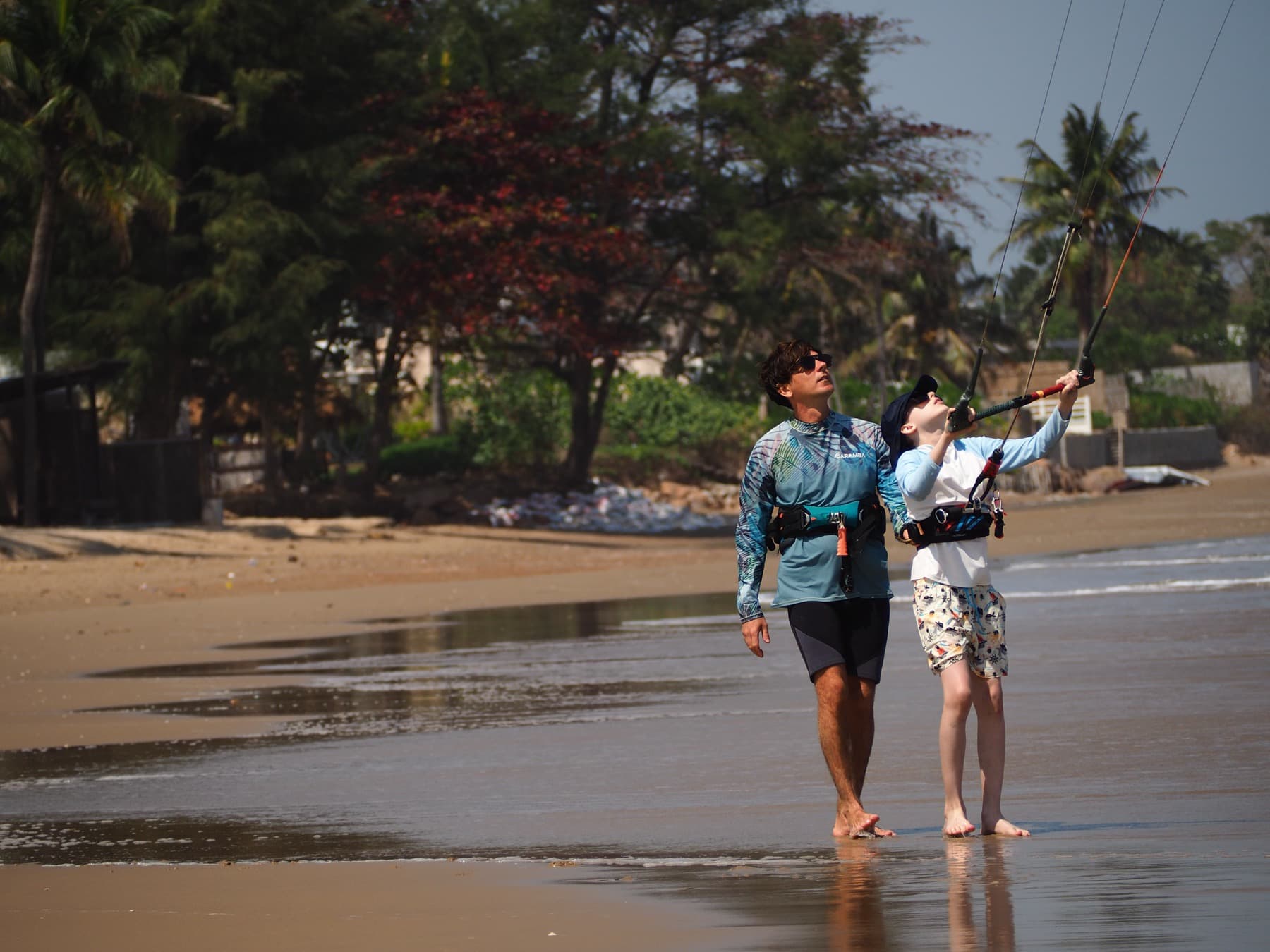
- Учитесь с инструктором. Первые месяцы — самый уязвимый период, и пройти его под присмотром разумнее, чем в одиночку. Инструктор страхует, ставит правильные привычки и не даёт наделать типичных ошибок новичка.Learn with an instructor. The most vulnerable period is the first few months, and it makes more sense to go through it supervised than alone. An instructor keeps you safe, builds the right habits and prevents typical beginner mistakes.
- Отработайте квик-релиз и самоспасение до автоматизма. Рука должна знать движение сброса заранее. Разбираться в матчасти во время аварии — поздно.Drill the quick release and self-rescue to reflex. Your hand should know the release motion in advance. Learning the gear during an emergency is too late.
- Катайтесь в подходящих условиях. Избегайте оффшорного ветра (он дует от берега в море): при поломке или усталости он унесёт вас от берега. Избегайте сильных порывов и толпы на воде.Ride in suitable conditions. Avoid offshore wind (blowing from the shore out to sea) — if you break down or tire, it carries you away from the beach. Avoid strong gusts and crowds on the water.
- Не перетягивайтесь по размеру кайта. Размер под ваш вес и силу ветра — половина безопасности. Перетянутый кайт — частая причина потери контроля.Don't overpower yourself on kite size. The right size for your weight and the wind strength is half of safety. An overpowered kite is a common cause of losing control.
- Шлем и жилет — когда уместно. На обучении, в волне, на мелкой воде с твёрдым дном шлем и плавучий жилет лишними не будут.Helmet and impact vest — when appropriate. During lessons, in waves, and in shallow water with a hard bottom, a helmet and a buoyancy vest won't go amiss.
- Идите по шагам, не переоценивайте себя. Сначала уверенное базовое катание, потом прыжки и трюки. Большинство серьёзных травм — попытка перепрыгнуть ступень.Don't overestimate yourself — progress step by step. Build up gradually: confident basic riding first, then jumps and tricks. Most serious injuries are an attempt to skip a step.
- Следите за прогнозом. Проверяйте ветер заранее, не выходите в шквалистые условия, не катайтесь до изнеможения.Watch the forecast. Check the wind in advance, don't go out in unstable, squally conditions, and don't ride yourself to exhaustion.
- Держите дистанцию от людей, кайтов, лодок и препятствий — и на берегу, и на воде.Keep your distance from people, kites, boats and obstacles — on the beach and on the water.
Ничего из этого не требует героизма. Дисциплина и здравый смысл — вот что превращает «опасный спорт» в управляемое и кайфовое занятие.None of this takes heroism. It's just discipline and common sense — and they're exactly what turns a "dangerous sport" into a manageable, hugely enjoyable one.
Почему важно начинать с инструктором и на правильном спотеWhy it matters to start with an instructor and at the right spot
Всё сказанное сводится к одной мысли: риск в кайтсёрфинге — это в основном риск неопытности и неподходящих условий. А значит, два решения снимают бóльшую часть проблем ещё на старте: учиться с инструктором и начинать на правильном споте.If we boil all of the above down to one thought, it's this: risk in kitesurfing is mostly the risk of inexperience and wrong conditions. Which means two decisions remove most of the problems right at the start — learning with an instructor and starting at a suitable spot.
С инструктором вы проходите самый уязвимый период под присмотром. Не нужно гадать, какой размер кайта взять, как пристегнуть лиш и что делать при порыве, — рядом человек, который страхует и ставит правильные рефлексы. Снаряжение на обучении проверено и настроено, система безопасности исправна. Это резко сокращает ту самую «новичковую» частоту травм. Как устроено обучение с нуля, мы описали отдельно: «Обучение кайтсёрфингу с нуля».With an instructor you go through the most vulnerable first period supervised. You don't have to guess on your own which kite size to take, how to attach the leash or what to do in a gust — there's someone next to you keeping you safe and building the right reflexes. The gear during lessons is checked and tuned, the safety system is sound. This sharply cuts that "beginner" injury rate. We've described how learning from scratch works separately: "Learning to kitesurf from scratch".
Со спотом та же логика: место для первых шагов должно прощать ошибки. Пак Нам Пран как раз такой. Плоская мелкая вода — можно встать на дно и спокойно повторить движение. Много простора без толпы. Сайд-шор ветер (вдоль берега) не уносит в открытое море. Цена ошибки падает — а на старте ошибки неизбежны. Какой ветер и когда здесь бывает, читайте в материале «Сезон ветров в Хуа Хине и Пранбури по месяцам».The same goes for the spot. A place for your first steps should forgive mistakes. Pak Nam Pran is exactly that: flat, shallow water where you can stand on the bottom and calmly repeat a movement, plenty of space without crowds, and side-shore wind (along the beach) that doesn't carry you out to the open sea. This greatly lowers the cost of a mistake — and at the start mistakes are inevitable. For what wind there is here and when, read "Wind season in Hua Hin and Pranburi month by month".
Сложите одно с другим — правильное обучение плюс правильный спот — и страшный на словах спорт превращается в спокойное освоение нового навыка.Put the two together — proper training plus the right spot — and a sport that sounds frightening turns into a calm, controlled way of learning a new skill.
Поедем кататься?Let's go riding?
Страх есть, но интерес сильнее? Это нормально. Напишите нам свой вес, уровень и желаемые даты: подберём снаряжение под ветер, начнём на мелкой плоской воде, отработаем систему безопасности и пойдём по шагам, без спешки и геройства. Запись и цены — на странице /obuchenie, связь — на /kontakty. WhatsApp +66 98 367 9769, Telegram-бот @JollyKite_kite_bot.If the fear is there but the interest is stronger — that's normal and right. Send us your weight, level and preferred dates: we'll match the gear to the wind, start on flat shallow water, drill the safety system and go step by step, without haste or heroics. Booking and prices are on the /obuchenie page, contact us via /kontakty. WhatsApp +66 98 367 9769, Telegram bot @JollyKite_kite_bot.
Частые вопросыFAQ
Опасен ли кайтсёрфинг для новичка?Is kitesurfing dangerous for a beginner?+
Риски есть, и у новичков они объективно выше: по оценкам, в первый год частота травм около 17,5 на 1000 часов против 7–10,5 у более опытных райдеров. Но почти все эти риски управляемы. Самый уязвимый период — первые месяцы, и логичнее пройти его с инструктором, а не в одиночку. Большинство травм у новичков идёт от нехватки опыта и усталости, а не от непреодолимой «опасности спорта». Обучение с инструктором, отработанная система безопасности и подходящие условия делают риск для новичка управляемым.There are risks, and for beginners they're objectively higher: estimates put the injury rate in the first year of experience at around 17.5 per 1,000 hours versus 7–10.5 for more experienced riders. But almost all of these risks are manageable. The most vulnerable period is the first few months, and it makes sense to go through it with an instructor rather than alone. Most beginner injuries come from lack of experience and fatigue, not from some unavoidable "danger of the sport". With instructor-led training, drilled safety systems and riding in suitable conditions, the risk for a beginner becomes manageable.
Какие травмы бывают в кайтсёрфинге?What kinds of injuries happen in kitesurfing?+
Большинство травм лёгкие. Чаще всего это порезы и ссадины (около 23–25% случаев) — о доску, ракушки, стропы; ушибы (около 20%) при падениях; растяжения (около 17%), в основном голеностопа и колена. Серьёзные травмы тоже случаются, но их меньшинство, и статистически они чаще связаны с прыжками и трюками, особенно в порывистый ветер, а не с базовым катанием по плоской воде.Most injuries are minor. The most common are cuts and grazes (about 23–25% of cases) — from the board, shells and lines; bruises (about 20%) from falls; and sprains (about 17%), mainly of the ankle and knee. Serious injuries do happen, but they're a minority and statistically are more often linked to jumps and tricks, especially in gusty wind, rather than to basic riding on flat water.
Можно ли научиться кайтсёрфингу безопасно?Can you learn kitesurfing safely?+
Да — в этом и смысл правильного обучения. Большинство инцидентов вызывает человеческий фактор: ошибки из-за усталости (до ~77%), нехватка опыта (~16%), потеря контроля над кайтом (~11%). Отказ снаряжения — всего ~3%. Всё это управляемо: обучение с инструктором, отработка квик-релиза и самоспасения, постепенный прогресс по шагам, правильный выбор условий и размера кайта. Современная система безопасности с двумя уровнями сброса гасит тягу за доли секунды. При таком подходе обучение проходит спокойно и контролируемо.Yes — and that's the whole point of proper training. Most incidents are caused by the human factor — errors from fatigue (up to ~77%), lack of experience (~16%), loss of control over the kite (~11%) — and not at all by equipment failure (just ~3%). All of this is manageable: training with an instructor, drilling the quick release and self-rescue, gradual step-by-step progression, the right choice of conditions and kite size. The modern safety system with two levels of release lets you kill the power in a fraction of a second. With this approach, learning is calm and controlled.
Нужен ли в кайтсёрфинге шлем?Do you need a helmet in kitesurfing?+
В ряде ситуаций — да, и лишним он точно не будет. Шлем и плавучий жилет стоит надевать на обучении, при катании в волне и на мелкой воде с твёрдым дном, где есть риск удара головой о дно или о доску. Простая мера, которая снижает тяжесть возможной травмы. На обучении инструктор подскажет, когда защита уместна именно в ваших условиях.In a number of situations — yes, and it certainly won't go amiss. A helmet and a buoyancy vest are worth wearing during lessons, when riding in waves, and in shallow water with a hard bottom where there's a risk of hitting your head on the bottom or the board. It's a simple measure that reduces the severity of a possible injury. During lessons your instructor will advise when protection is appropriate for your specific conditions.
Что делать, если потерял контроль над кайтом?What do you do if you lose control of the kite?+
Использовать систему безопасности — для этого она и нужна. Первый рефлекс — отпустить планку: за счёт депауэра кайт сразу теряет бóльшую часть тяги. Если этого мало, толкните квик-релиз на трапеции от себя одной рукой — кайт отстегнётся, отфлагуется на одной стропе и перестанет тянуть. Эти движения важно отработать до автоматизма заранее — на мелкой воде и слабом ветре, под присмотром инструктора, — чтобы в реальной ситуации тело знало последовательность без раздумий. Подробно — в статье про лиш и систему безопасности.Use the safety system — that's what it's there for. The first reflex is to let go of the bar: thanks to depower the kite immediately loses most of its pull. If that's not enough, a push-away motion of one hand activates the quick release on the harness — the kite detaches, flags out on a single line and stops pulling. It's important to drill these movements to reflex in advance, in shallow water and light wind under an instructor's supervision, so that in a real situation your body knows the sequence without thinking. There's more detail in the article on the leash and safety system.
Поедем кататься?Shall we go riding?
Напишите даты и уровень — посчитаем поездку под ключ и подберём формат.Tell us your dates and level — we’ll plan the whole trip.