
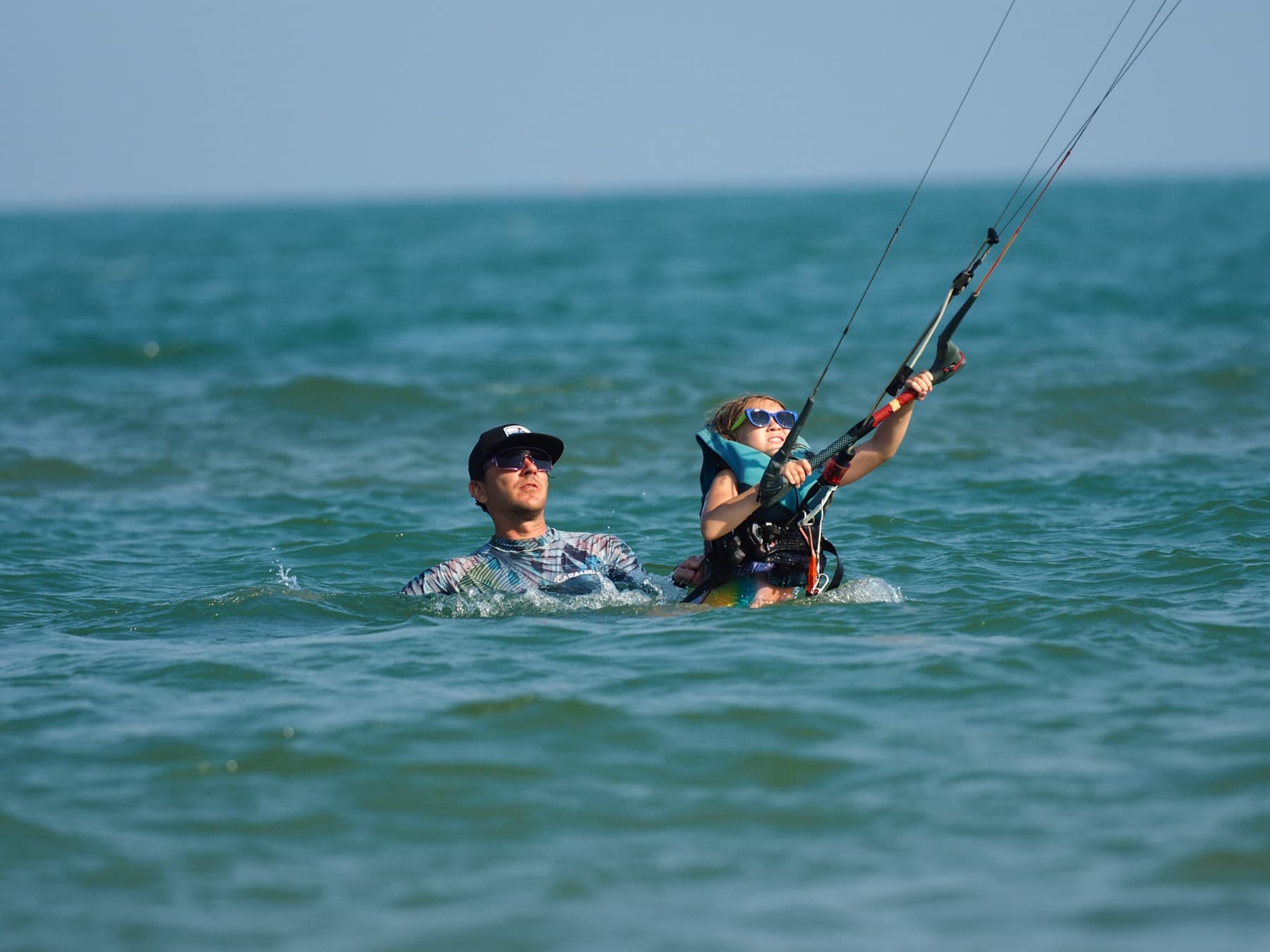
Кайтсёрфинг для детей: с какого возраста и как это проходитKitesurfing for kids: what age, safety, and how it works
Детей кайтсёрфингу учить можно. Всё решает готовность ребёнка, а возраст в годах — ориентир так себе: один ребёнок в девять лет уверенно держит внимание и весит достаточно, чтобы кайт его слушался, а другой в двенадцать пока не готов. Разберём по порядку: с чего мы смотрим, можно ли ребёнку на воду, как устроена безопасность, чем детская методика отличается от взрослой и почему Пак Нам Пран — одно из самых удачных мест в мире, чтобы поставить ребёнка на кайт.Yes, children can learn to kitesurf — but readiness matters more than a birthday. Age in years is a poor guide: one nine-year-old holds focus well and weighs enough for the kite to respond, while another twelve-year-old isn’t ready yet. Below is the honest version: what we actually look at, how safety is built, how the kids’ method differs from the adult one, and why Pak Nam Pran is one of the best places in the world to put a child on a kite.
22 июля 202622 July 2026 · JollyKite
Сразу оговорка: эта статья про обучение. Если вы едете семьёй и думаете, чем занять детей и как совместить кайт с отдыхом, — это отдельная тема.One clarification up front: this article is about learning. If you’re travelling as a family and wondering how to keep the kids busy and combine kiting with a holiday, that’s a separate topic.
С какого возраста реально: смотрим не на годыWhat age is realistic: don’t look at the number
Возраст сам по себе почти ничего не говорит. Мы смотрим на три вещи, и они важнее даты рождения.Age on its own tells us almost nothing. We look at three things, and they matter more than the date of birth.
- Вес и рост. Кайту нужно, за что тянуть. Слишком лёгкого ребёнка даже маленький кайт в слабый ветер будет либо срывать с места, либо просто не поднимать. Есть нижняя граница, ниже которой физика против нас — и её видно на первом же занятии на берегу. Мы подбираем размер кайта под вес, а не наоборот.Weight and height. The kite needs something to pull on. Too light a child will either get yanked off their feet by even a small kite in light wind, or the kite simply won’t lift them. There’s a lower limit where physics works against us — and it shows on the very first beach session. We match the kite size to the weight, not the other way round.
- Внимание и способность слушать. Кайтсёрфинг — это про то, чтобы делать ровно то, что говорит инструктор, в ту же секунду. Ребёнок, который может сосредоточиться на 15–20 минут и выполнять короткие команды, готов.Attention and the ability to listen. Kitesurfing is about doing exactly what the instructor says, the moment they say it. A child who can focus for 15–20 minutes and follow short commands is ready.
- Желание самого ребёнка. Если кайт хотят родители, а ребёнок нет — не поедет. Без мотивации ребёнок не станет терпеть повторы и разбор ошибок.The child’s own wish. If the parents want the kite but the child doesn’t, it won’t happen. Without motivation a child won’t tolerate the repetition and the corrections.
Ориентир, который мы обычно называем родителям: чаще всего дети готовы примерно с 8–10 лет, но встречаются и более ранние случаи, и более поздние. Точный ответ даём только после того, как посмотрим ребёнка вживую на берегу — по весу, вниманию и тому, как он держит тренировочный кайт.The guideline we usually give parents: most kids are ready from around 8–10, though we see earlier and later cases too. We only give a real answer after seeing the child in person on the beach — their weight, their focus, and how they handle a trainer kite.
Почему Пак Нам Пран идеально подходит детямWhy Pak Nam Pran is ideal for children
Спот для ребёнка решает половину задачи. В Пак Нам Пране всё складывается именно под детское обучение.For a child, the spot does half the job. In Pak Nam Pran everything lines up for kids specifically.
- Мелкая вода. На отливе можно уйти далеко от берега и по-прежнему стоять ногами. Любое упражнение ставится на паузу — просто встал. Страх глубины, который мешает взрослым, здесь почти не включается.Shallow water. At low tide a child can be a long way from shore and still standing on their feet. Any drill can be paused simply by standing up. The fear of deep water that troubles adults barely switches on here.
- Песчаное дно. Ни камней, ни кораллов, ни ежей. Упал — упал в песок и воду, а не на что-то твёрдое.Sandy bottom. No rocks, no coral, no urchins. A fall is a fall into sand and water, not onto something hard.
- Ровный ветер. Дует стабильно, без резких порывов. Кайт ведёт себя предсказуемо, а именно предсказуемость нужна ребёнку.Steady wind. It blows consistently, without vicious gusts. The kite behaves predictably, and predictability is exactly what a child needs.
- Много места и спокойно. Длинный пляж, мало людей на воде. Никто не режет курс, инструктор видит ребёнка целиком и всё время рядом.Space and calm. A long beach, few people on the water. Nobody cuts across, the instructor sees the whole child and stays right beside them.
Безопасность: как устроена детская сессияSafety: how a kids’ session is built
Безопасность ребёнка — это целая система, и она жёстче, чем у взрослых.A child’s safety isn’t one item, it’s a system — and a stricter one than for adults.
- Маленький кайт, лёгкий ветер. Мы намеренно берём меньший размер кайта и не выводим ребёнка в сильный ветер. Задача — чтобы тяга была управляемой, а не чтобы «поехал быстрее».Small kite, light wind. We deliberately use a smaller kite size and don’t take a child out in strong wind. The goal is a controllable pull, not “going faster”.
- Шлем и жилет — всегда. Не обсуждается. Жилет держит на воде и снимает страх, шлем защищает голову.Helmet and vest — always. Non-negotiable. The vest keeps the child afloat and takes away fear; the helmet protects the head.
- Инструктор рядом, а не на берегу. С ребёнком инструктор работает вплотную: страхует, придерживает, в любой момент может перехватить управление или сбросить тягу.Instructor right there, not on the beach. With a child the instructor works up close: spotting, holding, ready to take over the controls or dump the power at any second.
- Отработка систем безопасности руками. Квик-релиз и самоспасение ребёнок отрабатывает так же, как взрослый, — руками, до автоматизма. Сброс тяги должен срабатывать раньше, чем ребёнок успеет испугаться.Safety systems drilled by hand. The child practises the quick release and self-rescue the same way an adult does — with their hands, to the point of reflex. Dumping the power has to fire before the child has time to get scared.
Мы работаем по методике IKO — единая последовательность шагов и понятный протокол на случай нештатной ситуации. Что это за сертификация и как вообще устроена безопасность на обучении, мы разбирали в отдельных статьях.We teach by the IKO method — one sequence of steps and a clear protocol if something goes wrong. What that certification is, and how safety works during lessons in general, we cover in separate articles.
Чем детская методика отличается от взрослойHow the kids’ method differs from the adult one
Шаги те же, что у взрослых: теория и безопасность на берегу, пилотирование кайта на земле, бодидрэг без доски, водный старт, первые галсы. Но подача другая.The steps are the same as for adults: theory and safety on the beach, flying the kite on land, body dragging without a board, the water start, first runs. But the delivery is different.
- Короткие сессии. Ребёнок устаёт и теряет концентрацию быстрее взрослого. Лучше короче и чаще, чем долго и через силу.Short sessions. A child tires and loses focus faster than an adult. Shorter and more often beats long and forced.
- Через игру. Восьмёрки кайтом, «подержи кайт в зените, пока я считаю до десяти», задания на точность — детям это заходит как игра, а не как урок.Through play. Figure-eights with the kite, “hold the kite at the zenith while I count to ten”, accuracy tasks — kids take to this as a game, not a lesson.
- Меньше теории за раз. Ребёнку то же самое даём порциями, вплетая в практику, а не лекцией на 20 минут.Less theory at once. A child gets the same material in portions, woven into practice rather than a 20-minute lecture.
- Больше повторов и терпения. Мы не гоним ребёнка на следующий шаг, пока предыдущий не встал уверенно: пропущенный этап у ребёнка почти всегда возвращается страхом.More repetition and patience. We don’t push a child to the next step until the current one is solid: a skipped stage almost always comes back as fear.
Чего ждать родителю и как подготовить ребёнкаWhat to expect as a parent, and how to prepare your child
- Прогресс у детей нелинейный. Ребёнок может день топтаться на месте, а потом за одну сессию скакнуть вперёд. Не сравнивайте его с соседом на пляже.Kids’ progress isn’t linear. A child can go a whole day with no movement, then jump forward in a single session. Don’t compare them to the kid next to them on the beach.
- Падать — часть процесса. В мелкой воде на песке это безопасно и быстро перестаёт пугать. Ваша задача — не передавать ребёнку свою тревогу.Falling is part of it. In shallow water over sand this is safe and stops being scary fast. Your job is not to pass your own anxiety on to the child.
- Не давите. Если сегодня ребёнок не хочет на воду — лучше не заставлять. Кайт держится на желании.Don’t push. If a child doesn’t want to go on the water today, better not to force it. Kiting runs on desire.
- Как подготовить. Полезно, если ребёнок умеет плавать и спокойно чувствует себя в воде. Помогает любой опыт бордов — самокат, скейт, сноуборд, вейк. Но ничего специально уметь заранее не нужно.How to prepare. It helps if the child can swim and is comfortable in the water. Any board or coordination sport helps — scooter, skateboard, snowboard, wakeboard. But nothing needs to be learned in advance.
Гарантий по срокам мы не даём — и никто честный не даст. Сколько займёт, зависит от готовности ребёнка, ветра и регулярности. Что мы обещаем: не будем торопить и не выведем ребёнка туда, где ему опасно или страшно.We don’t promise timelines — no honest school will. How long it takes depends on the child’s readiness, the wind, and consistency. What we do promise: we won’t rush, and we won’t take a child anywhere unsafe or frightening.
Частые вопросыFAQ
С какого возраста можно учить ребёнка кайтсёрфингу?What age can a child start learning to kitesurf?+
Ориентир — примерно 8–10 лет, но возраст в годах вторичен. Важнее вес и рост (кайту нужно, за что тянуть), способность удерживать внимание и выполнять короткие команды, а также собственное желание ребёнка. Точный ответ даём после того, как посмотрим ребёнка на берегу с тренировочным кайтом.The guideline is roughly 8–10, but age in years is secondary. What matters more is weight and height (the kite needs something to pull on), the ability to hold attention and follow short commands, and the child’s own wish to do it. We give a real answer after seeing the child on the beach with a trainer kite.
Безопасно ли обучение кайтсёрфингу для детей?Is kitesurfing safe for children?+
При правильной организации — да. Мы берём маленький кайт и лёгкий ветер, ребёнок всегда в шлеме и жилете, инструктор работает вплотную и может в любой момент перехватить управление. Системы безопасности и самоспасение отрабатываются руками до автоматизма. Плюс сам спот: мелкая вода, песчаное дно, ровный ветер.Set up properly, yes. We use a small kite and light wind, the child always wears a helmet and vest, and the instructor works up close and can take over the controls at any moment. Safety systems and self-rescue are drilled by hand until automatic. The spot helps too: shallow water, sandy bottom, steady wind.
Почему Пак Нам Пран подходит детям?Why is Pak Nam Pran good for kids?+
Мелкая вода — на отливе ребёнок стоит ногами далеко от берега; песчаное дно без камней и кораллов; ровный ветер без резких порывов, при котором кайт предсказуем; длинный пустой пляж, где инструктор всё время рядом. Всё это снимает у ребёнка страх и ускоряет обучение.Shallow water — at low tide a child stands on their feet far from shore; a sandy bottom with no rocks or coral; steady wind without sharp gusts, so the kite stays predictable; a long, empty beach where the instructor is always right beside them. All of it reduces fear and speeds up learning.
Чем детская методика отличается от взрослой?How does the kids’ method differ from the adult one?+
Шаги те же (теория, пилотирование кайта на земле, бодидрэг, водный старт, галсы), но сессии короче, теория подаётся порциями, а упражнения строятся через игру. Повторов больше, темп мягче: пропущенный этап у ребёнка почти всегда возвращается страхом.The steps are the same (theory, flying the kite on land, body dragging, water start, first runs), but sessions are shorter, theory comes in portions, and drills are built as games. There’s more repetition and a gentler pace: a skipped stage almost always comes back as fear in a child.
Что нужно уметь ребёнку до начала?What does a child need to know beforehand?+
Заранее ничего специально уметь не нужно — всему учим с нуля. Полезно, если ребёнок умеет плавать и спокойно чувствует себя в воде. Помогает любой опыт бордов и координационных видов — скейт, самокат, сноуборд, вейк.Nothing specific in advance — we teach everything from scratch. It helps if the child can swim and is comfortable in the water. Any board or coordination sport helps too — skateboard, scooter, snowboard, wakeboard.
Сколько времени займёт обучение ребёнка?How long will it take a child to learn?+
Точный срок назвать нельзя — он зависит от готовности ребёнка, ветра и регулярности занятий. Прогресс у детей нелинейный: возможен день без сдвигов и резкий скачок на следующей сессии. Мы не торопим и не выводим ребёнка туда, где ему опасно или страшно.There’s no exact figure — it depends on the child’s readiness, the wind, and how consistently they train. Kids’ progress isn’t linear: a day with no movement can be followed by a jump next session. We don’t rush, and we won’t take a child anywhere unsafe or frightening.
Нужен ли ребёнку свой кайт и снаряжение?Does the child need their own kite and gear?+
Нет. Снаряжение подбираем под вес и рост ребёнка сами — размер кайта, трапецию, шлем и жилет. Свой кайт покупать заранее не нужно и не стоит: детям он быстро становится мал.No. We match the gear to the child’s weight and height ourselves — kite size, harness, helmet, vest. There’s no need to buy a kite in advance, and it’s not worth it: kids outgrow one quickly.
Поедем кататься?Shall we go riding?
Напишите даты и уровень — посчитаем поездку под ключ и подберём формат.Tell us your dates and level — we’ll plan the whole trip.