
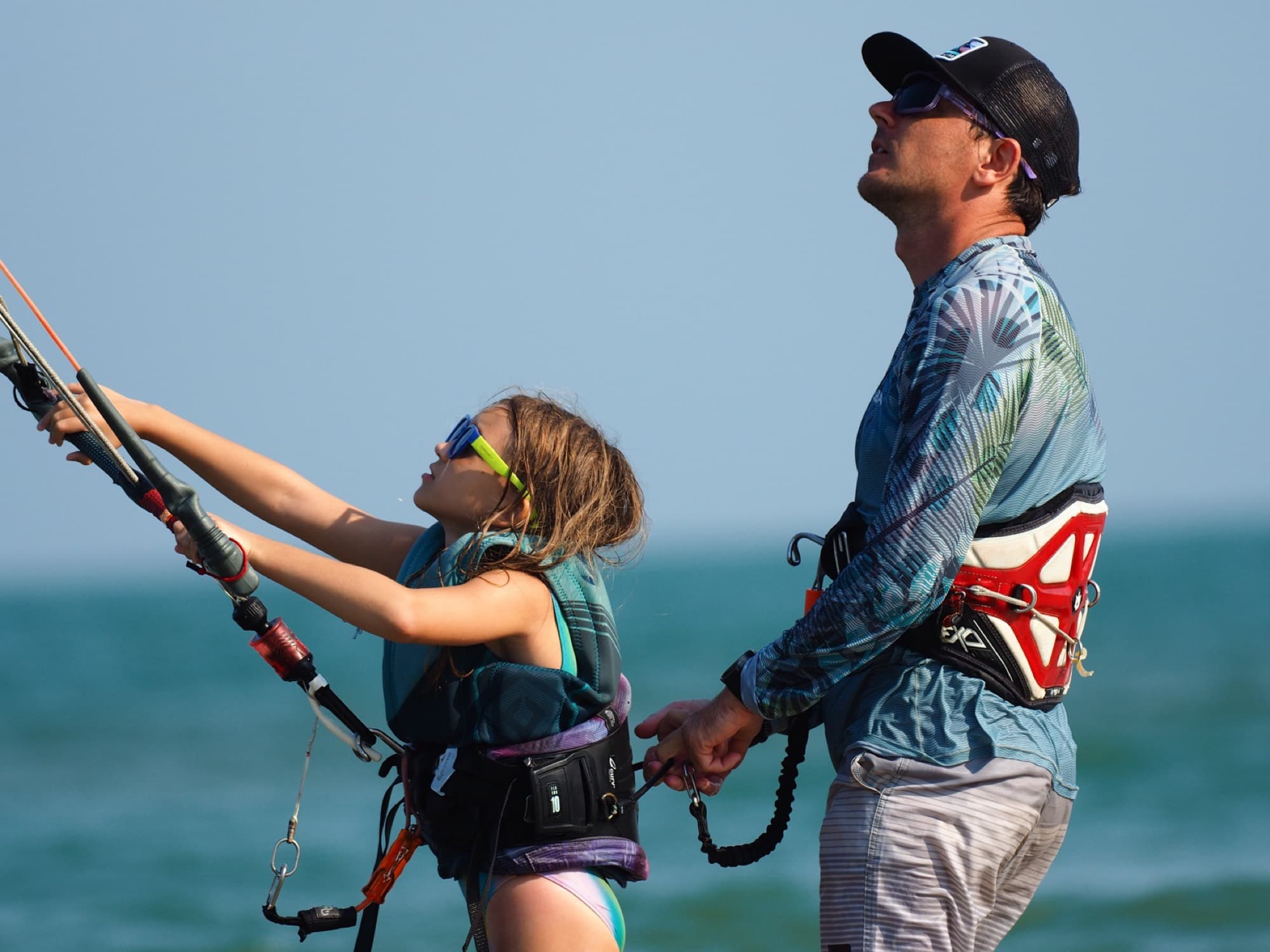
Кайт-школа в Пак Нам Пране: как проходит обучениеKite school in Pak Nam Pran: how the training works
Пак Нам Пран — тихий кайт-спот в 30 км южнее шумного Хуа Хина, на берегу Сиамского залива. Сюда едут за тишиной и простором: широкий песчаный берег, мелкая плоская вода, почти пустая акватория — никакой тусовки и многолюдных пляжей. Если хотите учиться кайтсёрфингу спокойно и без стресса, это одно из лучших мест в Таиланде.Pak Nam Pran is a quiet kite spot about 30 km south of busy Hua Hin, on the shore of the Gulf of Thailand. People don't come here for the party scene or crowded beaches — quite the opposite: a wide sandy shore, shallow flat water, plenty of space and almost no crowd on the water. For anyone who wants to learn kitesurfing calmly and without stress, it's one of the best places in all of Thailand.
29 июня 202629 June 2026 · JollyKite
Где находится Пак Нам ПранWhere Pak Nam Pran is
Пак Нам Пран относится к району Пранбури провинции Прачуапкхиригхан — это в 30 км южнее Хуа Хина, около получаса на машине. Здесь тише, спокойнее и заметно меньше людей на воде. Многие, кто впервые слышит про регион, связывают кайтинг с Хуа Хином. Но спот, который инструкторы по всей Азии ценят за условия для обучения, находится именно в Пак Нам Пране.Pak Nam Pran belongs to the Pranburi district of Prachuap Khiri Khan province. It's south of Hua Hin — about 30 km and roughly half an hour by car. Compared with Hua Hin it's quieter, calmer and noticeably less crowded on the water. Many people who first hear about the region associate kiting with Hua Hin, but it's in Pak Nam Pran that you'll find the spot instructors across Asia value for its learning conditions.
Наша станция стоит на пляже Lazy Beach — широком, песчаном, с пологим входом в воду. Вокруг кафе, рынки, аптеки, массаж и жильё в шаговой доступности. Учиться можно, не выпадая из комфорта: после сессии есть где поесть и отдохнуть.Our station sits on Lazy Beach — a wide sandy shore with a gentle entry into the water. Around it are cafes, markets, pharmacies, massage parlours and accommodation within walking distance. You can come to learn without giving up comfort: after a session there's somewhere to eat, rest and recover.
Спот: чем он хорош для обученияThe spot: why it's good for learning
Главная причина ехать учиться именно в Пак Нам Пран — это спот. Вот из чего складываются его условия:The main reason to come and learn in Pak Nam Pran is the spot. Here's what its conditions are made of:
- Мелкая плоская вода. В южный сезон вода спокойная и неглубокая — во многих местах вы стоите ногами. Падать и ошибаться не страшно, а значит новичок меньше нервничает и быстрее прогрессирует.Shallow flat water. In the south-wind season the water is calm and shallow — in many places you stand on your feet. Falling and making mistakes here isn't scary, which fundamentally lowers a beginner's stress and speeds up progress.
- Песчаное дно. Ни камней, ни кораллов — мягкий песок, по которому удобно ходить и на который не страшно упасть.Sandy bottom. No rocks or coral — a soft sandy bottom that's comfortable to walk on and safe to fall on.
- Широкий пляж. Много места, чтобы подготовить кайт, запустить и приземлить его. Не нужно толкаться с другими райдерами.A wide sandy beach. Plenty of room to set up the kite, launch and land. No jostling with other riders.
- Простор и мало людей. Здесь хватает воды на всех — это редкость. Меньше людей — меньше риска и больше свободы учиться в своём темпе.Space and few people. Unlike overcrowded spots, there's enough water for everyone here. Fewer people means less risk and more freedom to learn at your own pace.
- Сайд-шор ветер. Ветер дует вдоль берега — это одно из самых безопасных направлений для обучения: вас не сдувает в открытое море и не прижимает к берегу.Side-shore wind. The wind mostly blows along the shore, which is considered one of the safest, most convenient directions for learning: you're not blown out to sea or pinned against the beach.
Вместе это идеальная учебная площадка: ошибаться не страшно, прогресс идёт быстрее, а само обучение проходит спокойно. Подробнее о споте — на странице /spot, а про сам регион мы рассказывали в отдельной статье /blog/pranburi-pak-nam-pran.Together this gives an ideal "training ground": mistakes aren't scary, progress comes faster, and the learning itself is calm. More about the spot is on the /spot page, and we covered the region in a separate article, /blog/pranburi-pak-nam-pran.
Как проходит обучение: 4 этапаHow the training works: 4 stages
Мы учим по своей проверенной методике из четырёх этапов. Она совпадает с международными уровнями IKO 1–3. Каждый этап опирается на предыдущий — так навык ложится прочно и без пробелов. Путь с полного нуля до самостоятельного катания обычно занимает 8–16 часов на воде, чаще всего — около четырёх ветреных дней.We teach using our own proven method, split into four sequential stages. It matches the international IKO levels 1–3. Each stage builds on the last, so the skill is laid down solidly and without gaps. Going from a complete beginner to independent riding usually takes 8–16 hours on the water, most often about four windy days.
### Этап 1. Управление кайтом и безопасность### Stage 1. Kite control and safety
Первое занятие — практическое. Немного теории (как устроен кайт, что такое «ветровое окно», базовые команды), а дальше вы уже управляете кайтом руками. Задача — поставить контроль: плавно вести кайт по небу, удерживать его в нужной зоне, дозировать тягу. Параллельно доводим до автоматизма системы безопасности: как сбросить тягу, как отцепиться, что делать в нестандартной ситуации. Именно этот навык снимает большую часть страха.The first lesson is hands-on. A little theory (how the kite works, the "wind window", basic commands), then you're already working the kite with your hands. The goal is to build control: steering the kite smoothly across the sky, holding it in the right zone, dosing the power. In parallel we drill the safety systems to automatic: how to dump the power, how to release, what to do in an unusual situation. This is the skill that removes most of the fear.
### Этап 2. Бодидраг — движение без доски### Stage 2. Body drag — moving without the board
Теперь добавляем воду. Вы двигаетесь за счёт тяги кайта, пока без доски, — это и есть бодидраг. Тело привыкает к нагрузке, вы чувствуете, как кайт тянет, и учитесь этим управлять. Отдельно отрабатываем бодидраг против ветра — тот навык, что позволяет вернуться к доске, если она уплыла.Now we add water. You move through the water on the kite's pull, still without the board — this is body dragging. Your body gets used to the load, you feel the kite pulling and learn to manage it. We pay special attention to upwind body drag — a crucial skill that lets you get back to the board if it has drifted away.
### Этап 3. Водный старт — встаём на доску### Stage 3. Water start — getting up on the board
Самый волнующий момент — первые проезды. Соединяем «мах» кайтом и работу ног: кайт даёт импульс, вы выталкиваетесь из воды и встаёте на доску. Сначала это пара метров, потом дольше и устойчивее. Учимся держать баланс на первых метрах и доверять кайту. Первый проезд по воде стоя — тот самый момент, ради которого всё и затевалось.The most exciting moment — your first rides. Here we combine the kite "stroke" with footwork: the kite gives the impulse, you push out of the water and stand on the board. At first it's a couple of metres, then longer and steadier. You learn to balance over those first metres and trust the kite. Your first glide across the water standing up is the moment this whole thing was for.
### Этап 4. Апвинд (зарезка) — едем против ветра### Stage 4. Going upwind
Финальный и самый важный для самостоятельности этап. Просто проехать по ветру мало — вас будет сносить. Поэтому учимся идти на ветер: контролировать скорость и направление телом и доской, уходить против ветра и возвращаться на старт. Когда вы стабильно возвращаетесь туда, откуда стартовали, — вы независимый райдер.The final and most important stage for independence. Simply riding downwind isn't enough — you'd drift away. So we learn to head upwind: controlling speed and direction with body and board, going against the wind and returning to the start. Once you reliably come back to where you started, you're an independent rider.
Подробнее о методике и этапах мы рассказали в статье /blog/obuchenie-kajtsurfingu-s-nulya.We covered the method and stages in more detail in the article /blog/obuchenie-kajtsurfingu-s-nulya.
Что входит в обучениеWhat's included
Курс в JollyKite — это всё необходимое под ключ, своего снаряжения иметь не нужно:A course at JollyKite is everything you need, all in — you don't need your own gear:
- русскоязычные инструкторы IKO — Христина и Саша, школа работает с 2014 года;Russian-speaking IKO instructors — Kristina and Sasha, the school has run since 2014;
- всё снаряжение — кайт, планка управления, доска, трапеция, лиш;all the equipment — kite, control bar, board, harness, leash;
- малые группы или индивидуально — вы не теряетесь в потоке учеников;small groups or private lessons — you don't get lost in a crowd of students;
- радиосвязь на воде — инструктор подсказывает, пока вы катаетесь, не теряя ни минуты;radio comms on the water — the instructor coaches you while you ride, without losing a minute;
- подбор кайта под ваш вес и текущий ветер — это напрямую влияет на безопасность и скорость прогресса;a kite matched to your weight and the current wind — this directly affects safety and how fast you progress;
- журнал прогресса — любой инструктор продолжит с того же места, если вы делаете перерыв.a progress log — any instructor can pick up where you left off if you take a break.
Форматы курсов и запись — на странице /obuchenie.Course formats and booking are on the /obuchenie page.
Сезон и ветер краткоSeason and wind in brief
Сезон в Пак Нам Пране идёт с середины ноября по начало мая. Внутри — два основных ветровых режима:The season in Pak Nam Pran runs from mid-November to early May. There are two main wind modes within it:
- Ноябрь — январь — северный ветер, дует с утра, сила примерно 18–22 узла. Есть лёгкая волна — бодрит, отлично заходит опытным, но подходит и новичкам.November — January — north wind, blowing in the morning, roughly 18–22 knots. There's a light swell — invigorating, great for experienced riders, but also suitable for beginners.
- Февраль — май — южный ветер, дует со второй половины дня, сила 13–18 узлов, вода спокойная и плоская. Это идеальное окно для новичка: ровный ветер, мелкая вода, комфортный темп.February — May — south wind, blowing from the afternoon, 13–18 knots, calm flat water. This is the ideal window for beginners: steady wind, shallow water, a comfortable pace.
Текущий прогноз удобно смотреть на windguru (станция 173190).The current forecast is easy to check on windguru (station 173190).
Как добраться и где житьGetting there and where to stay
До Пак Нам Прана — около 3 часов от аэропорта Бангкока и примерно полчаса от центра Хуа Хина. Трансфер из Хуа Хина или прямо из аэропорта поможем организовать — напишите даты, и подскажем удобный вариант.Pak Nam Pran is about 3 hours from Bangkok airport and roughly half an hour from central Hua Hin. We help arrange a transfer from Hua Hin or straight from the airport — send us your dates and we'll suggest a convenient option.
С жильём проблем нет: рядом со станцией есть варианты на любой бюджет — от гестхаусов до вилл и апартаментов. Кафе, рынки, аптеки и массаж в шаговой доступности, так что быт решается легко. Если нужно, поможем подобрать жильё поближе к пляжу.Accommodation is no problem: near the station there are options for any budget — from guesthouses to villas and apartments. Cafes, markets, pharmacies and massage are all within walking distance, so the everyday side of the trip is easy. If you like, we'll help you find a place close to the beach.
Сколько стоит обучениеHow much it costs
Все цены ниже — ориентир и включают снаряжение и инструктора. Никаких доплат за кайт или трапецию.All the prices below are a guide and include equipment and an instructor. No surcharges for the kite or harness.
| ЧасовHours | ЦенаPrice | |
|---|---|---|
| Индивидуально, часPrivate, per hour | 1 ч1 h | €65€65 |
| С нуля до катанияZero to riding | 12 ч12 h | €730€730 |
Это ориентировочные цифры. Чем больше пакет, тем выгоднее час. Группа на двоих выходит дешевле в пересчёте на человека — но тут важно, чтобы у вас был одинаковый уровень и близкий вес. Актуальные цены и форматы — на странице /obuchenie.These are indicative figures. The bigger the package, the cheaper the hour. A group of two works out cheaper per person — for that format you should be at the same level and a similar weight. Current prices and formats are on the /obuchenie page.
Поедем кататься?Let's go riding?
Напишите нам даты и уровень — подскажем формат, подберём сезон под ваш ритм и посчитаем поездку под ключ. WhatsApp +66 98 367 9769, Telegram-бот @JollyKite_kite_bot.Send us your dates and level — we'll suggest a format, match the season to your rhythm and plan your trip end to end. WhatsApp +66 98 367 9769, Telegram bot @JollyKite_kite_bot.
Частые вопросыFAQ
Где находится Пак Нам Пран?Where is Pak Nam Pran?+
Пак Нам Пран — это район Пранбури в провинции Прачуапкхиригхан, примерно в 30 км южнее Хуа Хина, на берегу Сиамского залива. От аэропорта Бангкока — около 3 часов на машине. Здесь тише и спокойнее, чем в Хуа Хине, и заметно меньше людей на воде.Pak Nam Pran is the Pranburi district of Prachuap Khiri Khan province, about 30 km south of Hua Hin, on the Gulf of Thailand. It's around 3 hours by car from Bangkok airport. It's quieter and calmer than Hua Hin, with noticeably fewer people on the water.
Чем спот в Пак Нам Пране хорош для новичка?Why is the Pak Nam Pran spot good for beginners?+
Мелкая плоская вода (во многих местах вы стоите ногами), мягкое песчаное дно, широкий пляж, простор и сайд-шор ветер. Ошибаться не страшно, поэтому прогресс идёт быстрее, а обучение проходит спокойно — это одно из лучших мест Таиланда для старта.Shallow flat water (in many places you stand on your feet), a soft sandy bottom, a wide beach, space and side-shore wind. Mistakes aren't scary here, so progress comes faster and the learning is calm — one of the best places in Thailand to start.
Сколько часов нужно до самостоятельного катания?How many hours until you can ride on your own?+
Обычно 8–16 часов на воде — как правило, около четырёх ветреных дней. Точный срок зависит от вашего темпа, веса, координации и стабильности ветра. Обучение идёт по четырём этапам: управление кайтом и безопасность, бодидраг, водный старт и апвинд.Usually 8–16 hours on the water — typically about four windy days. The exact time depends on your pace, weight, coordination and how stable the wind is. Training goes through four stages: kite control and safety, body drag, water start and upwind.
Что входит в курс?What's included in the course?+
Русскоязычные инструкторы IKO, всё снаряжение (кайт, планка, доска, трапеция, лиш), занятия в малых группах или индивидуально, радиосвязь на воде, подбор кайта под ваш вес и ветер и журнал прогресса. Своего снаряжения иметь не нужно.Russian-speaking IKO instructors, all the equipment (kite, control bar, board, harness, leash), small groups or private lessons, radio comms on the water, a kite matched to your weight and the wind, and a progress log. You don't need your own gear.
Когда сезон в Пак Нам Пране?When is the season in Pak Nam Pran?+
С середины ноября по начало мая. Ноябрь — январь: северный ветер с утра, 18–22 узла, лёгкая волна. Февраль — май: южный ветер после обеда, 13–18 узлов, спокойная плоская вода — идеальное окно для новичка.From mid-November to early May. November — January: north wind in the morning, 18–22 knots, light swell. February — May: south wind in the afternoon, 13–18 knots, calm flat water — the ideal window for beginners.
Поедем кататься?Shall we go riding?
Напишите даты и уровень — посчитаем поездку под ключ и подберём формат.Tell us your dates and level — we’ll plan the whole trip.