
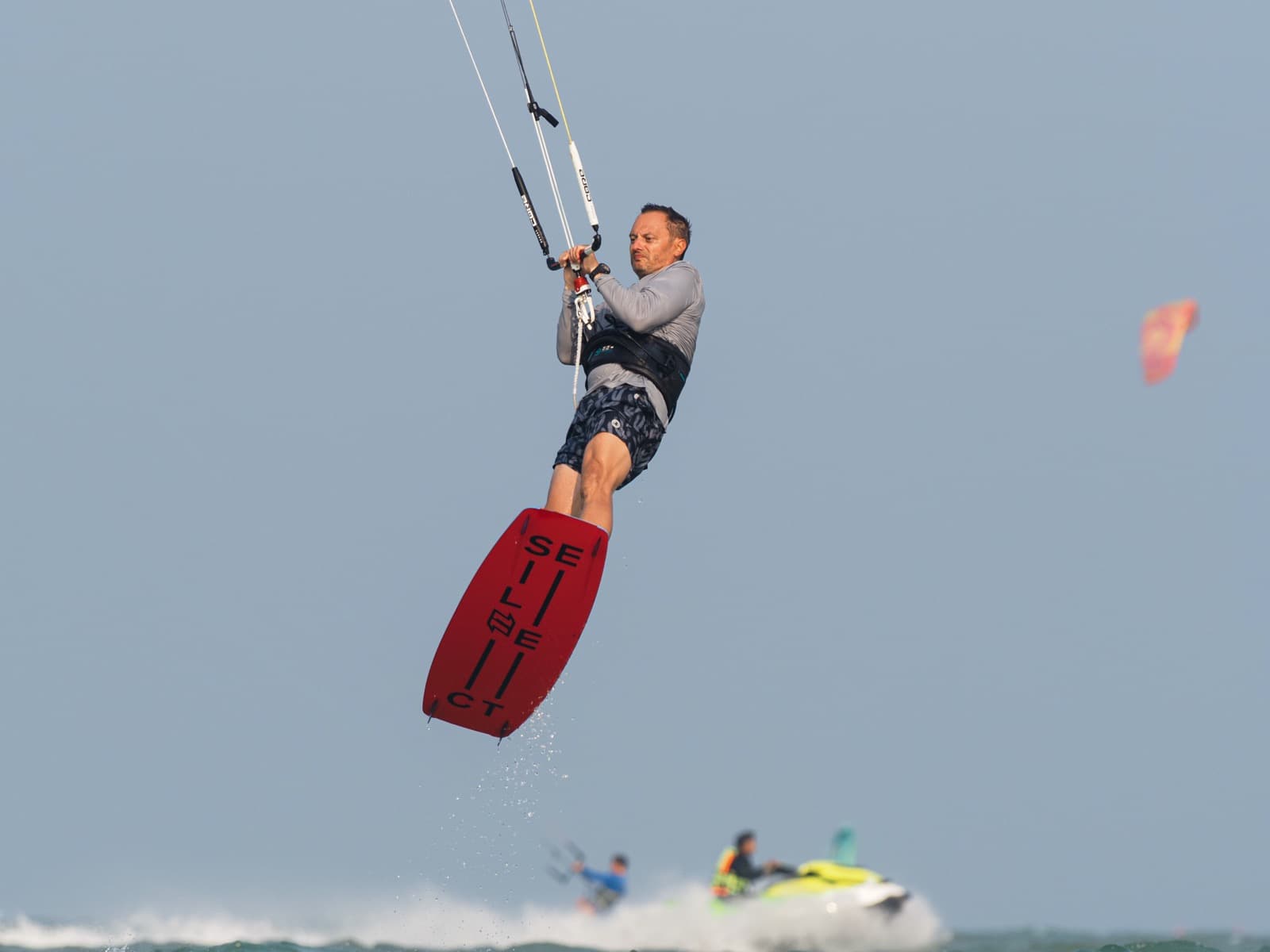
Фронтролл на кайте: вращение вперёд пошаговоFrontroll on a kite: the forward rotation, step by step
Фронтролл (от англ. *frontroll*, его ещё называют фронтлупом) — это вращение вперёд в прыжке: вы «ныряете» через переднее плечо и голову вниз-вперёд, делаете полный оборот и приземляетесь. Логичный следующий трюк после бэкролла: техника во многом та же, но с одним нюансом, который делает фронтролл капризнее.The frontroll (also called a frontloop) is a forward rotation in a jump: you "dive" through your front shoulder and head down-and-forward, make a full rotation and land. It's the logical next trick after the backroll — the technique is largely the same, but with one nuance that makes the frontroll trickier.
27 июня 202627 June 2026 · JollyKite
Что нужно уметь до фронтроллаWhat you should be able to do before the frontroll
Фронтролл — не первый трюк, под ним должна быть прочная база. Прежде чем браться за вращение вперёд, убедитесь, что у вас есть две вещи:The frontroll isn't a first trick. For it to work, there has to be a solid base underneath it. Before you take on the forward rotation, make sure you have two things:
- Уверенный прыжок. Вы стабильно отрываетесь от воды, контролируете кайт в воздухе, мягко приземляетесь на согнутые ноги и не роняете кайт. Без спокойного, повторяемого прыжка любое вращение превращается в лотерею.A confident jump. You leave the water consistently, control the kite in the air, land softly on bent legs and don't "drop" the kite while doing it. Without a calm, repeatable jump, any rotation becomes a lottery.
- Освоенный бэкролл (желательно). В бэкролле — вращении назад — вы уже привыкли крутиться в воздухе, держать кайт неподвижно в зените и доворачивать к приземлению. Фронтролл строится ровно на этих ощущениях, только вращение идёт в другую сторону. С бэкроллом в кармане фронтролл пойдёт заметно быстрее.A learned backroll (preferably). The backroll is a backward rotation, and in it you already get used to spinning in the air, keeping the kite still at the zenith and turning through to the landing. The frontroll is built on exactly these sensations, only the rotation goes the other way. If the backroll is "in the bag," the frontroll will come noticeably faster.
Если прыжок ещё нестабилен, вернитесь на шаг назад — к первому прыжку на кайте. А если хотите сначала закрыть бэкролл, у нас есть отдельный разбор — бэкролл на кайте.If your jump is still shaky, step back — to the first jump on a kite. And if you want to lock in the backroll first, we have a separate breakdown — the backroll on a kite.
Фронтролл по шагамThe frontroll, step by step
Запомните заранее: вращение делает тело, а не кайт. Во время трюка кайт стоит неподвижно в зените и просто держит вас в воздухе. Оборот задают голова, плечо и колени. По шагам:The main thing to understand up front: the rotation is done by your body, not the kite. During the trick the kite stays still at the zenith and simply holds you in the air. The whole rotation is driven by the movement of your head, shoulder and knees. Step by step:
- Заход и закантовка как на прыжок. Идёте на нормальной скорости, закантовываетесь против ветра — ровно как перед обычным прыжком. Ничего нового на этом этапе.Approach and edge as for a jump. Ride at a normal speed and edge against the wind — exactly as before an ordinary jump. There's nothing new to do at this stage.
- Прыжок с лёгким посылом кайта. Подайте кайт коротким движением вверх, оторвитесь от воды — и сразу зафиксируйте кайт в зените (12 часов), держите его неподвижно. Это ключ: после отрыва кайт больше не трогаете, он просто висит над вами.Jump with a light kite send. Send the kite up with a short movement, leave the water — and immediately fix the kite at the zenith (12 o'clock) and hold it still. This is the key: after takeoff you don't touch the kite again, it just hangs above you.
- Инициируйте вращение вперёд. Опустите голову и переднее плечо вниз-вперёд — как будто ныряете через переднюю руку. Колени в этот момент подтяните к груди. Именно движение головы и плеча запускает оборот.Initiate the forward rotation. Drop your head and front shoulder down-and-forward — as if "diving" through your front arm. At the same moment pull your knees up to your chest. It's this head-and-shoulder movement that launches the forward rotation.
- Соберитесь в компактное тело. Чем плотнее группировка — колени подтянуты, корпус собран, — тем быстрее и чище идёт оборот. Раскрытое, вытянутое тело крутится медленно и вяло.Tuck into a compact body. The tighter you're tucked — knees pulled in, body compact — the faster and cleaner the rotation. An open, stretched-out body spins slowly and sluggishly.
- Пройдите «слепой» момент. На выходе из вращения вы ненадолго теряете воду из вида — это нормально и неизбежно. Не зависайте: доворачивайте тело и в конце снова поймайте взглядом воду и точку приземления.Get through the "blind" moment. Coming out of the rotation you briefly lose sight of the water — this is normal and unavoidable. Don't freeze: keep turning your body through and, at the end, catch the water and the landing spot with your eyes again.
- Раскройтесь и приземлитесь. Завершив оборот, раскройте тело, выпрямите ноги к воде и приземлитесь носом доски чуть по ветру на согнутые ноги. Кайт всё это время держите летящим — он принимает вас на приземлении.Open up and land. Once the rotation is complete, open your body, extend your legs toward the water and land nose slightly downwind on bent legs. Keep the kite flying the whole time — it takes you on the landing.
Собранный целиком, фронтролл занимает буквально секунду. Поэтому отрабатывают его не по частям в воздухе, а одним цельным движением, постепенно делая чище.When all the steps connect, the frontroll takes literally a second. That's why you drill it not "piece by piece in the air" but as one whole movement, gradually making it cleaner.
Слепой момент и как с ним бытьThe blind moment and how to handle it
«Слепой» момент — главное отличие фронтролла от бэкролла. При вращении вперёд голова в какой-то фазе уходит вниз и вперёд, и вы на доли секунды перестаёте видеть воду. После бэкролла, где приземление видно почти всё время, это непривычно и поначалу пугает.The "blind" moment is the main difference between the frontroll and the backroll. In the forward rotation, at a certain phase of the spin your head goes down and forward, and for a fraction of a second you stop seeing the water. For those used to the backroll (where the landing is visible almost the whole time), this is unfamiliar and frightening at first.
Что делать:What to do about it:
- Примите, что это нормально. Слепая фаза короткая. Не нужно пережидать её в страхе — нужно продолжать вращение.Accept that it's normal. The blind phase is short. You don't need to "wait it out" in fear — you need to keep rotating.
- Не зависайте в слепой фазе. Самая частая проблема: человек инстинктивно замирает, потеряв воду из вида, и не доворачивает оборот. Тело останавливается на середине, приземление выходит грязным. Решение одно — продолжать движение и доворачивать до конца.Don't freeze in the blind phase. The most common problem is that a person instinctively "freezes" when they lose sight of the water and doesn't turn the rotation through. The body stops halfway and the landing comes out messy. The fix is to keep moving: turn all the way through.
- Поймайте приземление взглядом в конце. Как только оборот выходит из слепой фазы, сразу найдите глазами воду и точку, куда садитесь. Взгляд цепляется за воду — и тело само готовится к приземлению.Catch the landing with your eyes at the end. As soon as the rotation comes out of the blind phase, immediately find the water and the spot you're landing on with your eyes. The gaze "catches" the water — and the body automatically prepares to land.
Чем увереннее у вас идут бэкролл и обычный прыжок, тем спокойнее проходит слепой момент: тело уже знает, что после потери ориентира всё закончится мягким приземлением.The more confident you are at the backroll and the ordinary jump, the calmer you get through the blind moment: the body already knows that after losing its reference point everything ends with a soft landing.
Частые ошибкиCommon mistakes
Большинство неудачных фронтроллов объясняется одними и теми же ошибками. Зная их заранее, вы сэкономите много попыток:Most failed frontrolls come down to the same mistakes. Knowing them in advance will save you many attempts:
- Крутят кайтом, а не телом. Самая распространённая ошибка. Человек пытается помочь себе, дёргая планку и заводя кайт в сторону. Кайт уходит из зенита, теряет тягу — и приземление разваливается. После отрыва кайт стоит неподвижно в зените; вращение делает только тело.Spinning with the kite, not the body. The most common mistake. People try to "help" themselves by yanking the bar and steering the kite to the side. The kite leaves the zenith, loses pull — and the landing falls apart. After takeoff the kite stays still at the zenith; only the body rotates.
- Зависают в слепой фазе и не доворачивают. Об этом выше: потеряли воду из вида, замерли — оборот не завершился. Продолжайте вращение и ловите приземление взглядом в конце.Freezing in the blind phase and not turning through. As above: you lose sight of the water, freeze — and the rotation doesn't finish. You need to keep rotating and catch the landing with your eyes at the end.
- Перекручивают. Обратная крайность: слишком резкая инициация и слишком плотная группировка дают лишний оборот, и вы проскакиваете точку приземления. Фронтролл перекрутить легче, чем бэкролл, поэтому инициацию делают чёткой, но не злой.Over-rotating. The opposite extreme: too sharp an initiation and too tight a tuck give excess rotation, and you fly past the landing spot. The frontroll is easier to over-rotate than the backroll, so make the initiation crisp but not vicious.
- Роняют кайт. Незафиксированный кайт «гуляет» и не держит вас в воздухе — оборот проседает, приземление становится жёстким. Держите кайт неподвижно и летящим.Dropping the kite. If the kite isn't fixed at the zenith and "wanders," it doesn't hold you in the air — the rotation sags and the landing gets hard. Keep the kite still and flying.
- Слабый заход. Без нормальной скорости и закантовки не будет ни высоты, ни времени на оборот. Заход — фундамент трюка: спокойный, уверенный, с хорошей закантовкой против ветра.A weak approach. Without proper speed and edging there will be neither height nor time for the rotation. The approach is the foundation of the trick: calm, confident, with good edging against the wind.
Что дальшеWhat's next
Стабильный и чистый фронтролл в обе стороны открывает целую ветку трюков:When the frontroll comes out consistently and cleanly on both sides, a whole branch of tricks built on it opens up:
- Фронтролл с грэбом — то же вращение, но в воздухе вы хватаете доску рукой. Добавляет стиля и учит контролировать тело в обороте.Frontroll with a grab — the same rotation, but in the air you grab the board with your hand. It adds style and teaches you to control your body during the spin.
- 360 — полное вращение с разворотом, следующая ступень сложности.360 — a full rotation with a spin, the next step up in difficulty.
- Анхукед-вращения — трюки с отстёгнутым от трапеции крюком; это уже продвинутый уровень и отдельная большая тема.Unhooked rotations — tricks done while unhooked from the harness; this is already an advanced level and a big separate topic.
Куда двигаться и в каком порядке осваивать трюки, удобно сверять по Школе трюков JollyKite: там разложены ступени от первых прыжков до продвинутых вращений.Where exactly to go and in what order to learn tricks is easy to check against the JollyKite Trick School, where the steps are laid out from first jumps to advanced rotations.
Все прыжковые трюки мы ставим под контролем инструктора, с радиосвязью на воде и в безопасной плоской мелкой воде Пак Нам Прана — это резко снижает риски, когда вы начинаете крутиться. Подробнее о форматах и записи — на странице /obuchenie.We coach all jump tricks under an instructor's supervision, with radio comms on the water and in the safe, flat, shallow water of Pak Nam Pran — which sharply lowers the risks when you start spinning. More on formats and booking is on the /obuchenie page.
Поедем кататься?Let's go riding?
Напишите нам даты и уровень — подскажем формат, подберём сезон под ваш ритм и посчитаем поездку под ключ. WhatsApp +66 98 367 9769, Telegram-бот @JollyKite_kite_bot.Send us your dates and level — we'll suggest a format, match the season to your rhythm and plan your trip end to end. WhatsApp +66 98 367 9769, Telegram bot @JollyKite_kite_bot.
Частые вопросыFAQ
Что такое фронтролл на кайте?What is a frontroll on a kite?+
Фронтролл (frontroll, фронтлуп) — это вращение вперёд в прыжке: вы опускаете голову и переднее плечо вниз-вперёд, как бы «ныряете» через переднюю руку, делаете полный оборот и приземляетесь. Кайт при этом стоит неподвижно в зените, а вращение задаёт само тело. Это логичный следующий трюк после бэкролла.A frontroll (frontloop) is a forward rotation in a jump: you drop your head and front shoulder down-and-forward, as if "diving" through your front arm, make a full rotation and land. The kite stays still at the zenith, and the rotation is driven by the body itself. It's the logical next trick after the backroll.
Чем фронтролл сложнее бэкролла?Why is the frontroll harder than the backroll?+
По механике он не сложнее, но капризнее из-за двух вещей. Во-первых, на выходе вращения есть «слепой» момент, когда вы на короткое время не видите воду. Во-вторых, инициация вперёд более резкая, поэтому фронтролл легче перекрутить. На уверенном бэкролле эти отличия осваиваются быстро.Mechanically it isn't harder, but it's trickier for two reasons. First, on the way out of the rotation there's a "blind" moment when you briefly can't see the water. Second, the forward initiation is sharper, so the frontroll is easier to over-rotate. On a confident backroll these differences are learned quickly.
Что такое «слепой» момент во фронтролле?What is the "blind" moment in the frontroll?+
Это короткая фаза на выходе оборота, когда голова ушла вниз-вперёд и вы на доли секунды перестаёте видеть воду. Это нормально и неизбежно. Главное — не зависать в этой фазе, продолжать доворачивать тело и в конце снова поймать взглядом воду и точку приземления.It's a short phase coming out of the rotation, when your head has gone down-and-forward and for a fraction of a second you stop seeing the water. This is normal and unavoidable. The key is not to freeze in this phase, to keep turning your body through and, at the end, to catch the water and the landing spot with your eyes again.
Что нужно уметь до фронтролла?What should you be able to do before the frontroll?+
Нужен уверенный, повторяемый прыжок с контролем кайта в воздухе и мягким приземлением. Желательно уже освоить бэкролл — в нём вы привыкаете крутиться в воздухе и держать кайт неподвижно в зените. Фронтролл строится ровно на этих навыках, только вращение идёт вперёд.You need a confident, repeatable jump with kite control in the air and a soft landing. It's best to have already learned the backroll — in it you get used to spinning in the air and keeping the kite still at the zenith. The frontroll is built on exactly these skills, only the rotation goes forward.
Как не перекрутить фронтролл?How do you avoid over-rotating the frontroll?+
Делайте инициацию чёткой, но не чрезмерно резкой, и не группируйтесь сильнее, чем нужно для одного оборота. Перекрут чаще всего идёт от слишком злого «нырка» головой и плечом. И обязательно ловите приземление взглядом на выходе из слепой фазы — это помогает телу остановить вращение вовремя.Make the initiation crisp but not excessively sharp, and don't tuck tighter than you need for a single rotation. Over-rotation most often comes from too vicious a "dive" of the head and shoulder. And be sure to catch the landing with your eyes coming out of the blind phase — this helps the body stop the rotation in time.
Поедем кататься?Shall we go riding?
Напишите даты и уровень — посчитаем поездку под ключ и подберём формат.Tell us your dates and level — we’ll plan the whole trip.