
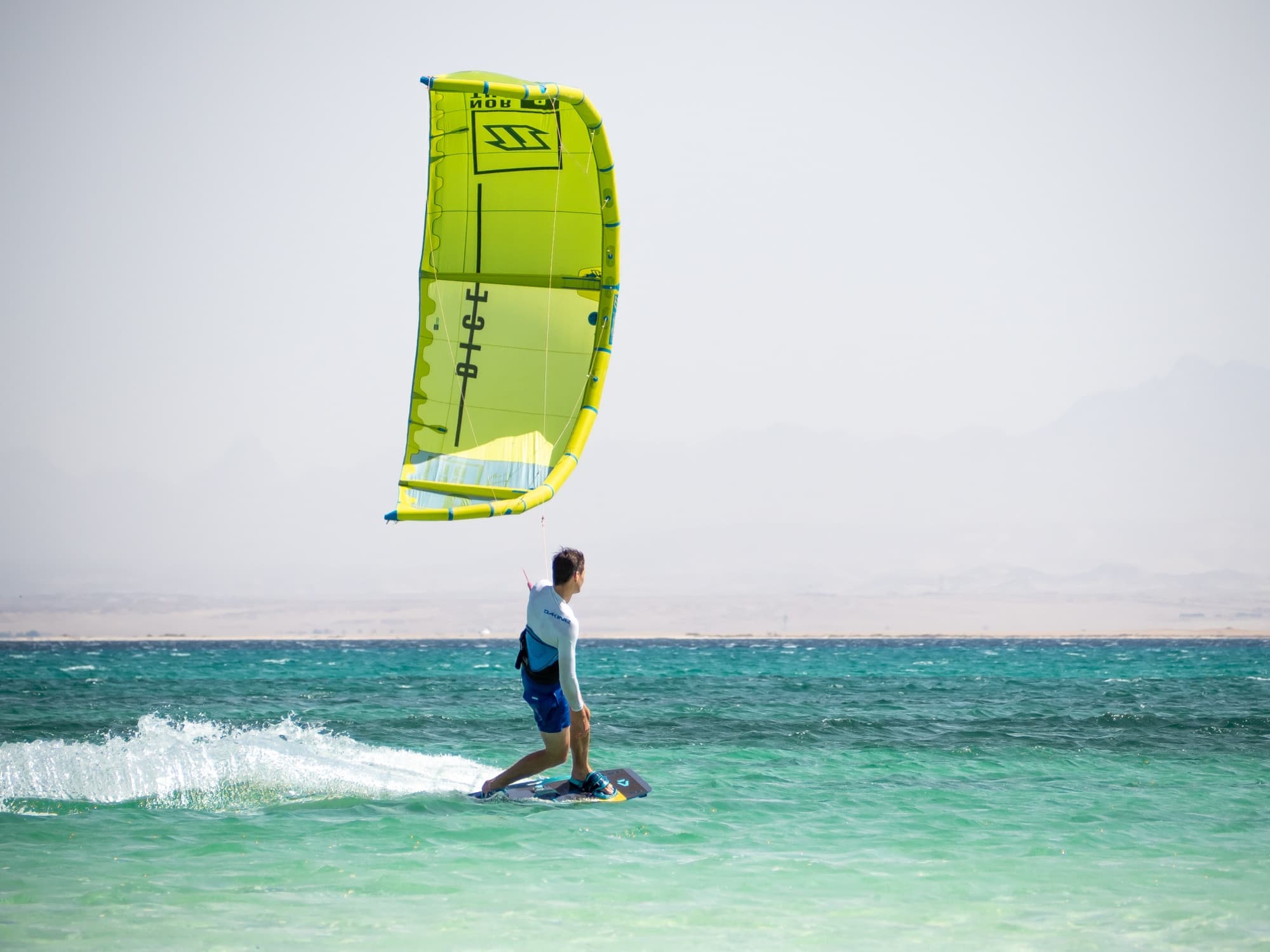
Даунлуп для разворота: смена направления петлёй кайтаThe down-loop transition: changing direction with a kite loop
Обычный разворот на кайте идёт вхолостую: вы доезжаете до края, ставите кайт повыше, перекантовываетесь с пятки на носок и едете обратно. Работает, но в момент смены галса тяга проседает — вас подтормаживает и сносит вниз по ветру. Даунлуп решает именно эту проблему. Он не только красивый, но и на удивление *прикладной* приём.An ordinary kite transition is a "dead" turn: you ride out to the edge, park the kite a bit higher, switch your edge from heel to toe, and ride back. It works, but the moment you change tack the pull sags, and you often get slightly stalled or pushed downwind. The down-loop solves exactly that problem — it's not just stylish, it's a surprisingly *practical* move.
9 июля 20269 July 2026 · JollyKite
Что нужно уметь до даунлупаWhat you need before the down-loop
Даунлуп — не первый трюк и не отдельный навык с нуля. Это надстройка над двумя уже освоенными вещами, и без них пробовать петлю не стоит:The down-loop isn't a first trick or a skill from scratch. It's an add-on to two things you should already own, and without them you shouldn't try the loop:
- Чистые развороты (transition). Вы уверенно меняете галс обычным разворотом — с пятки на носок и обратно (джайб), не теряя равновесия и не садясь в воду. Если перекантовка даётся через раз, сначала добейте её: даунлуп добавляется *к* развороту, а не заменяет его.Clean transitions. You confidently change tack with an ordinary transition — heel to toe and back (jibe) — without losing balance or "sitting down" into the water. If the switch is still hit-or-miss, fix it first: the down-loop is added *to* the transition, it doesn't replace it.
- Базовые даунлупы и лупы в бодидраге. Прежде чем крутить петлю на доске, прокрутите её без доски — в бодидраге, на воде, держась за планку. Цель — привыкнуть к рывку: когда кайт проходит силовую зону, вас ощутимо дёргает. Тело должно знать это ощущение заранее, а не знакомиться с ним на скорости.Basic down-loops and loops in body drag. Before you spin the loop on the board, spin it without the board — in body drag, on the water, holding the bar. The goal is to get used to the yank: when the kite passes the power zone, it pulls you noticeably, and your body should know that feeling in advance, not meet it at speed.
- Спокойный контроль кайта в верхней части окна. Вы умеете ставить кайт высоко (около 45° и выше) и удерживать его там, не подруливая рефлекторно. Высокий кайт — главная страховка даунлупа: чем выше он стоит перед петлёй, тем больше у него запаса высоты, чтобы пройти луп и снова уйти вверх, а не врезаться в воду.Calm kite control in the upper window. You can park the kite high (around 45° and above) and hold it there without reflexively steering. A high kite is the down-loop's main safety net: the higher it sits before the loop, the more height it has to spare to complete the loop and climb back up, rather than crashing into the water.
Все три пункта про вас — переходите к технике. Что-то проседает — сначала закройте пробел: на даунлупе слабые места вылезают сразу и неприятно.If all three describe you, move on to the technique. If something is weak, close that gap first: the down-loop exposes weak spots immediately and unpleasantly.
Даунлуп-разворот по шагамThe down-loop transition step by step
Главная идея: петля делается на ходу, в момент разворота, и кайт через неё ведёт вас, а не дёргает в провал. Вся последовательность — четыре шага:The main idea to keep in mind: the loop is done on the move, at the moment of the transition, and the kite leads you through it instead of yanking you into a gap. The full sequence is four steps:
- Поставьте кайт высоко и сбросьте скорость. Перед разворотом выведите кайт повыше — около 45° или чуть выше — и слегка сбросьте скорость хода. Высокий кайт даёт запас высоты на петлю, а меньшая скорость делает рывок мягче и предсказуемее. Не входите в даунлуп на полном ходу с низким кайтом: это ровно тот сценарий, где петля уходит в воду.Park the kite high and shed speed. Before the transition, bring the kite up high — around 45° or a touch higher — and ease off your speed a little. A high kite gives height to spare for the loop, and shedding speed makes the yank softer and more predictable. Don't enter the down-loop at full speed with a low kite — that's exactly the scenario where the loop goes into the water.
- Заходите в разворот и поезжайте по ветру. Начните обычный разворот и сначала направьте доску по ветру (downwind). Момент критичный: когда вы уже катитесь по ветру, ваша скорость и скорость кайта согласованы, и петля пройдёт мягко. Крутить луп *до* того, как поехали по ветру, — значит получить резкий поперечный рывок.Begin the transition and ride downwind. Initiate a normal transition and first point the board downwind. This moment is critical: once you're rolling downwind, your speed and the kite's speed are matched, and the loop ahead will pass smoothly. If you spin the loop *before* you've gone downwind, the yank comes out sharp and sideways.
- Резко потяните переднюю руку и задайте даунлуп. Уже двигаясь по ветру, резко потяните переднюю руку (front hand) — ту, что впереди по ходу движения. Кайт уйдёт в быструю петлю вниз. Держите тягу за переднюю руку, пока кайт не завершит петлю и не пойдёт вверх — не отпускайте на середине. Петля должна быть именно *быстрой*: вялый, медленный луп — главная причина того, что кайт садится в силовую зону и валит вас.Pull the front hand sharply and initiate the down-loop. Already moving downwind, sharply pull your front hand — the one leading in the direction of travel. This sends the kite into a fast downward loop. Keep the pull on the front hand until the kite completes the loop and starts climbing — don't let go halfway. The loop must be *fast*: a lazy, slow loop is the main reason the kite "sits down" in the power zone and knocks you over.
- Ведите за кайтом и выходите на новый галс. Пока кайт крутит петлю, ведите за ним: доска носом по ветру, корпус следует за тягой. Кайт завершил луп, ушёл вверх, тяга ослабевает — отпустите планку от себя, дайте кайту раскрутиться обратно, перекантуйтесь и закантуйтесь уже на новом галсе. Вы поехали в обратную сторону, ни разу не потеряв тягу.Follow the kite and exit onto the new tack. While the kite spins the loop, follow it — board pointing downwind, body following the pull. When the kite finishes the loop, climbs back up, and the pull starts to ease — let the bar out away from you, let the kite unwind, switch your edge, and edge onto the new tack. You've gone the other way without ever losing pull.
Поначалу петля кажется быстрой и рывковой — это нормально, кайт действительно проходит силовую зону. С каждой попыткой движение становится плавнее (особенно если рывок вы уже чувствовали в бодидраге), а тайминг «потянул — провёл — отпустил» складывается сам.At first the loop feels fast and "yanky" — that's normal, since the kite really does pass through the power zone. With each attempt (especially if you've already felt that yank in body drag) the movement gets smoother, and the timing of "pull — carry through — release" starts to come together on its own.
Частые ошибкиCommon mistakes
Почти все проблемы с даунлуп-разворотом сводятся к нескольким типичным ошибкам. Зная их заранее, вы пройдёте трюк быстрее и безопаснее:Almost all down-loop transition problems come down to a few typical mistakes. Knowing them in advance, you'll get through the move noticeably faster and more safely:
- Крутят петлю слишком медленно или слабо. Самая частая и самая неприятная ошибка. Потянули переднюю руку вяло — кайт прокрутит луп медленно и сядет в силовую зону внизу окна. Оттуда он рванёт вас горизонтально или потащит вниз по ветру. Петля должна быть быстрой и решительной: потянули — и держим, пока кайт не пойдёт вверх.Spinning the loop too slowly or too weakly. The most common and most unpleasant mistake. If you pull the front hand lazily, the kite spins the loop slowly and "sits down" in the power zone low in the window — from there it yanks you sideways or drags you downwind. The loop must be fast and decisive: pull, and hold until the kite climbs.
- Не едут по ветру перед петлёй. Луп задан раньше, чем доска пошла по ветру: скорости хода и кайта не согласованы, рывок выходит резким и поперечным. Сначала по ветру, потом петля. Это не опция, это часть техники.Not riding downwind before the loop. If you initiate the loop before the board has gone downwind, your speed and the kite's speed aren't matched — the yank comes out sharp and sideways instead of smooth. Downwind first, then the loop. It's not optional, it's part of the technique.
- Отпускают планку слишком рано. Бросили переднюю руку на середине петли — кайт не докрутит луп, застопорится и может упасть. Держите тягу до конца петли: отпускаете только тогда, когда кайт уже пошёл вверх, а тяга ослабла.Releasing the bar too early. If you drop the front hand mid-loop, the kite doesn't finish the loop, stalls, and may fall. Hold the pull through the end of the loop — you only let go once the kite has already climbed and the pull has eased.
- Заходят на большом кайте и в сильный ветер. Даунлуп — горизонтальный рывок, и его масштаб напрямую зависит от размера кайта и силы ветра. Большой кайт в сильный ветер превращает мягкий приём в жёсткий выброс. Учите даунлуп на адекватном кайте в слабый или умеренный ветер.Going out on a big kite in strong wind. The down-loop is a horizontal yank, and its scale is directly tied to kite size and wind strength. A big kite in strong wind turns a soft move into a hard launch. Learn the down-loop on a sensible kite in light or moderate wind.
БезопасностьSafety
Даунлуп мягче и прикладнее полноценного кайтлупа, но это всё равно петля кайта, а значит, всё равно горизонтальный рывок. Относитесь к нему с уважением.The down-loop is a more "practical" and softer move than a full kiteloop, but it's still a kite loop, which means it's still a horizontal yank. Treat it with respect.
Главные опасности даунлупа — резкий горизонтальный рывок (кайт через силовую зону тащит вас в сторону или вниз по ветру) и петля, ушедшая в воду (если высоты не хватило или луп пошёл слишком низко). Оба сценария почти всегда упираются в три вещи: слишком большой кайт, слишком сильный ветер или слишком низкий старт петли.The main dangers of the down-loop are a sharp horizontal yank (the kite drags you sideways or downwind through the power zone) and a kite loop that goes into the water (if there wasn't enough height or the loop went too low). Both scenarios are almost always the result of three things: too big a kite, too strong a wind, or too low a start for the loop.
Отсюда простые и нерушимые правила:So the rules are simple and non-negotiable:
- Слабый или умеренный ветер. Не учите даунлуп в усиление и порывы — рывок становится непредсказуемым.Light or moderate wind. Don't learn the down-loop in building, gusty wind — the yank becomes unpredictable.
- Кайт держать высоко. Высокий старт петли (около 45° и выше) даёт кайту запас высоты, чтобы пройти луп и снова уйти вверх, а не в воду.Keep the kite high. A high start to the loop (around 45° and above) gives the kite height to spare to complete the loop and climb back up rather than going into the water.
- Адекватный кайт. Никаких больших кайтов на грани: чем больше кайт, тем сильнее рывок в петле.A sensible kite. No "big" kites at the edge — the bigger the kite, the stronger the yank in the loop.
- Открытое пространство и инструктор. Учитесь там, где вокруг есть место, и под контролем инструктора с радиосвязью на воде: он подскажет тайминг и остановит вас до того, как ошибка станет жёсткой.Open space and an instructor. Learn where there's room around you, and under an instructor's supervision with radio comms on the water — they'll cue the timing and stop you before a mistake turns hard.
В Пак Нам Пране для этого почти идеальные условия: плоская мелкая вода, стабильный ветер сезона и пространство, чтобы спокойно ошибаться. Это резко снижает риски при разучивании петель.Pak Nam Pran offers nearly ideal conditions for this: flat shallow water, stable seasonal wind, and space to make mistakes calmly. That sharply lowers the risks while learning loops.
Что дальшеWhat's next
Стабильный даунлуп-разворот — вы крутите его в обе стороны, держите тягу через всю петлю и выходите на новый галс без провала — это уже половина механики настоящего кайтлупа. Логичный прогресс выглядит так:Once the down-loop transition is solid — you spin it both ways, hold the pull through the whole loop, and exit onto the new tack without a gap — you already hold half the mechanics of a real kiteloop. The logical progression looks like this:
чистые развороты → даунлуп для разворота → первый кайтлуп.clean transitions → the down-loop transition → your first kiteloop.
Даунлуп учит главному: не бояться рывка, держать тягу через петлю и доверять кайту провести вас через силовую зону. Ровно эти навыки нужны для первого кайтлупа — более мощного и эффектного старшего брата, который крутится уже на прыжке. После уверенного даунлупа кайтлуп перестаёт пугать и становится следующим логичным шагом.The down-loop teaches you the key thing: not to fear the yank, to hold the pull through the loop, and to trust the kite to carry you through the power zone. Those are exactly the skills you need for your first kiteloop — the more powerful, more spectacular big brother that loops on the jump. After a confident down-loop, the kiteloop stops feeling scary and becomes the next logical step.
Если вы ещё дорабатываете сам разворот, начните с базы — переход (поворот) на кайте. А какие трюки и в каком порядке осваивать дальше, разложено в Школе трюков JollyKite.If you're still refining the transition itself, start with the basics — the transition (turn) on a kite. And to figure out which tricks to learn next and in what order, look into the JollyKite Trick School.
Приёмы с петлёй кайта мы ставим под контролем инструктора, с радиосвязью на воде и в плоской мелкой воде Пак Нам Прана — это резко снижает риски при разучивании даунлупов и лупов. Подробнее о форматах и записи — на странице /obuchenie.We teach all kite-loop moves under an instructor's supervision, with radio comms on the water and in the safe, flat, shallow water of Pak Nam Pran — which sharply lowers the risks while learning down-loops and loops. More on formats and booking is on the /obuchenie page.
Поедем кататься?Let's go riding?
Напишите нам даты и уровень — подскажем формат, подберём сезон под ваш ритм и посчитаем поездку под ключ. WhatsApp +66 98 367 9769, Telegram-бот @JollyKite_kite_bot.Send us your dates and level — we'll suggest a format, match the season to your rhythm and plan your trip end to end. WhatsApp +66 98 367 9769, Telegram bot @JollyKite_kite_bot.
Частые вопросыFAQ
Что такое даунлуп на кайте?What is a down-loop on a kite?+
Даунлуп (down-loop) — это петля кайта вниз, которую делают прямо в момент разворота, чтобы плавно сменить направление и сохранить тягу. Кайт прокручивает небольшую петлю под собой, проходит через силовую зону и сам выводит вас на новый галс, не отпуская в провал. Это более «прикладной» и мягкий родственник кайтлупа.A down-loop is a downward loop of the kite, performed right at the moment of the transition, to change direction smoothly while keeping the pull. The kite spins a small loop beneath itself, passes through the power zone, and carries you onto the new tack without dropping you into a gap. It's the more "practical" and softer relative of the kiteloop.
Чем даунлуп отличается от кайтлупа?How is a down-loop different from a kiteloop?+
Масштабом и назначением. Даунлуп — это небольшая петля вниз на ходу, в момент разворота: рывок мягче, риск ниже, задача — плавно сменить галс с сохранением тяги. Кайтлуп — полноценная мощная петля кайта, которую обычно крутят на прыжке: рывок сильнее и эффектнее. Даунлуп — логичная подготовка к кайтлупу.Scale and purpose. A down-loop is a small downward loop on the move, at the moment of the transition: the yank is softer, the risk lower, and the goal is to change tack smoothly with the pull intact. A kiteloop is a full, powerful kite loop usually spun on a jump: the yank is stronger and more spectacular. The down-loop is the logical preparation for the kiteloop.
Почему перед петлёй важно поехать по ветру?Why does it matter to ride downwind before the loop?+
Чтобы рывок был плавным. Когда доска уже катится по ветру, ваша скорость хода и скорость кайта согласованы, и петля проходит мягко. Если задать луп до того, как поехали по ветру, рывок получается резким и поперечным — кайт дёргает вас в сторону, а не ведёт через поворот. Сначала по ветру, потом петля.So the yank is smooth. When the board is already rolling downwind, your speed and the kite's speed are matched, and the loop passes softly. If you initiate the loop before going downwind, the yank comes out sharp and sideways — the kite jerks you to the side instead of leading you through the turn. Downwind first, then the loop.
Какой рукой тянуть для даунлупа?Which hand do you pull for the down-loop?+
Передней — той, что впереди по ходу движения. Резкий потяг за переднюю руку отправляет кайт в быструю петлю вниз. Тягу нужно держать, пока кайт не завершит петлю и не пойдёт вверх; отпускать на середине нельзя — иначе кайт не докрутит луп и может упасть.The front hand — the one leading in the direction of travel. A sharp pull of the front hand sends the kite into a fast downward loop. You hold the pull on that hand until the kite completes the loop and starts climbing; you must not release halfway — otherwise the kite won't finish the loop and may fall.
Опасен ли даунлуп?Is the down-loop dangerous?+
Это петля кайта, поэтому относиться к нему нужно с уважением: главные риски — резкий горизонтальный рывок и петля, ушедшая в воду. Оба обычно случаются из-за слишком большого кайта, сильного ветра или слишком низкого старта петли. Поэтому даунлуп учат в слабый/умеренный ветер, с высоко поднятым кайтом и под контролем инструктора.It's a kite loop, so treat it with respect: the main risks are a sharp horizontal yank and a loop that goes into the water. Both usually happen because of too big a kite, too strong a wind, or too low a start for the loop. That's why the down-loop is learned in light/moderate wind, with the kite parked high, and under an instructor's supervision.
Поедем кататься?Shall we go riding?
Напишите даты и уровень — посчитаем поездку под ключ и подберём формат.Tell us your dates and level — we’ll plan the whole trip.