
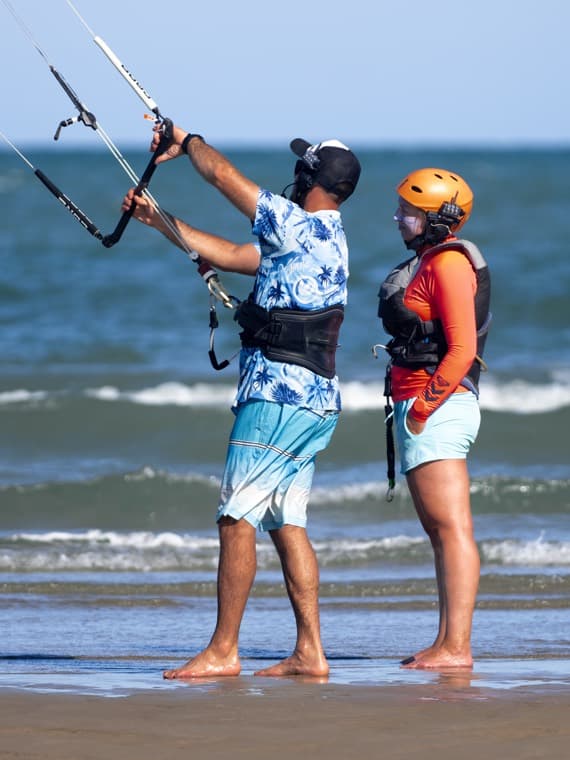
Управление кайтом на земле: первый навык новичкаControlling the kite on land: a beginner's first skill
Почти каждый, кто приходит учиться кайтсёрфингу, хочет одного: поскорее встать на доску. Но спросите любого инструктора, с чего этот спорт начинается на самом деле, и ответ будет один — с управления кайтом. Сначала кайт должен идеально слушаться ваших рук — и только потом доска, вода и прыжки. Это первый навык, и пока он не отработан, дальше идти просто нельзя.Almost everyone who comes to learn kitesurfing wants one thing: to get on the board as fast as possible. But ask any instructor where this sport really begins and the answer is always the same — with kite control. Not the board, not the water, not jumps: first the kite has to obey your hands perfectly. This is the first skill, and until it's dialled in, you simply can't move on.
27 июня 202627 June 2026 · JollyKite
Почему контроль кайта — это фундаментWhy kite control is the foundation
Кайт — это двигатель, а вы — водитель. Пока вы не научились плавно газовать, тормозить и держать руль, выезжать на трассу рано. В кайтсёрфинге ровно так же. Кайт создаёт тягу, и эта тяга должна быть полностью предсказуемой: вы понимаете, где кайт даст много силы, где мало и как в любой момент эту силу убрать.The kite is the engine and you're the driver. Until you can throttle smoothly, brake and hold the wheel, it's too early to take it onto the road. Kitesurfing works exactly the same way. The kite creates pull, and that pull has to be completely predictable: you know where the kite gives a lot of power, where it gives little, and how to remove that power at any moment.
Поэтому первый этап — управление кайтом на земле или на мелкой воде, где вы стоите ногами. Никакой доски, никакой скорости: только вы, планка и кайт в небе. Задача звучит просто, но стоит дорого — добиться, чтобы кайт ходил туда, куда вы хотите, плавно и без сюрпризов. Когда контроль становится уверенным, уходит и большая часть страха: вы управляете кайтом, а не он вами.That's why the first stage is controlling the kite on land — or in shallow water where you can stand. No board, no speed: just you, the bar and the kite in the sky. The task sounds simple but it's worth a great deal — get the kite to go exactly where you want, smoothly and without surprises. Once your control is confident, most of the fear goes with it: you control the kite, not the other way round.
Окно ветра простыми словамиThe wind window in plain words
Главное понятие для новичка — окно ветра (wind window). Звучит сложно, а на деле всё наглядно.The key concept for a beginner is the wind window. It sounds complex; in practice it's very visual.
Встаньте спиной к ветру. Перед вами, по бокам и над головой — воображаемая зона в форме четверти сферы. Это и есть окно ветра: пространство, в котором ваш кайт может летать. За его пределы кайт не выйдет — там он просто потеряет ветер и упадёт.Stand with your back to the wind. In front of you, to the sides and overhead is an imaginary zone shaped like a quarter of a sphere. That's the wind window: the space in which your kite can fly. Beyond it the kite won't go — there it simply loses the wind and falls.
Внутри окна тяга распределяется неравномерно, и это самое важное:Inside the window, the pull is uneven, and this is the most important part:
- Зенит (12 часов) — кайт прямо над головой. Тяга минимальна: кайт почти не тянет, он просто висит. Спокойное, безопасное положение.The zenith (12 o'clock) — the kite directly overhead. Pull is minimal: the kite barely tugs, it just hovers. The calm, safe position.
- Края окна (примерно 9 и 3 часа) — кайт сбоку, у самой границы зоны. Тяги тоже мало.The edges of the window (roughly 9 and 3 o'clock) — the kite to the side, near the boundary of the zone. Pull is low here too.
- Силовая зона (низ окна, перед вами) — кайт внизу, в центре. Здесь тяга максимальна: тянет сильнее всего. Для новичка это зона повышенного внимания.The power zone (the bottom of the window, in front of you) — the kite low and central. Here the pull is maximal: this is where it pulls hardest. For a beginner, a high-attention area.
Главное правило: тяга максимальна в нижней-центральной части окна и минимальна в зените и у краёв. Поэтому, пока вы учитесь, кайт держат ближе к краю окна и к зениту — там он спокойный и предсказуемый. В силовую зону на земле кайт без необходимости не заводят: оттуда он может резко дёрнуть.The main rule: the pull is maximal in the lower-central part of the window and minimal at the zenith and the edges. So while you're learning, you keep the kite closer to the edge of the window and the zenith — where it's calm and predictable. On land, you don't send the kite into the power zone without reason: from there it can jerk you sharply.
Зенит и нейтральZenith and neutral
Самое полезное положение для новичка — зенит, точка «12 часов» прямо над головой. Кайт в зените почти не тянет, и у вас есть время подумать, отдышаться, поправить трапецию. Это парковка: безопасная нейтраль, в которую вы возвращаете кайт всякий раз, когда нужна пауза.The most useful position for a beginner is the zenith, the "12 o'clock" point directly overhead. At the zenith the kite barely pulls, and you have time to think, catch your breath, adjust your harness. This is parking the kite: a safe neutral you return to whenever you need a pause.
Первое, чему учат на занятии, — уверенно держать кайт в зените и спокойно возвращать его туда из любого положения. Звучит просто, но именно стабильный зенит даёт ощущение контроля. Кайт «гуляет» и сваливается то влево, то вправо — значит, движения планкой пока слишком резкие. С этого и начинают работу.The first thing you're taught in a lesson is to hold the kite confidently at the zenith and calmly bring it back there from any position. It sounds simple, but a stable zenith is exactly what gives the feeling of control. If the kite wanders and falls off to the left or right, your bar movements are still too sharp — and that's the first thing to work on.
Как управлять планкойHow to steer with the bar
Управление устроено интуитивно. Планка — это руль:Steering is intuitive. The bar is your steering wheel:
- Тянете за левый край планки — кайт идёт влево.Pull the left side of the bar — the kite goes left.
- Тянете за правый край — кайт идёт вправо.Pull the right side — the kite goes right.
- Планка ровная — кайт стоит на месте (в зените просто висит).Bar level — the kite stays put (at the zenith it simply hovers).
Элементарно — и так оно и есть. Вся сложность в дозировке. Главный принцип новичка — маленькие плавные движения. Кайт реагирует на любое смещение планки: чем резче тянете, тем резче и быстрее он идёт. Поэтому работают понемногу: чуть потянули — кайт пошёл — вернули планку ровно — кайт остановился.Elementary, and it really is. The only difficulty is the dosing. The beginner's main principle is small, smooth movements. The kite reacts to any shift of the bar: the sharper you pull, the sharper and faster it goes. So you work in small amounts: pull a little — the kite moves — level the bar — the kite stops.
Две вещи, которые повторяет каждый инструктор:Two things every instructor repeats:
- Не дёргать. Резкое движение отправляет кайт через всё окно и может завести его в силовую зону.Don't jerk. A sharp movement sends the kite across the whole window and can drive it into the power zone.
- Смотреть на кайт, а не на планку. Руки сами найдут планку, а глаза следят за кайтом — только так вы видите, что он делает, и успеваете реагировать.Watch the kite, not the bar. Your hands will find the bar on their own; your eyes follow the kite — only then do you see what it's doing and react in time.
Махи кайтом (sine)Sine strokes
Когда базовый контроль освоен, появляется следующий приём — «махи», синусоидальные движения (sine strokes). Это плавные восьмёрки или мягкие синусы, которые кайт описывает в нижней части окна.Once basic control is mastered, the next technique appears — sine strokes: smooth figure-eights or gentle sine shapes the kite traces in the lower part of the window.
Зачем они? Чтобы создать тягу. Кайт, висящий в зените, не тянет, а для движения в воде тяга нужна. «Махами» вы гоните кайт через рабочую зону и получаете силу, не оставляя его надолго в самой мощной точке. Это управляемый способ добыть тягу: достаточно, чтобы вас потянуло вперёд, но без рывка.What are they for? To create pull. A kite hovering at the zenith doesn't pull, and to move in the water you need pull. With sine strokes you drive the kite through the working zone and get power, without leaving it in the most powerful point for long. It's a controlled way to get pull: enough to tug you forward, but without a jolt.
Навык понадобится дальше — на бодидраге (движении в воде без доски) и особенно на водном старте, где именно «мах» кайтом даёт импульс, чтобы встать на доску. Поэтому правильные плавные «махи» начинают ставить ещё на земле, до воды.You'll need this skill later — for body dragging (moving in the water without a board) and especially for the water start, where it's exactly the kite stroke that gives the impulse to get up on the board. That's why correct, smooth sine strokes start being taught on land, before the water.
Системы безопасности — сразуSafety systems — straight away
Пожалуй, самый важный раздел. Управлению кайтом всегда учат в паре с системами безопасности, и осваивают их одновременно — ещё до выхода на воду.Perhaps the most important section. Kite control is always taught together with the safety systems, and they're learned at the same time — before you ever go on the water.
На современном кайте есть две ступени сброса тяги:A modern kite has two stages of dumping the power:
- Отпустить планку. Отпускаете планку (она остаётся на лише) — кайт «флагуется»: теряет большую часть тяги и перестаёт тянуть. Это первая и самая частая реакция: тяга стала слишком большой — руки отпустили планку.Release the bar. Let go of the bar (it stays on the leash) and the kite flags out: it loses most of its power and stops pulling. This is the first and most common reaction: the pull gets too strong, your hands let go of the bar.
- Квик-релиз (быстрый сброс). Красная скоба на трапеции. Дёрнули — кайт полностью отсоединяется от вас, остаётся только на страховочном лише и почти не тянет. Аварийный сброс на случай, когда ситуация вышла из-под контроля.The quick release. The red handle on your harness. Pull it and the kite fully detaches from you — it stays only on the safety leash and barely pulls. The emergency release for when a situation has got out of control.
На первом занятии эти движения отрабатывают до автоматизма: где находится квик-релиз, как найти его не глядя, как отпустить планку. Цель — чтобы в нужный момент рука сделала это сама, без раздумий. Отработанная безопасность снимает большую часть страха перед водой.In the first lesson these movements are drilled to automatic: where the quick release is, how to find it without looking, how to release the bar. The goal is that when the moment comes, your hand does it on its own, without thinking. Rehearsed safety removes most of the fear of the water.
Частые ошибки новичкаCommon beginner mistakes
Почти все новички ошибаются одинаково. Знать эти ошибки заранее — значит пройти этап быстрее:Almost all beginners make the same mistakes. Knowing them in advance means getting through this stage faster:
- Резкие движения планкой. Самая частая. Кайт реагирует мгновенно, и рывок отправляет его через всё окно. Лекарство — сознательно замедлить руки.Sharp bar movements. The most common one. The kite reacts instantly, and a jerk sends it across the whole window. The cure is to consciously slow your hands down.
- Смотреть на планку, а не на кайт. Смотрите вниз — теряете кайт из виду и перестаёте понимать, что он делает. Глаза на кайте.Watching the bar, not the kite. Look down and you lose sight of the kite and stop understanding what it's doing. Eyes on the kite.
- Заводить кайт в силовую зону. Случайно опустили кайт в нижнюю-центральную часть окна — получили резкую тягу. Пока контроль не уверенный, держите кайт у края и в зените.Sending the kite into the power zone. Drop the kite into the lower-central part of the window and you get a sharp pull. Until your control is confident, keep the kite at the edge and the zenith.
- Паника и зажатые руки. Когда страшно, человек инстинктивно сжимает планку и тянет её на себя — а это только усиливает реакцию кайта. Правильный рефлекс обратный: расслабить руки и отпустить планку, чтобы убрать тягу.Panic and tense arms. When scared, people instinctively grip the bar and pull it towards themselves — which only intensifies the kite's reaction. The right reflex is the opposite: relax your arms and release the bar to remove the pull.
Все эти ошибки нормальны, через них проходят все. С инструктором рядом они безопасны и быстро уходят.All these mistakes are normal — everyone goes through them. With an instructor beside you, they're safe and they pass quickly.
Что дальшеWhat comes next
Вы уверенно держите кайт в зените, плавно водите его по краям окна, делаете контролируемые «махи», а системы безопасности срабатывают на автомате — фундамент заложен. Контроль кайта стал привычкой, а не борьбой.You hold the kite confidently at the zenith, guide it smoothly along the edges of the window, make controlled sine strokes, and the safety systems fire on autopilot — the foundation is laid. Kite control has become a habit, not a struggle.
Следующий шаг — бодидраг: движение в воде на тяге кайта, ещё без доски. Там вы впервые почувствуете кайт «в работе» и научитесь возвращаться к доске против ветра. Подробно — в статье «Бодидраг в кайтсёрфинге». Глубже про лиш и системы безопасности — в материале «Лиш и безопасность кайта».The next step is body dragging: moving through the water on the kite's pull, still without a board. There you'll feel the kite at work for the first time and learn to return to the board upwind. More on this in Body dragging in kitesurfing. For a deeper look at the leash and safety systems, see Leash and kite safety.
Хотите пройти этот первый этап правильно, с инструктором и на безопасном споте? Как устроено обучение в JollyKite — на странице /obuchenie.Want to get this first stage right, with an instructor and on a safe spot? How training works at JollyKite is on the /obuchenie page.
Поедем кататься?Let's go riding?
Напишите нам даты и уровень — подскажем формат, подберём сезон под ваш ритм и посчитаем поездку под ключ. WhatsApp +66 98 367 9769, Telegram-бот @JollyKite_kite_bot.Send us your dates and level — we'll suggest a format, match the season to your rhythm and plan your trip end to end. WhatsApp +66 98 367 9769, Telegram bot @JollyKite_kite_bot.
Частые вопросыFAQ
Что такое окно ветра в кайтсёрфинге?What is the wind window in kitesurfing?+
Окно ветра — воображаемая зона в форме четверти сферы перед райдером, который стоит спиной к ветру. Внутри неё кайт может летать. В зените (над головой) и у краёв окна тяга минимальна, в нижней-центральной части (силовой зоне) — максимальна. Понимание окна ветра — основа управления кайтом.The wind window is an imaginary zone shaped like a quarter of a sphere in front of a rider standing with their back to the wind. The kite can fly within it. At the zenith (overhead) and at the edges of the window the pull is minimal; in the lower-central part (the power zone) it's maximal. Understanding the wind window is the basis of kite control.
Где у кайта максимальная тяга?Where does the kite have maximum pull?+
В нижней-центральной части окна ветра — в силовой зоне, когда кайт внизу прямо перед вами. Минимальна тяга в зените (кайт над головой) и у краёв окна. Поэтому новичок держит кайт ближе к зениту и краям, а в силовую зону на земле без необходимости его не заводит.In the lower-central part of the wind window — the power zone, when the kite is low and directly in front of you. It's minimal at the zenith (kite overhead) and at the edges of the window. That's why a beginner keeps the kite closer to the zenith and the edges, and doesn't send it into the power zone on land without reason.
С чего начинать учиться кайтсёрфингу?Where should you start learning kitesurfing?+
С управления кайтом на земле или мелкой воде — это самый первый навык. Сначала вы учитесь плавно водить кайт по небу, парковать его в зените и пользоваться системами безопасности, и только потом переходите к бодидрагу, водному старту и катанию. Делать это нужно с инструктором.With controlling the kite on land or in shallow water — this is the very first skill. First you learn to guide the kite smoothly across the sky, park it at the zenith and use the safety systems, and only then move on to body dragging, the water start and riding. This should be done with an instructor.
Опасно ли управлять кайтом на земле?Is it dangerous to control the kite on land?+
Кайт создаёт реальную тягу, поэтому неконтролируемый кайт опасен. Но с инструктором, на безопасном споте и с отработанными системами сброса тяги управление кайтом на земле безопасно. Именно поэтому первый навык всегда осваивают под присмотром, а не самостоятельно по видео или статье.The kite creates real pull, so an uncontrolled kite is dangerous. But with an instructor, on a safe spot and with rehearsed power-release systems, controlling the kite on land is safe. That's exactly why the first skill is always learned under supervision, not on your own from a video or an article.
Сколько нужно учиться, чтобы уверенно управлять кайтом?How long does it take to control the kite confidently?+
Базовый контроль кайта обычно осваивают за первые одно-два занятия по 2 часа. Точное время зависит от вашего темпа, координации и стабильности ветра. Цель здесь — добиться, чтобы кайт слушался уверенно и без сюрпризов, прежде чем выходить на воду. Гнаться за минимумом занятий смысла нет.Basic kite control is usually mastered within the first one or two lessons of 2 hours. The exact time depends on your pace, coordination and how stable the wind is. The goal isn't to hit a minimum but to make the kite obey confidently and without surprises before you go on the water.
Поедем кататься?Shall we go riding?
Напишите даты и уровень — посчитаем поездку под ключ и подберём формат.Tell us your dates and level — we’ll plan the whole trip.