
Kite competitions and events in Hua Hin and Thailand: what happens and when
Kite life on the Gulf of Thailand coast doesn’t stop at rentals and schools. In season there are regular competitions, jams and festivals — from friendly amateur starts to spectacular big-air sessions where riders launch dozens of metres into the sky. Let’s break down the formats you’ll find, when the event season kicks in, where to catch announcements, and how to take part even if you’re not a pro yet.
22 July 2026 · JollyKite
One thing up front: specific dates and event names change from year to year. Some are held regularly, others come and go, some depend on wind and sponsors. So below is about the types of events and the seasonality — for exact announcements, always check closer to the time. We’ll say where at the end.
The formats you’ll find
Kite events aren’t only strict championships. There are many formats, and almost every one has room for a spectator and an amateur.
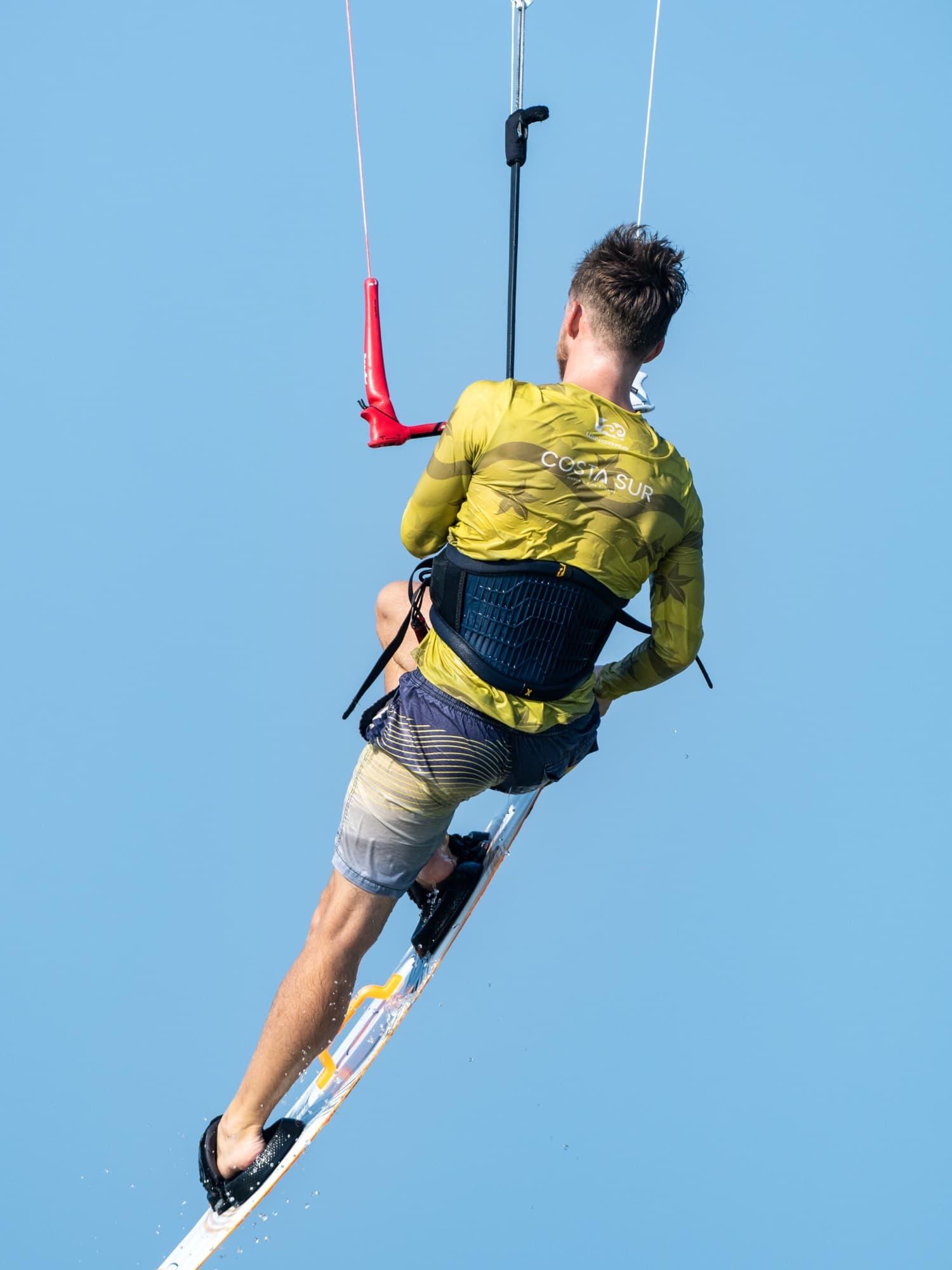
- Big-air jams. The most spectacular. Riders compete on the height and power of their jumps, often landing tricks mid-air. The “jam” format is usually looser than a classic championship: riders go in turns and judges score the best attempts.
- Freestyle. Here technique rules: trick combos, rotations, unhooked moves, clean execution. Freestyle needs flat water and steady wind, so these starts favour lagoons and sheltered bays.
- Wave and strapless. Riding the wave on a directional board, often without straps. The Gulf’s swell is more modest than the ocean’s, but wave sessions and mini-starts happen too, especially when a good swell rolls in.
- Amateur starts and in-house heats. The most accessible. Schools and kite communities run friendly contests for their own: triangle races, longest-jump challenges, relays. Levels range from confident beginner to advanced.
- Festivals and community events. Not only sport. A kite festival also means music, beach barbecues, markets, brand test-rides of new gear, evening parties. Here the vibe matters more than results.
When the event season runs
The event calendar follows the wind. On our coast the kite season runs roughly mid-November to late April — and most competitions, jams and festivals fall in these months. The logic is simple: steady wind means something to hold starts on and a reason for riders to fly in from around the world.
The peak is mid-winter, when the wind is at its steadiest and the coast is busiest. In the off-season and rainy months there’s almost nothing: the wind isn’t right and there are fewer travellers. So if you want to catch a competition or festival — plan your trip for the winter window.
Where to find announcements
There’s no single official calendar for everything, so you gather announcements from several channels:
- Social media of local schools and rentals — they often organise or first repost starts and jams.
- Kite communities and rider chats for Hua Hin and Pranburi — events surface there earliest.
- Gear brand pages — test-rides and demo days are usually announced by them.
- Beach noticeboards and word of mouth — on the spot, news travels fast.
The easiest way is to ask on the ground at a school or with locals: regular riders always know what’s coming up. At JollyKite we keep an ear to the ground too — if you’re coming to us, ask what’s on during your dates.
How an amateur can take part
- Start with an amateur format. In-house school heats and friendly starts are the ideal entry. No harsh qualifying, kind judging, and the real goal is the buzz and the experience, not the podium.
- Sharpen your basics. Even an amateur start needs you to launch confidently, ride both ways, turn, and control the kite in a crowd. If you’re not there yet, that’s a matter of a few lessons.
- Come and watch. Even if you’re not ready to compete — come to an event as a spectator. It’s the best way to understand the formats, get inspired and meet the community.
- Ask at the school. Instructors will tell you which starts suit your level, help you enter and get ready.
The vibe
The main thing to know about kite events in Thailand: they’re friendly. This isn’t a closed world of professionals but a living community that welcomes newcomers. At a big-air jam you’ll be yelling from the stands with everyone when someone flies into the sky. At a festival — grilling barbecue with strangers and testing other people’s kites. At an amateur start — nervous on the line and getting high-fives from rivals after the heat.
Warm water, sandy beaches, sunsets over the gulf and a crowd of people as wind-obsessed as you. That atmosphere is why many come back to the coast year after year.
FAQ
What kite competitions take place in Thailand?+
Many formats: big-air jams on jump height and power, freestyle on technique, wave sessions, school amateur starts and big kite festivals with music and test-rides. Specific names and dates change year to year — follow announcements closer to the season.
When is the kite event season in Hua Hin?+
The event calendar follows the wind: most competitions and festivals fall within the kite season, roughly mid-November to late April. The peak is mid-winter, when the wind is steadiest.
Where do I find festival and start announcements?+
There’s no single calendar. Check the social media of local schools and rentals, kite chats for Hua Hin and Pranburi, and gear brand pages. Easiest of all — ask on the spot, where news travels fast.
Can an amateur enter a kite competition?+
Yes. Start with amateur formats — in-house school heats and friendly starts with kind judging. You need solid basics: launching, riding both ways, controlling the kite in a crowd. Instructors will help you enter and prepare.
Do I need a high level to attend a kite festival?+
No. You can come to a festival simply as a spectator — watch the heats, test gear, meet the community. Many people catch the bug to try a start after exactly that.