
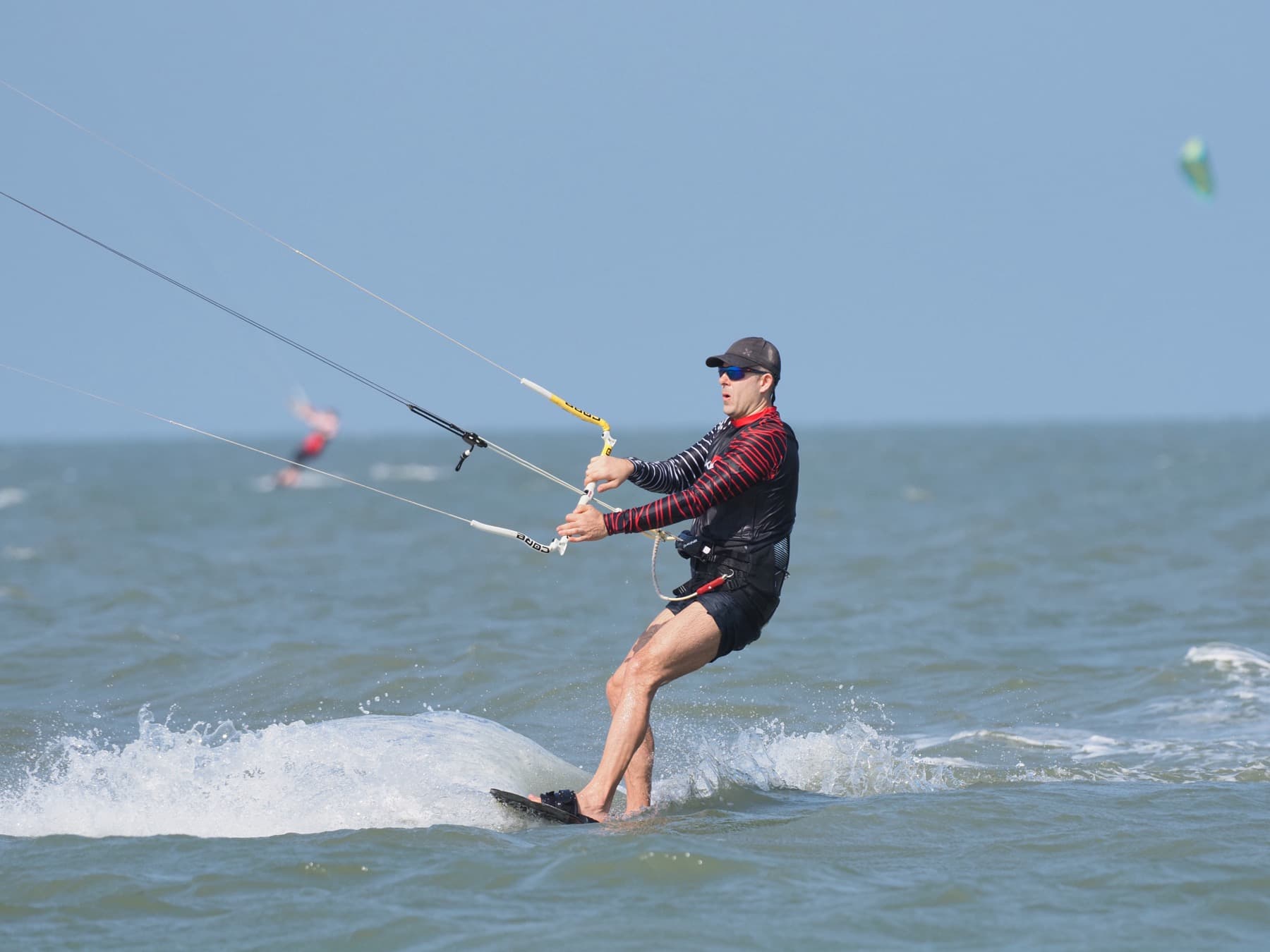
Kitesurfing after 40 and 50: age is no barrier
«I'm over forty, probably too late for me.» «Starting something like this at fifty? That's for the young ones.» We hear these lines almost every season. People come out on the water with us at 40, at 50 and older. And almost all of them say the same thing afterwards: it turned out not to be about age.
27 June 2026 · JollyKite
We've been teaching since 2014 and have put very different people on the board — including those who hadn't done any sport in years. The main question is usually the same: is it too late to start later in life? The answer is no. But there are nuances, and we'll cover them below.
Why age is no barrier: it's a sport of technique, not strength
From the shore, kitesurfing looks athletic and powerful: a person dragged across the water, jumping, yanked by the kite. That image is what breeds the myth about young muscles and an athletic body. In reality it works differently. Kitesurfing is, above all, the skill of steering the kite and managing the pull. The power doesn't go into your arms but through the harness onto your core: you don't hang off the bar, you lean back and spread the load across your whole body and the gear. Your hands only guide the kite gently across the sky.
And the jumps that scare beginners so much are a separate, entirely optional thing. To ride flat water in both directions and enjoy yourself, you don't need to jump at all. Most riders in the world simply cruise — and that's plenty of joy for years.
The strengths of mature students
- Patience. Mature students don't expect miracles on lesson one and calmly work through the basics. And a solid base decides everything in kiting.
- Discipline. An adult listens to the instructor, doesn't rush ahead and does what's asked — in kitesurfing that's directly about safety and the speed of progress.
- Respect for safety. A healthy caution comes with age: fewer silly mistakes, less risk, a smoother path.
- Realistic expectations. Nobody tries to start jumping in two days. That removes frustration and lets you enjoy every step.
Younger students often rush, skip stages and so get bruised and stuck. Mature ones go slower at the start but steadier and without setbacks. Very often they end up reaching stable, confident riding more surely than the ones in a hurry.
What to weigh honestly: fitness, joints, pace
General fitness. No special preparation is needed, but basic stamina and mobility help. Kiting means a couple of hours on the water: wind, water, load on your core and legs. If you're in reasonable shape overall, it'll be comfortable. If you haven't moved much in a while, simply start gently and let your body adapt.
Back, knees, shoulders. These are the areas the sport loads. Weak spots aren't a ban but a reason not to play the hero: don't overload the first days, take breaks, don't chase volume. Plenty of our students with their own knee or back issues ride happily — they just dose the load sensibly.
Warm-up. Later in life you can't skip it: ten minutes to warm up muscles and joints before going on the water noticeably lowers the risk of pulling something. Pace is individual: you may need a few more hours on the water, and that's normal. And listen to your body: tired — rest; something hurts — stop and tell the instructor.
Safety and how we teach
- Flat shallow water. The Pak Nam Pran spot near Hua Hin is shallow water where you stand on the bottom. Falling and making mistakes here isn't scary.
- Safety systems from lesson one. We drill the quick-release (instant power dump) to automatic before you ever go on the water with a board.
- Comfortable wind. We take beginners out in calm, steady wind, not in a stormy chop.
- Gradual progression. We don't push anyone to a stage they aren't ready for.
- Small groups and a personal approach. A calm pace, an instructor right beside you, and we adapt to you.
With chronic conditions or any health doubts, it makes sense to see a doctor beforehand — that's not about scaring you, it's about sensibly preparing for an active holiday.
How much time and what to expect
An honest benchmark: going from complete beginner to confident, independent riding usually takes several windy days on the water. Later in life it may turn out a bit longer — and that's fine. Every body and every pace is individual, and a couple of extra hours on the water says nothing about your talent.
The main thing is to set the right goal. You're not learning for records or to impress anyone. You're learning for the pleasure: to glide calmly across the water, feel the wind, come home with shining eyes. That's achievable at any age if you go at your own pace and don't compare yourself to others. And one more thing: many of those who worried whether it was too late later say the same — I wish I'd started earlier.
FAQ
Is it too late to learn kitesurfing at 40 or 50?+
It isn't. People come out on the water with us at 40, at 50 and older. Kitesurfing is a sport of technique and kite handling, not brute strength, so age in itself is no barrier. What matters more is a calm pace, the right method and a safe place to start.
Do I need to be in good athletic shape?+
No special preparation is needed. Basic stamina and mobility help, but if you haven't done sport in a while, just start gently and let your body adapt. The kite's pull goes through the harness onto your core, not into your arms, so you don't have to hit the gym to begin.
Is it safe to start at this age?+
Yes, with the right training. We teach on flat shallow water where you stand on the bottom, drill the quick-release power dump from lesson one, take you out in comfortable wind and go gradually. With chronic conditions it's worth consulting a doctor beforehand.
How long will learning take later in life?+
Usually several windy days on the water. Later in life you may need a few more hours — that's normal and depends on your pace. The goal isn't a record but steady, enjoyable riding.
Can I learn with back or knee problems?+
Often yes — many of our students with their own knee or back issues ride happily, they just dose the load sensibly: no heroics the first days, a warm-up and breaks. With serious conditions, be sure to consult a doctor before the trip.