
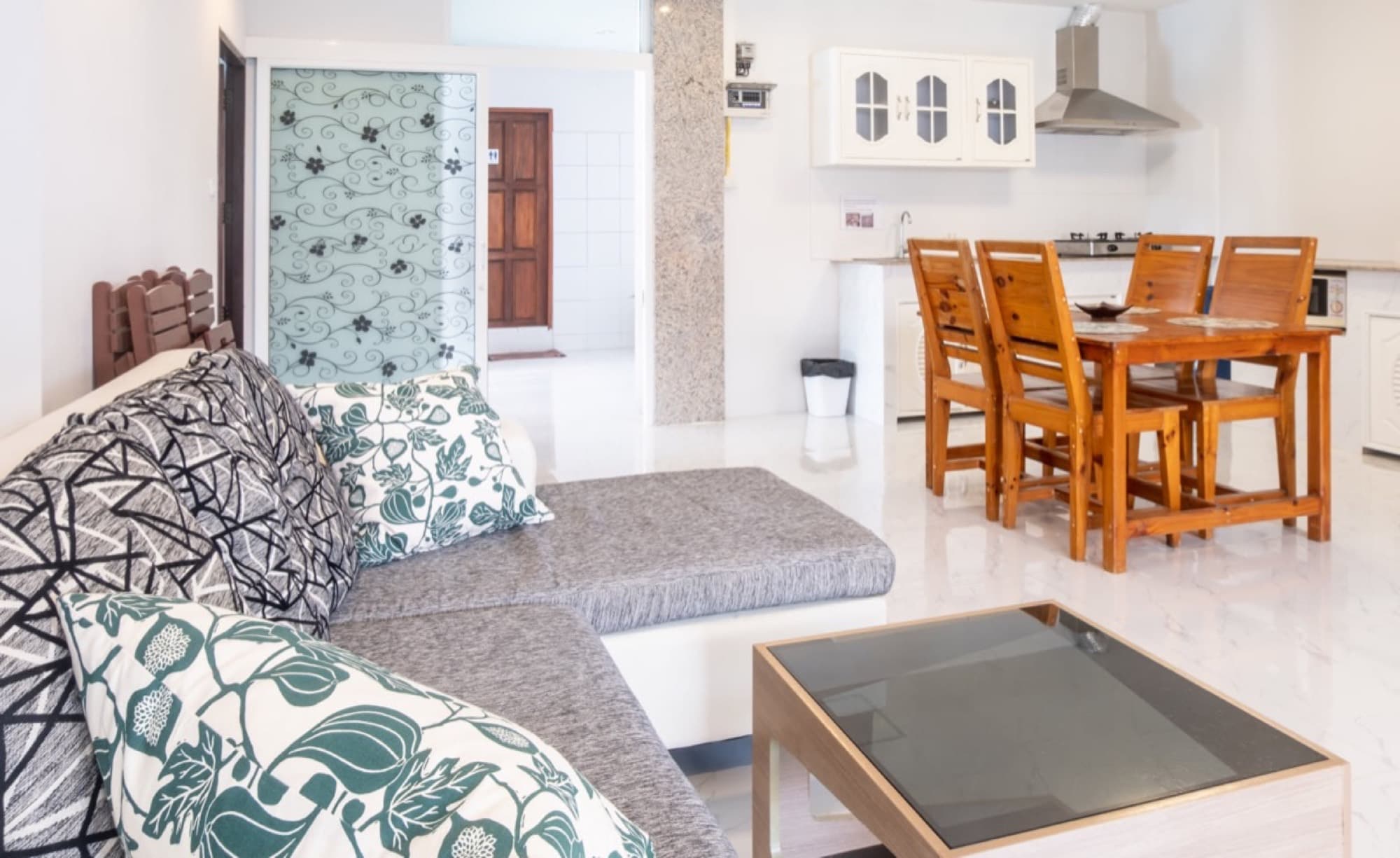
Types of property in Thailand: condo, house, villa, townhouse, land
When wintering in Thailand stops being a one-off trip and turns into a habit, the thought of buying your own place eventually appears. And that's when you discover that "buying property in Thailand" isn't one question but several. A condominium unit, a pool villa, a house, a townhouse, a plot of land — these are different property types with different ownership rules, different price tags and different logic of use.
8 July 2026 · JollyKite
Where to start: what's out there
In simple terms, on the Thai market you'll meet five main types of residential property:
- Condominium (condo, apartment) — a unit in a building with condominium status;
- Pool villa — a standalone house with land and its own pool;
- House / townhouse — a standalone house or a house in a terraced development;
- Land plot — land with no buildings, or for future construction;
- plus an important split by "freshness": off-plan (new build) versus a completed property (resale).
What mainly drives your choice isn't just budget and lifestyle, but the form of ownership. For a foreigner this is the key factor: the same property type may be available as full ownership or only as a lease. Let's go through them in order.
Condominium: the only freehold open to foreigners
A condo is a unit in a building officially registered as a condominium. It's the simplest, clearest route for a foreigner, and here's why: a condominium unit is the only type of property a foreigner can own freehold (full ownership) in their own name.
This works within the 49% quota: in any condominium building, foreigners may collectively own no more than 49% of the total floor area of the units. The remaining 51% stays with Thai citizens or companies. Before paying anything, get written confirmation from the management that free foreign quota still exists in the building.
Who it suits. Those who want the simplest, most secure ownership; who plan to rent the place out (easy with a condo) or treat it as an investment. There's usually a management company looking after common areas, the pool and security — you don't have to handle upkeep yourself.
Nuances. To register freehold under the quota, the purchase money must enter Thailand from abroad in foreign currency, and the bank issues a special FET form (Foreign Exchange Transaction Form). On top of the price, budget for monthly common area fees.
Pool villa: living and holidaying by the sea
A pool villa is a standalone house with its own plot and pool. In the Hua Hin and Pranburi area it's one of the most popular formats: there are plenty of villas both for living in and for holiday rentals.
Who it suits. Those who want space, privacy and their own pool — for a family, for a long winter stay, or year-round living. A villa is about the "own house by the sea" lifestyle, not a compact apartment.
Can a foreigner own it. Yes and no — and it's important to understand. The building (the house) can be owned by a foreigner, but the land beneath it cannot be owned directly. So a villa is usually structured this way: the house is owned by the foreigner, while the land under it is leased long-term (leasehold) or held via other legal tools (usufruct, superficies, a real Thai company). It's a workable, common practice, but precisely because of the land a villa deal is more complex than a condo, and a lawyer is especially needed here.
House and townhouse: same principle, different budget
An ordinary house and a townhouse are legally structured like a villa: the building can be owned by the foreigner, the land is leased. The difference is mainly in the development format and the price.
A townhouse is a house in a terraced development: a row of houses with shared side walls, usually with a small plot. The build is denser, the pool is more often shared (per development) rather than private. But a townhouse is usually noticeably cheaper than a standalone villa — a sensible entry point for those who want a "house on land" without the budget for a separate pool villa.
Who it suits. A house — those who want a standalone home with a plot at a more affordable price than a villa. A townhouse — those who want a "house, not an apartment" format on a compact budget and are fine with closer neighbours.
Nuances. Same as for a villa: the key question is how the land under the house is held. Always check the form of land ownership and the title type (chanote).
Land plot: you can't own it directly
Land is the strictest case. Under Thai law, a foreigner cannot own land in their own name (apart from rare exceptions that are practically out of reach for a private buyer).
That doesn't mean land can't be used at all. Legal routes exist: a long-term lease (leasehold up to 30 years), usufruct, superficies, or holding it via a real Thai company. But understand: this isn't buying land "outright," it's a right to use it under certain conditions.
Who it suits. Those who want to build a house to their own design or invest in land in a growing area. In Pak Nam Pran and around, plots are available for sale.
Nuances. The Thai-company route is legal only if the company is genuine — trading, with real Thai participants. Nominee structures where Thai shareholders exist only "on paper" to bypass the ban are illegal and are now under active review. So with land it's especially important to go through a lawyer and not try to "get around" the law.
Off-plan (new build) or completed (resale)
Beyond the property type there's another split that strongly affects the deal — whether you're buying an off-plan (under-construction) new build or a completed property (resale).
Off-plan (new build from the developer): - *Pros:* often cheaper, payment by instalments as construction progresses, choice of floor/layout, everything new. - *Cons:* construction risk (timelines, quality, developer reputation); you're paying for something that doesn't physically exist yet.
Completed / resale: - *Pros:* you see exactly what you're buying — the real property, the view, condition, neighbours; you can move in straight away. - *Cons:* the price is usually higher, no developer instalments, the property may not be new.
There's no universal answer: off-plan is more attractive on price and payment terms but requires trust in the developer; a completed property is calmer and more tangible. In both cases a lawyer checks the documents and the reputation of the seller/developer.
Apartment vs condominium: not the same thing
A subtle but important point. On signs and in listings the word "apartment" is often used as a synonym for "flat." But legally, an "apartment" without official condominium status is not the same as a condo.
The difference is fundamental: a foreigner can obtain freehold in their own name only in a building with condominium status. If a property is called "apartments" but isn't registered as a condominium, it can't be registered as full ownership to a foreigner — at best it'll be a lease.
So when choosing a "flat," always clarify: is it a condominium (with status, chanote, the 49% quota) or just apartments (often a rental building with no freehold right)? That determines whether you can own it at all.
Table: property types and foreign ownership
- Condo (condominium) — Yes — within the 49% quota — Full ownership (chanote) + funds from abroad, FET form — Rentals, investment, simple and secure ownership
- Pool villa — Building only; not the land — House owned + land leased (leasehold) / other structures — Living and holidaying, space, privacy
- House / townhouse — Building only; not the land — House owned + land leased; townhouse is cheaper — A house on land at a more affordable price
- Land plot — No — Long-term lease / usufruct / a real Thai company — Self-build, investing in land
- "Apartments" (no condo status) — No — Usually a lease — Renting only; don't confuse with a condominium
Freehold or leasehold — in a nutshell
Freehold is full ownership: the property is yours indefinitely, registered in your name (for a foreigner this is only realistic in a condominium under the 49% quota). Leasehold is a long-term lease (usually up to 30 years), a right to use the property under a contract registered at the Land Department. Foreigners most often take land and houses/villas precisely through leasehold or related tools, because you can't own land directly.
This is a simplified explanation. For the detail on freehold, leasehold, usufruct and superficies, see the separate article: how a foreigner can own a house and land in Thailand. And for what a foreigner can buy in Thailand at all, see here: can a foreigner buy property.
What's popular in Pak Nam Pran and Pranburi
We're not a real estate agency — we're a kite school. But since you're reading this, we'll honestly tell you about our stretch of coast.
Pak Nam Pran, Pranburi and the neighbouring Sam Roi Yot national park are a growing, lively area next to Hua Hin. People come here to kite, and the area hosts sporting events: kitesurfing competitions, motocross, marathons. Among property types, the most popular here are pool villas — a format for living by the sea and for holiday rentals — and land plots for self-build. Condominiums exist too, but "your own villa by the ocean" captures the local vibe best.
JollyKite has been here a long time; we know the area from the inside and can help you get your bearings: which areas are which, what the wind is like, how wintering works. The legal side of a deal will be handled by a licensed lawyer.
Want to see the place for yourself and figure out what suits you? Drop us a line — we'll tell you about the area honestly. Related reading: property in Pak Nam Pran and Sam Roi Yot.
FAQ
What type of property can a foreigner buy in Thailand?+
A foreigner can buy only a condominium unit in full ownership (freehold) in their own name — within the 49% floor-area quota of the building. Villas, houses and townhouses are available this way: the building is owned, the land under it is leased long-term. A foreigner cannot register land as full ownership directly.
Which is better — a condo or a villa?+
It depends on your goals. A condo is simpler and more legally secure (the only freehold open to a foreigner), convenient for renting and investing, with built-in building management. A villa is about space, privacy and life by the sea, but the deal is more complex because of the land (building owned, land leased). There's no universal answer — choose by lifestyle and budget.
Can a foreigner buy a land plot in Thailand?+
Not directly, in their own name. But land can be used legally: a long-term lease (leasehold up to 30 years), usufruct, superficies, or holding via a real Thai company. Nominee schemes with "paper" Thai shareholders are illegal.
How do apartments differ from a condominium?+
A condominium is a building with official status where a foreigner can obtain freehold in their own name (the 49% quota, a chanote). "Apartments" without condominium status don't offer this — usually it's a lease. So when choosing a flat, always check whether the building has condominium status.
Should I buy a new build or a completed property?+
A new build (off-plan) is often cheaper, with developer instalments and a choice of layout, but carries construction risk. A completed property (resale) is more expensive and without instalments, but you see exactly what you're buying and can move in straight away. The choice depends on your appetite for risk and your trust in the developer.