
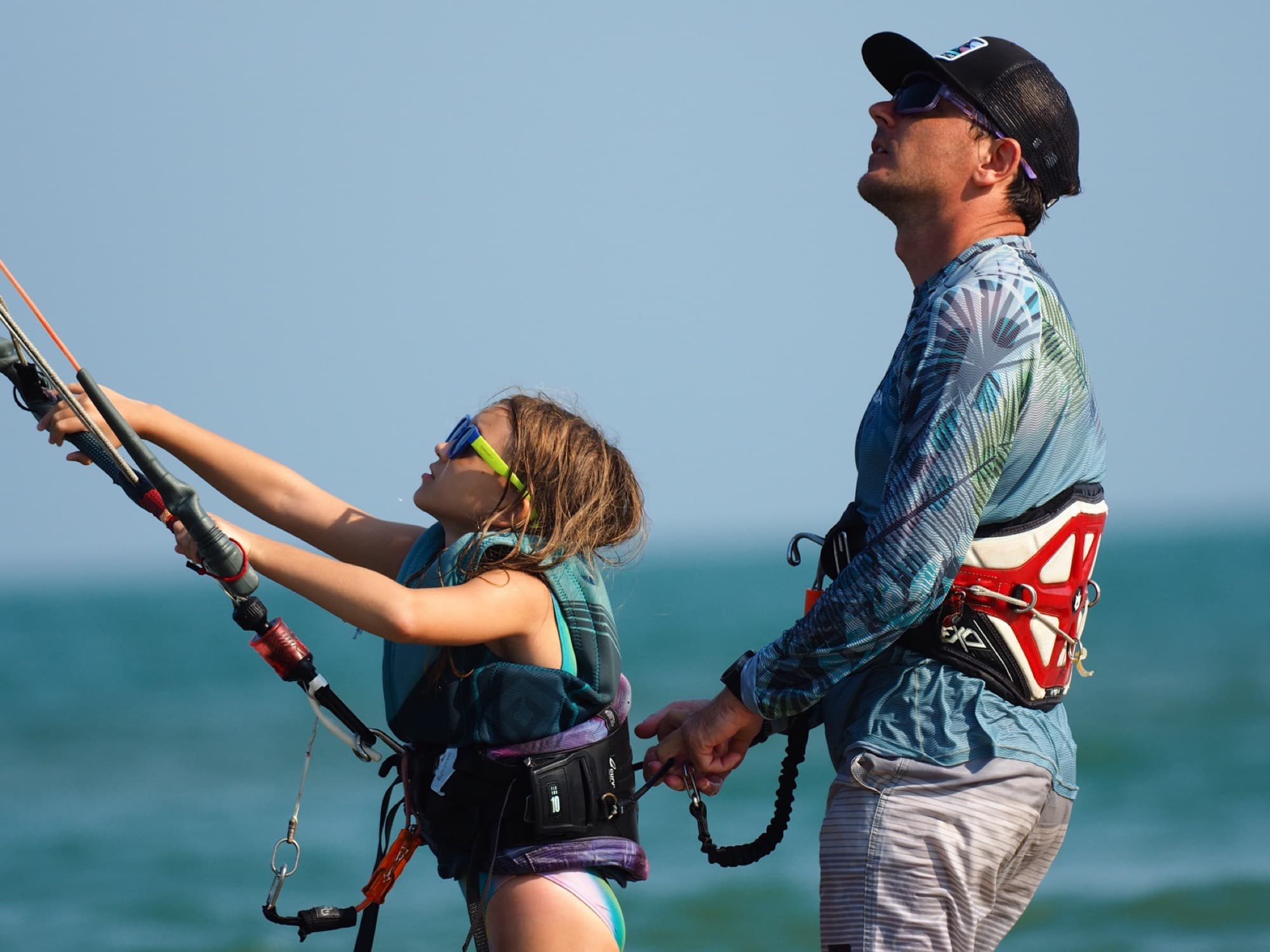
Common kitesurfing injuries and how to avoid them
Most kitesurfing injuries are not the result of an extreme trick — they come from a mundane mistake: a bad launch, going out in too much wind, riding tired and losing focus on the last run. It is a sport of managed risk, not a lottery. And nearly every typical injury scenario can be named in advance — which means it can be avoided.
22 July 2026 · JollyKite
We have been teaching since 2014 and work through the season in Pak Nam Pran, so we have seen exactly where beginners and casual riders get hurt. One important caveat up front: this is not a medical guide. Basic first aid is no substitute for a doctor. Severe pain, swelling, limited movement, a blow to the head, or a suspected fracture — go to a doctor or clinic straight away.
The most common kitesurfing injuries
- Shoulder injuries are particularly common among experienced riders. A strong gust yanks the arm up and back — if the body is not ready, the load goes into the shoulder joint. The classic error: holding the bar on a straight arm under overload instead of working through the core and harness.
- Knee and ligaments. Take the load on landings and hard falls at speed. The foot is fixed in the board straps, the board catches the water, the body keeps going — and the twisting force hits the ligaments.
- Lower back. Hurts from two things: a weak core and poor water-start technique. When core muscles do not hold, all the kite's pull runs through the lumbar region.
- Sprains and dislocations. Ankle, wrist, elbow — the usual victims of falls. More often on land, during launch and landing, than on the water.
- Cuts from reef and bottom. Coral, rocks, shells and sea urchins cut you on a fall and when you try to stand. These hazards are generally less common on sandy, shallow-water spots.
- Board and bar hits. Your own board on a recoiling leash, someone else's board, the bar on release — they hit the head, face, teeth. That is exactly why a helmet is mandatory during lessons.
- Lofting near the shore. The most serious, though not the most frequent, situation: the kite suddenly lifts a rider into the air and drops them. It almost always happens on land or at the water's edge, during launch or turning around with the kite in hand.
Where injuries come from: a chain of mistakes
- Mistakes on the beach. Launching with your back to the wind, parking the kite at the zenith in a gust, turning around with the kite in hand near people. The beach is the most injury-prone place in the sport, not the water.
- Too much wind. A few extra metres per second turns a controllable wing into an uncontrollable one, and the load on your joints multiplies.
- Fatigue. Delayed activation of the quick-release system, deteriorating technique, lost focus. Half of all incidents happen on the last run.
- Cold muscles. Going out without a warm-up is a direct route to a strain.
- Someone else's kite. Crossed lines, a kite coming in from upwind, a rider who did not give way. Lines under load cut.
- A bad spot. Rocks and reef downwind, crowding, obstacles. The place punishes every small mistake.
How to lower the risk: what actually works
- Warm up before the session. Five to ten minutes on shoulders, back, legs and core changes things. A cold muscle tears; a warm one stretches.
- The right kite size. The wrong kite for the conditions is the most common technical cause of injury. Size to your weight and the actual wind.
- Do not inflate your level. An honest level means wind and a kite you can handle.
- A drilled quick release and self-rescue. Your hand must know the release motion before it is needed.
- Helmet and impact vest. Mandatory during lessons. The helmet protects the head; the vest keeps you afloat and saves energy.
- The right spot and riding area. Sandy shallows instead of reef, space instead of crowding, clear boundaries.
- Do not ride tired or alone. Someone should always be able to see you.
None of this is heroic — it is discipline. That is exactly why learning at a school and teaching yourself from video are, injury-wise, two different sports. What and how to warm up we cover in the warm-up article, and typical beginner mistakes in a separate piece.
What to do if you get injured: the RICE basics
If an injury does happen and it is a strain, bruise, or minor joint injury, a simple protocol works in the first hours: RICE. It is the international first-aid scheme for soft-tissue injuries.
- R — Rest. Stop riding. Not “finish the run”, not “one more” — get to shore now.
- I — Ice. Cold for 15–20 minutes, through cloth, not on bare skin. Repeat every couple of hours in the first day.
- C — Compression. An elastic bandage — moderate, not too tight. If fingers go numb or the skin turns blue, loosen it.
- E — Elevation. Raise the injured limb above heart level.
An important caveat: RICE is for minor everyday injuries and the first hours. It does not replace a doctor. Seek medical help immediately if any of this is present: severe pain that will not ease; visible deformity or a suspected fracture; a head injury, loss of consciousness, nausea, confusion; a joint that will not move or gives way; a deep cut that will not stop bleeding; numbness in a limb. In those cases RICE is only what you do on the way to a doctor, not instead of one.
Bottom line
Kitesurfing is injury-prone in exact proportion to how carelessly it is approached. Remove cold muscles, too much wind, the wrong kite size, a bad spot and riding on fatigue, and what is left is a set of risks that discipline handles. On recovery after an injury — and, most importantly, how to tell it is time to go back on the water — we have a separate article. Rushing the return is more dangerous than the injury itself.
FAQ
What are the most common kitesurfing injuries?+
Most often it is the shoulder (overload in a gust, strains, occasionally a dislocation), the knee and ligaments (twisting on falls and landings), and the lower back (weak core and water-start technique). Add ankle and wrist sprains from falls, cuts from reef and rocks on rocky spots, and hits from your own or someone else's board and bar. The most serious, though not the most frequent, is lofting near the shore, when the kite suddenly lifts and drops the rider.
Is kitesurfing dangerous, are there many injuries?+
Kitesurfing is a sport of managed risk. Most injuries grow not from bad luck but from specific mistakes: launching on the beach with your back to the wind, going out in too much wind, the wrong kite size, riding tired, a bad spot. Once those causes are removed — which is what a school does — the risk is comparable to other water sports. Absolute safety does not exist anywhere.
Where do kiting injuries come from?+
The main causes: mistakes on the beach (the beach is more injury-prone than the water), too much wind, fatigue and lost focus, cold muscles without a warm-up, someone else's kite and crossed lines, a bad spot with rocks and crowding. Almost every injury ties to a specific decision, not to chance.
How do I lower the risk of injury?+
Warm up before the session, size the kite to your weight and the wind, do not inflate your level, drill the quick release and self-rescue, wear a helmet and impact vest, choose a safe spot and stay in the riding area, and do not ride tired or alone. This discipline covers almost every typical injury scenario.
What do I do if I get injured on the water?+
Stop riding immediately and get to shore. For a strain or bruise the RICE protocol works: rest, ice through cloth for 15–20 minutes, moderate compression with an elastic bandage, elevation of the limb above heart level. But RICE is only for minor injuries and the first hours. For severe pain, deformity, a suspected fracture, a head injury, a deep cut, or numbness — go to a doctor immediately.
Do I need a helmet in kitesurfing?+
During lessons, yes — it is mandatory. The helmet covers the most common head-injury scenario: a hit from your own or someone else's board or bar. On the water the head is exposed, and the consequences of an impact are more serious than any strain, so at JollyKite the helmet is part of the lesson gear.
Why are there fewer injuries on sandy shallows?+
Because the spot does half the safety work. On a sandy shallow there are no rocks, coral or sea urchins to cut you on a fall, there is somewhere to stand and catch your breath, and a fall stays a fall instead of becoming a crash. On reef spots cuts are routine, which is why Pak Nam Pran, with its sandy bottom, is safer for learning.