
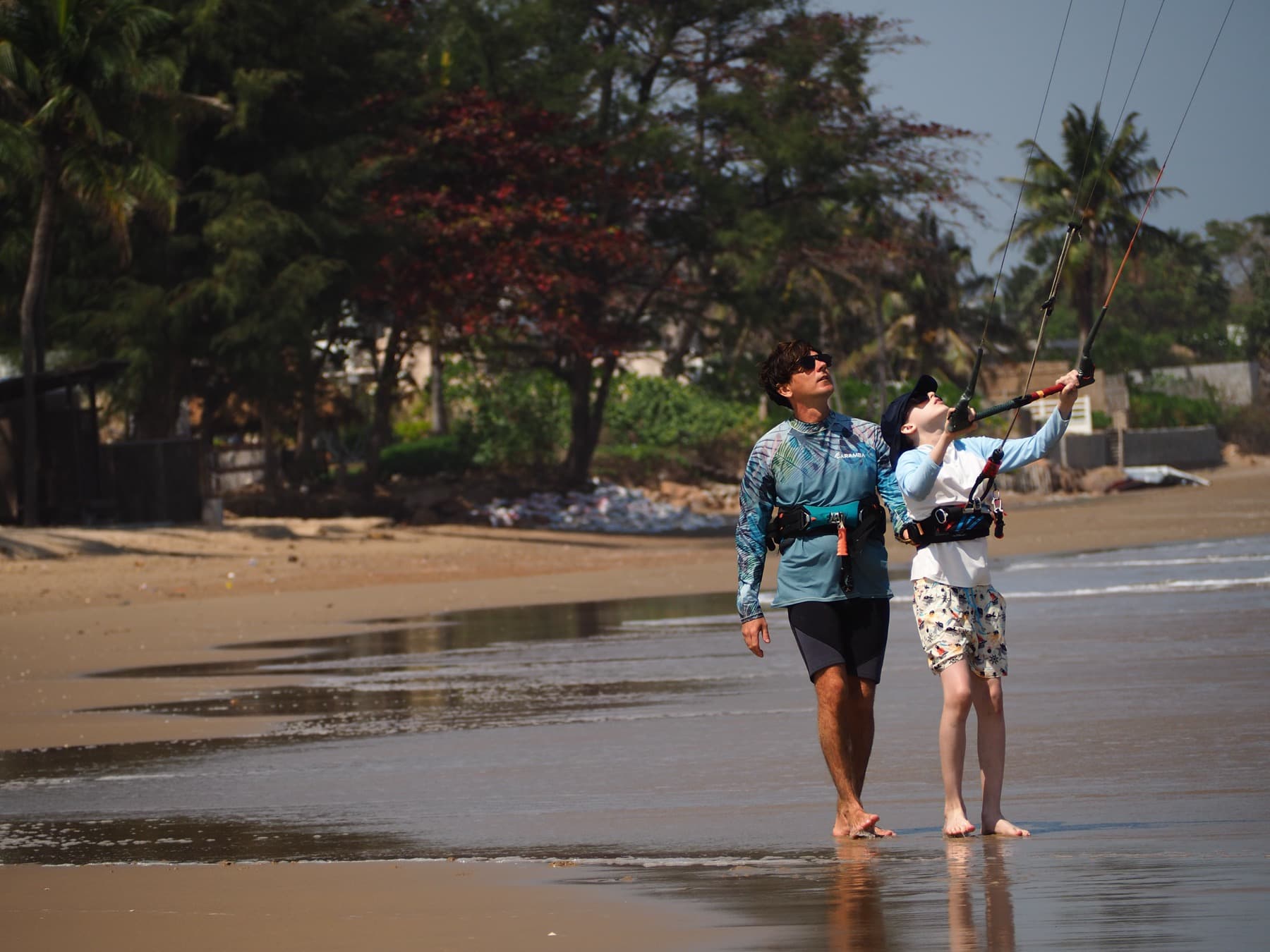
A kite guide and spot support: for independent riders
A kite guide is not a lesson. You already ride confidently and don't need an instructor beside you on every tack. But a new spot, unfamiliar water and unknown wind mean half your session goes to figuring out where it's safe, which way you drift and whether it's even worth going out. A guide takes that headache away: you show up and ride, instead of scouting.
22 July 2026 · JollyKite
JollyKite has worked in Pak Nam Pran since 2014, and we know this spot in every kind of weather — where the shallows are, where the current runs, how the wind shifts through the day. Support means having someone alongside who puts you on the best conditions, backs you up with a boat on the water and helps if something goes wrong.
What spot support is
Support is help for a rider who already rides — not learning from scratch. You can do it all yourself; a guide adds what you don't have on someone else's water: local knowledge and a safety net. What's actually included:
- Inside knowledge of the spot. Where to launch and land safely, where the shallows and rocks are, which way you drift in different wind directions, where the current runs. On unfamiliar water none of this is obvious, and a mistake is costly.
- A safety boat. If you get blown downwind, tear a kite or simply can't work back upwind, the boat is right there. That peace of mind is exactly why many riders take a guide: you can head further from shore without fear of being left alone with a problem.
- Help with breakdowns and drift. A blown bladder, a released chicken loop, tangled lines — the guide is on hand to advise and back you up. You don't have to fight your gear alone in the water.
- Best conditions and timing. When to go out and when to wait; which window of the day gives steadier wind; where to move for cleaner flow. We read the spot from years of experience, not from a forecast app.
In effect you pay for someone who has known this water for years to take on all the scouting and safety, so you can just ride and enjoy it.
Who needs a kite guide
Support isn't for everyone or every day. But there are situations where it pays off from the very first session. A guide is worth it if you're:
- An independent rider at a new spot. You've flown into Thailand, you ride confidently, but you're seeing Pak Nam Pran for the first time. In a couple of outings a guide shows you everything you'd otherwise spend a week finding.
- Back after a long break. The skill is there but rusty, and you'd rather not head into unfamiliar water alone. Support brings back confidence without turning into a lesson.
- After a downwinder or waves with a safety net. A solo downwinder along an unknown coast is a gamble. With a guide and a boat it's a planned route, not a lottery.
- Riding further from shore and want a boat nearby if something goes wrong, rather than just luck.
But if you're still learning, doing your first rides or unsure about self-rescue, you need a lesson with an instructor, not a guide. That's a different format and a different level of safety.
How support differs from rental
These are two different products, and they're easy to confuse. The difference is simple: rental is the gear; support is the person and the local knowledge.
- Rental — you take a kite, board and harness and ride on your own. We match the size to your weight and the wind, but after that you're on the water alone. It's for those who already know the spot or are happy to work it out themselves.
- Support — you can ride your own or rented gear, but a guide is alongside: putting you on the conditions, backing you up with a boat, helping with drift and breakdowns. Here you're paying not for equipment but for safety and knowledge of the place.
One doesn't replace the other. Often they're taken together: rent the gear, plus a guide for the first days at a new spot — so you ride the best spots right away instead of burning sessions on scouting.
Why a guide saves time and nerves at an unfamiliar spot
Every new spot has hidden variables that no forecast shows. Pak Nam Pran has character: the wind changes strength through the day, and it has its own zones, currents and seabed. Without local knowledge you either ride more cautiously than you could, or take risks where you shouldn't.
A guide removes that uncertainty. A first session with support replaces several days of scouting on your own: you immediately know where to launch, where to go for clean wind and what to avoid. And the safety boat removes the main fear of riding alone on someone else's water — being left one-on-one with a problem far from shore.
That's especially valuable if you're only here for a short trip. When you have a week of wind and an expensive flight behind you, losing two days just to «figure out the spot» stings. A guide gives those days back.
Cost and how to book
The cost of support depends on the format: how many outings, whether you need a safety boat, whether you ride alone or with a group, and whether you also rent gear. There's no single price list here — we quote it to the task.
Send us your dates, your level and what you want (just getting comfortable at the spot, a downwinder, waves, riding further out with a boat) — we'll build the format and quote it.
FAQ
How does a kite guide differ from a lesson with an instructor?+
A lesson is learning from scratch or improving your skill under an instructor's control. A guide supports a rider who already rides: they don't teach you to ride, they give you knowledge of the spot, safety and a support boat. If you don't yet ride independently, you need a lesson, not a guide.
What's included in spot support?+
Knowledge of the spot (where to launch, which way you drift, where the shallows and current are), a safety boat on the water, help with breakdowns or drift, and picking the best conditions and timing for the wind. In effect the guide takes on all the scouting and safety, and you just ride.
Do I need a safety boat?+
Not always, but a boat greatly increases safety, especially if you head further from shore, ride a downwinder or ride unfamiliar water. If you get blown downwind or tear a kite, the boat is right there. Whether you need one in your case, we'll advise when planning.
How does support differ from gear rental?+
Rental is the equipment: you take a kite, board and harness and ride on your own. Support is the person and the local knowledge: the guide puts you on the conditions, backs you up and helps. They're often taken together, but they're two different products.
Who needs a kite guide in Pak Nam Pran?+
Independent riders at a new spot, those coming back after a long break, and anyone wanting a downwinder or riding further from shore with a safety net. If you ride confidently but are seeing this spot for the first time, a couple of outings with a guide save you several days of scouting.
How much does a kite guide cost?+
There's no single price — the cost depends on the number of outings, whether you need a boat, and whether you ride alone or with a group. Send us your dates and the task and we'll quote a format for you. You can rough out the whole trip on the calculator.