
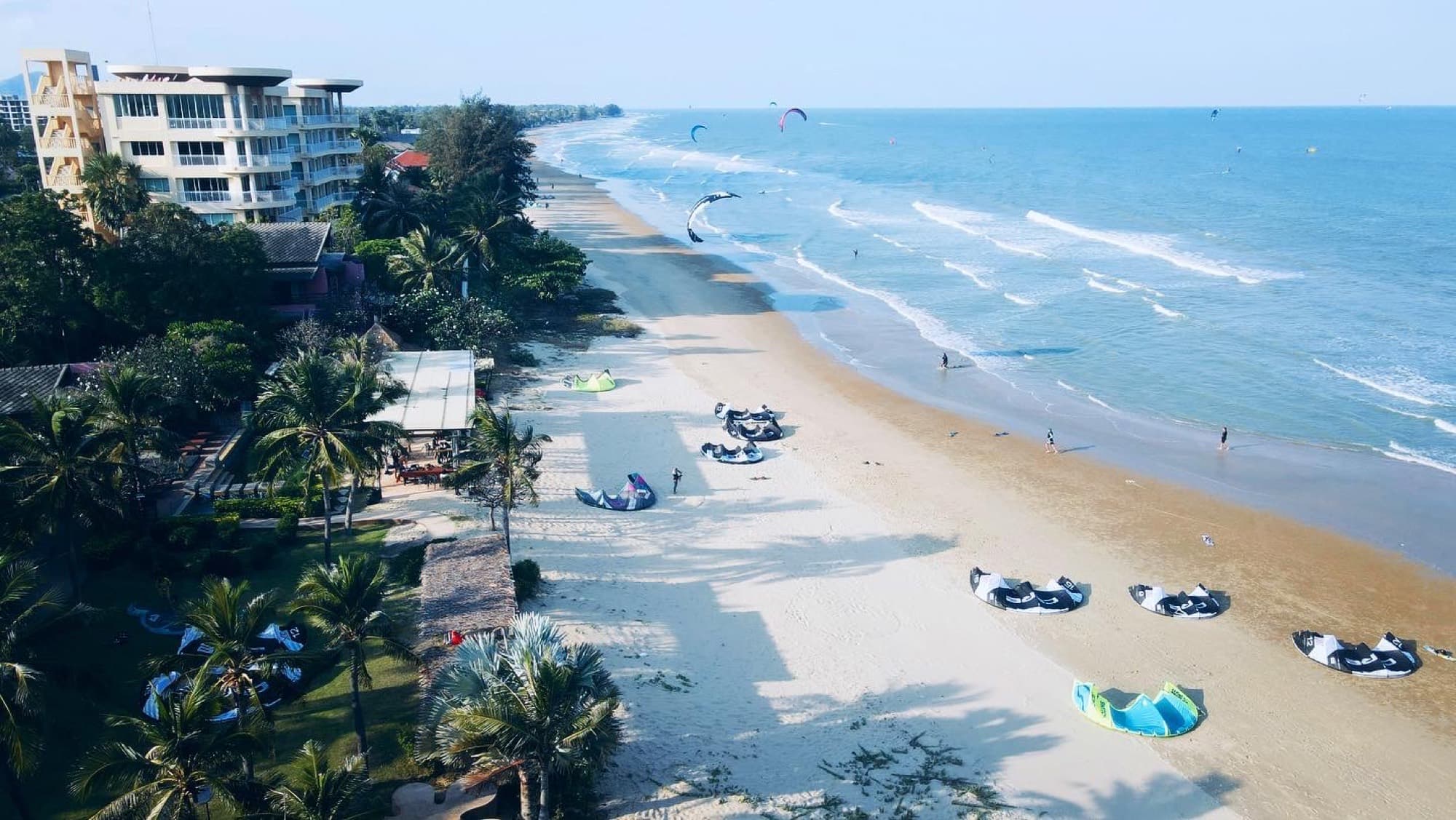
Is Hua Hin good for kitesurfing? An honest beginner guide
Short answer: yes — Hua Hin is a good place to kitesurf in season, and it's genuinely windy enough. From roughly mid-November to the end of April the monsoon delivers reliable wind, warm water and long riding days. But «good for kitesurfing» and «best for learning» aren't the same thing.
22 July 2026 · JollyKite
If your goal is to learn from scratch, the quieter beaches just south — around Pak Nam Pran in the Pranburi district — often make a better base than Hua Hin's busy main beach. We're JollyKite, and we've taught on this stretch of the Gulf coast since 2014. This is the version we'd give a friend: where Hua Hin shines, where it doesn't, and how to decide where to point your trip.
Is Hua Hin windy enough for kitesurfing?
In season, yes — comfortably so. Hua Hin sits on the Gulf of Thailand and shares the same monsoon wind as the whole Pranburi coast. The kite season runs from about mid-November to the end of April, and within it there are two dependable patterns:
- North wind (November–January). The stronger, punchier half of the season. It tends to blow in the mornings, often in the 18–22 knot range — plenty of power for riders who already have the basics.
- South wind (February–April). Softer and steadier, usually 13–18 knots, and it typically comes through in the afternoons. The water tends to flatten off, which is exactly what you want when you're learning.
One honest caveat that applies to Hua Hin and everywhere else: wind is weather. Nobody can promise a set number of windy days on a set date. What is reliable here is the seasonal pattern — and often a daily rhythm of north wind in the morning, south wind in the afternoon, so a single day can give you more than one window on the water.
Off-season (roughly May to October) is a different story — the wind is far less consistent, and it's not the time to plan a kite trip here.
Water, space and the beach itself
Hua Hin's main beach is long, sandy and easy to reach, with hotels, cafes and services right behind it. That convenience is real, and for a rider who just wants to roll out of a hotel and ride, it's hard to beat. The trade-offs show up when you look closer:
- Crowds. Hua Hin is a resort town. The main beach gets swimmers, sun-loungers, vendors and other watersports, especially at weekends and on Thai holidays. Sharing a launch and a riding area with a busy beach adds stress you don't need while learning.
- Chop. In the south-wind half of the season, Hua Hin's main beach tends to carry more chop than the flatter bays further south. Choppy water makes water starts harder and falls less pleasant.
- Space to fail. Learning means falling — a lot. The more people and obstacles around you, the less room you have to make mistakes safely.
None of this makes Hua Hin bad. It makes it a lively, convenient spot that suits confident riders better than nervous first-timers.
Crowds: who they help and who they don't
If you already ride, crowds are a minor annoyance you can manage. You launch, you go, you stay upwind of the swimmers, and you enjoy the buzz of a well-served beach town in the evenings.
If you're learning, crowds work against you. Kite lessons need space — for kite control on the sand, for body dragging, for the first wobbly water starts where you don't yet steer with precision. A wide, quiet beach isn't a luxury for a beginner; it's a safety margin.
That's the core of the honest answer: Hua Hin is good for kitesurfing, but its main beach is busier than ideal for your very first days on a kite.
Why nearby Pak Nam Pran is often the better learning base
About 30 km south of Hua Hin, in the Pranburi district, sits Pak Nam Pran — the same coast, the same monsoon wind, but a calmer, more spacious spot. It's our home beach, and for learning from scratch it's the one we point people to every time. Here's why it works so well:
- Shallow and flat. The depth builds gradually, so you can stand a long way out. In the south-wind season the water flattens beautifully — the ideal surface for first water starts.
- Clean sandy bottom. Soft sand underfoot, no rocks or coral, so frequent falls stay safe rather than bruising.
- Side-shore wind. The wind blows along the beach — the safest, most convenient direction for learning. It doesn't carry you out to sea or pin you to shore. Offshore wind, the kind that worries new kiters, simply isn't the pattern here.
- Space and quiet. Far fewer people on the sand and on the water than Hua Hin town — room to make mistakes without consequences.
Best months for kitesurfing in Hua Hin
- December to February is the sweet spot for most visitors: reliable wind, warm water, and dry, sunny weather. December and January lean stronger (north wind); February eases into the gentler south-wind pattern.
- February to April is the best window for complete beginners — softer, steadier south wind and flatter water.
- November is the shoulder of the season as the wind sets in; April is the tail end, still very rideable but warming up.
- May to October is off-season — inconsistent wind, not worth planning a kite trip around.
Who Hua Hin suits — and who might prefer elsewhere
Hua Hin is a great fit if you already ride and want a convenient, lively base with hotels, food and nightlife on the doorstep; are travelling with non-kiting family who'll appreciate a full resort town; and don't mind sharing a busy beach in exchange for that convenience.
You'll probably prefer Pak Nam Pran if you are learning from zero and want space, calm and flat, shallow water; want to progress fast without dodging crowds; and would rather stay in a quiet beach community than a resort strip.
The good news: the two are only about 30 minutes apart, so you're never locked in. Many riders base in Pak Nam Pran to learn and pop up to Hua Hin for a change of scene.
FAQ
Is Hua Hin good for kitesurfing?+
Yes, in season. From about mid-November to the end of April, Hua Hin gets reliable monsoon wind, warm water and long riding days. It's a solid destination — though its busy main beach suits confident riders more than complete beginners, who often do better at quieter Pak Nam Pran just south.
Is Hua Hin windy enough for kitesurfing?+
Yes. In season Hua Hin gets dependable wind: stronger north wind in the mornings (around 18–22 knots, November–January) and softer south wind in the afternoons (around 13–18 knots, February–April). Wind is still weather, so no exact number of windy days is guaranteed, but the seasonal pattern is reliable.
When is the best time to kitesurf in Hua Hin?+
December to February is the sweet spot for most riders — reliable wind and dry, sunny weather. February to April, with softer south wind and flatter water, is the best window for complete beginners. May to October is off-season with inconsistent wind.
Is Hua Hin good for beginners?+
It can be, but the main beach is busy, and in the south-wind season it tends to be choppier than the bays further south. For a first kite course, the quieter, flatter, more spacious beach at Pak Nam Pran (about 30 km south, in Pranburi) is usually the better base.
Hua Hin or Pak Nam Pran for kitesurfing?+
Hua Hin is busier, better known and more convenient — great for confident riders who want resort amenities. Pak Nam Pran is quieter, flatter and more spacious — better for learning and fast progress. They're only about 30 minutes apart, so you can easily do both.
How windy does it need to be to kitesurf as a beginner?+
Beginners do best in steady wind of roughly 13–18 knots — enough to fly a kite and get up on the board, but not so strong that it feels overpowering. That's exactly the south-wind pattern you get on this coast from February to April.