
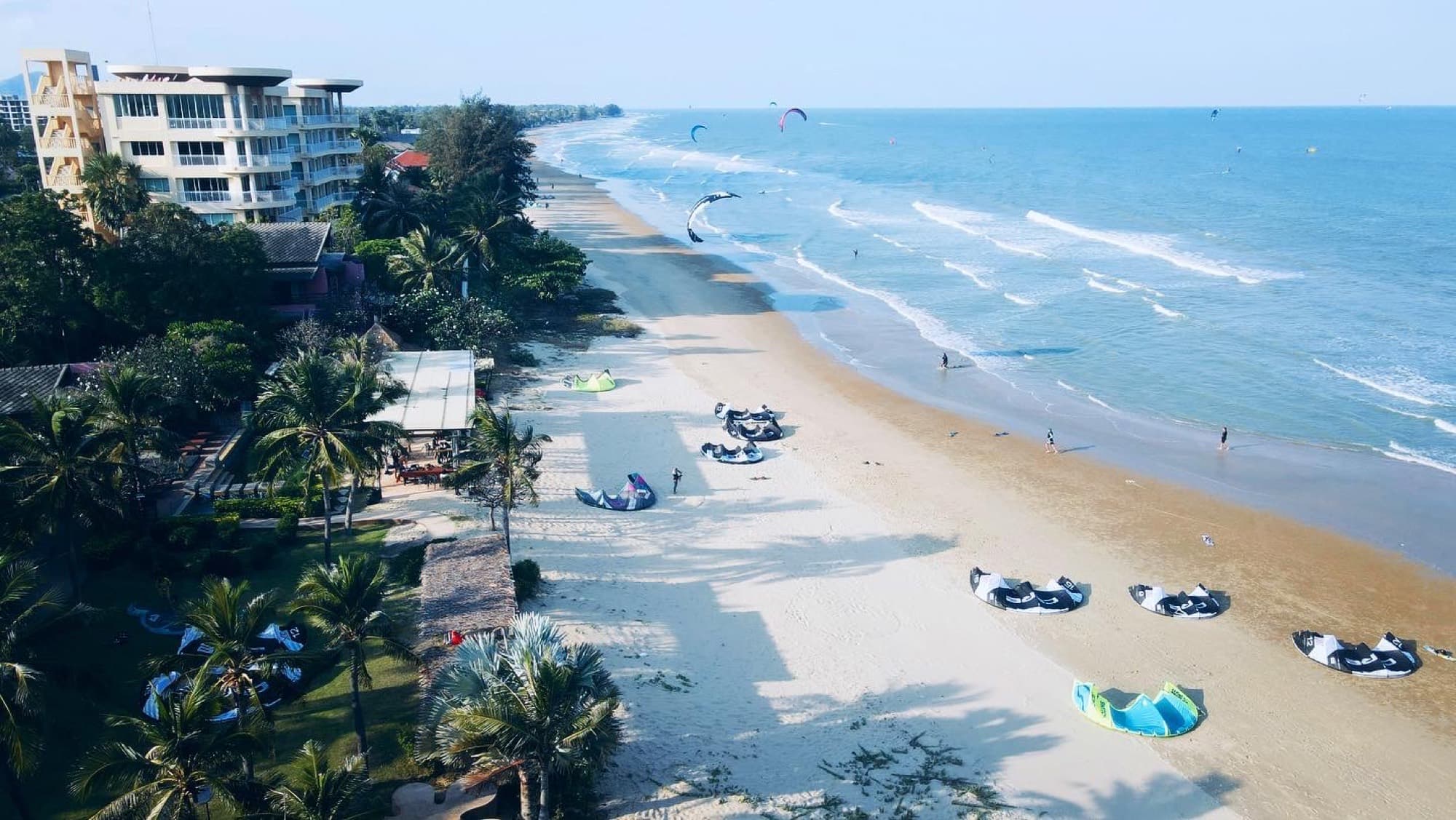
Hua Hin or Phuket for kitesurfing: where to learn and where to ride
Thailand's two best-known kite destinations — Phuket and Hua Hin — show up in the plans of almost everyone heading to Asia for a winter on the water. Phuket is a famous, heavily promoted island resort; Hua Hin, with neighbouring Pak Nam Pran, is the long-standing kite capital of the mainland. They're in the same country and share the same winter season. But for kiting the difference between them is big — and it's the part most often underestimated when people choose by the postcard rather than the wind.
29 June 2026 · JollyKite
In short: who should pick Phuket, who should pick Hua Hin
If you don't have time to read it all — here's the gist in three lines.
- Go to Phuket if kiting isn't the main goal of the trip, you want an island with developed tourist infrastructure, beaches, tours and nightlife, and you're prepared for capricious wind and for sometimes walking to the water over rocks and through low tides.
- Go to Hua Hin and Pak Nam Pran if kiting is your priority: you value reliable steady wind, long shallow sandy flats, open space and a calm, safe setting for learning from scratch.
- If you're unsure — for kiting, the mainland Hua Hin wins on the balance of conditions; Phuket makes sense when the trip is primarily about the island and kiting is a bonus.
Now, parameter by parameter.
Wind and reliability
Wind is everything in kiting, and this is where the two places diverge the most.
Phuket. The winter northeast monsoon gives the island a kite season from November to April, but conditions on the west coast are capricious. The wind is often weaker than you'd like and unstable: some days are steady and pleasant, others bring long lulls or gusty, broken wind that's hard to ride on. The island and its terrain break up the flow in places. For a holiday where kiting is one of several activities, that's tolerable; for a trip built around riding, the unreliable wind is Phuket's main risk.
Hua Hin and Pak Nam Pran. Here the wind is noticeably more reliable: usually 13–22 knots, steady, predictable, side-shore (a comfortable angle to the beach). Dead lulls are rarer, broken gusts are rarer — the flow comes in off the open sea and arrives clean. The season is longer too: from mid-November to early May. That means more real riding days for the same trip — and for a kiter that's exactly what matters.
To simplify: you go to Phuket for the island, and the wind is hit-or-miss; you go to Hua Hin precisely for reliable wind. For a trip where riding is the priority, that's the deciding point.
Water and getting in
Wind doesn't exist apart from the water and from how you get into it — and here Phuket has its everyday complications.
Phuket. At many spots the water is flat and beautiful — but flat water is no use without wind. The biggest hassle is the tides: at low tide the water pulls far out and getting in to ride becomes awkward. At several spots you have to walk to the water over clay, rocks or coral — unpleasant, and rough on feet and gear. So the water itself can be nice, but the "walk in and launch" logistics on Phuket are often capricious and tide-dependent.
Hua Hin and Pak Nam Pran. Long sandy beaches, a wide shallow zone and calm flat water. Getting in is simple: sand underfoot, shallow, you can stand for ages and make mistakes without consequence. For a beginner that's a huge difference — falling on a shallow sandy bottom isn't scary, and launching and landing don't turn into a quest over rocks and low tide.
The water verdict is simple: on Phuket the water can be beautiful, but getting in is capricious and tide-dependent; in Hua Hin and Pak Nam Pran the shallow sandy flat gives a simple, safe entry on any day.
Spots and logistics
How the riding areas are arranged is about the comfort of the whole trip, not just one session.
Phuket. The island's infrastructure is developed and there are schools: Nai Yang by the airport (handy if you've just flown in and want a quick session nearby), plus spots around Chalong, Rawai and Friendship Beach in the southeast. But the spots are scattered: you need to drive between them, each has its own conditions, and for a given wind you have to pick the right point. The island upside is a full resort on your doorstep: beaches, restaurants, tours, nightlife. If kiting is part of a holiday, that works for Phuket.
Hua Hin and Pak Nam Pran. Here the riding is concentrated on a long sandy stretch, there's lots of space and fewer people on the water — especially in Pak Nam Pran, which is particularly quiet and open. No driving between scattered points: you walk onto the beach and ride. Getting there is easy: about 3 hours from Bangkok on a good road. It's mainland, not an island, so the atmosphere is calmer and there's less resort bustle.
In short: Phuket is a promoted island with scattered spots and a rich non-kiting life; Hua Hin and Pak Nam Pran are space, quiet and riding all in one place.
For learning from scratch
This is probably the most important factor if you're just starting.
If you're learning from scratch, you need three things: reliable steady wind, shallow safe water and a simple entry. All three describe Hua Hin and Pak Nam Pran. Steady 13–22 knot wind isn't intimidating and lets you calmly practise kite control; the shallow sandy flat lets you stand on your feet and not fear falls; the space and small crowds lower the stress. Progress when learning depends more on stable conditions than on a "scenic location" — and stability is the mainland.
You can learn on Phuket — there are schools and people do learn. But capricious wind means some of your lesson days may "fall through" or run in broken conditions, while tides and rocky entries at certain spots add extra load for a beginner. For a holiday where learning is one of the activities, that's fine; for the goal "stand up on the board confidently within the trip", Hua Hin's reliability works better.
For a detailed look at how learning from scratch works — stages, timing, what's included — see the /obuchenie page. And for the mainland spots themselves, see our separate piece: /blog/kajt-spoty-hua-hin-pranburi.
Comparison table
| Phuket | Hua Hin / Pak Nam Pran | |
|---|---|---|
| Wind | Often weak and unstable, capricious | Steady, reliable, usually 13–22 knots, side-shore |
| Season | November–April, but capricious conditions | Mid-November — early May, more riding days |
| Water | Flat, but no use without wind | Shallow sandy flat, calm |
| Getting in | Clay/rocks/coral in places, strong low tides | Simple: sand, shallow, any day |
| Spots | Scattered (Nai Yang, Chalong, Rawai, Friendship Beach) | Concentrated on one long sandy stretch |
| For beginners | Possible, but capricious conditions get in the way | Near ideal: reliable and safe |
| Logistics | Island, driving between spots | ~3 h from Bangkok, riding in one place |
| Atmosphere | Promoted resort: beaches, tours, nightlife | Space, quiet, calm (especially Pak Nam Pran) |
| Best for | Kiting as an add-on to an island holiday | Kiting as the main goal and learning from scratch |
Our honest verdict
We won't pretend Phuket is "not for kiting" — that would be untrue. There are schools, there are spots and there are people who genuinely love riding there. Here's how we see the choice, honestly:
- Kiting is your main focus and you want reliable wind and comfortable learning from scratch → your option is Hua Hin and Pak Nam Pran. Steady wind, a shallow sandy flat, a simple entry and open space all work toward results.
- Kiting is a pleasant add-on to an island holiday and you care more about beaches, tours and nightlife → Phuket makes sense, but be ready for capricious wind and tides that can make some days go differently than you'd hoped.
- Unsure → if the trip is primarily about kiting, the mainland Hua Hin wins on the balance of conditions.
If reliable wind, safe shallow water and calm learning sound like you, we'd love to see you in Pak Nam Pran. Send us your dates and level, and we'll honestly tell you whether our spot fits your goal.
Shall we go riding?
Send us your dates, level and goal — we'll honestly tell you whether our mainland spot suits you, and if so, match the season and format to your rhythm. You can book lessons on the /obuchenie page. WhatsApp +66 98 367 9769, Telegram bot @JollyKite_kite_bot.
FAQ
Where is it better to learn kitesurfing — Hua Hin or Phuket?+
For learning from scratch, Hua Hin and Pak Nam Pran are more comfortable: reliable steady wind of 13–22 knots, a shallow sandy flat and a simple entry make learning safer and faster. You can learn on Phuket too — there are schools — but capricious wind and tides at several spots hold back steady progress.
Why is the wind capricious on Phuket?+
The winter monsoon gives Phuket a season from November to April, but on the island's west coast the wind is often weaker and more unstable: there are lulls and gusty, broken days, and the island's terrain breaks up the flow in places. So conditions for riding are less predictable there than on the mainland.
Where is the wind more reliable for kiting in Thailand?+
More reliable on the mainland — in Hua Hin and Pak Nam Pran. There it's usually 13–22 knots of steady side-shore wind, the flow comes in clean off the open sea, dead lulls and broken gusts are rarer, and the season is longer. That gives more real riding days per trip.
When is the kitesurfing season in these places?+
On Phuket the kite season runs roughly November to April, but conditions are capricious. In Hua Hin and Pak Nam Pran the season is longer and steadier — from mid-November to early May. We publish a month-by-month wind breakdown for the mainland separately.
Can you combine kiting with an island holiday?+
Yes — and here Phuket has an edge: the island offers beaches, tours, restaurants and nightlife, and you can fit kiting in as one of the activities. But if riding is your main focus, it's more reliable to plan a kite trip to Hua Hin and Pak Nam Pran and add the island leisure separately.