
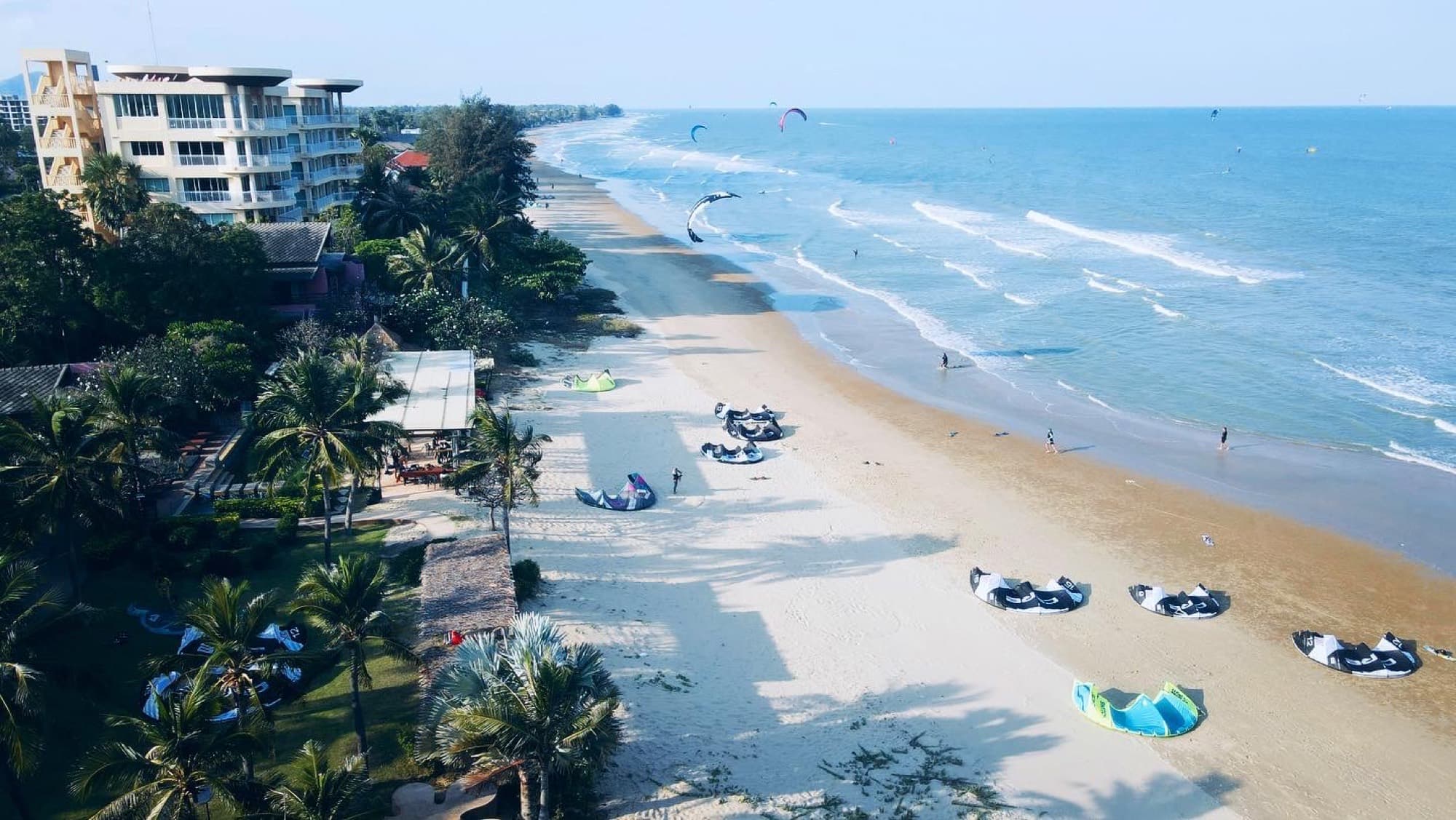
Foil, wave and downwind kitesurfing in Pak Nam Pran — a progression spot
Most people know Pak Nam Pran as the place you learn — shallow, flat, sandy, side-shore. All true. But the same beach has a second life that gets talked about far less: it's a quietly brilliant place to move on. To get up on a foil, catch your first small waves, and run your first downwinder along the coast.
22 July 2026 · JollyKite
Foiling: why it's such a good place to get on the wing
A hydrofoil loves flat water, light wind and space — and Pak Nam Pran has all three.
- Light wind is a feature, not a bug. A foil rides in conditions where a twin-tip barely moves. Days of 10–14 knots that feel too soft for a board are perfectly good foiling days, and Pak Nam Pran gets plenty of them — especially at the edges of the season and where the wind patterns change over.
- Flat water. The shallow, gently shelving gulf and its smooth surface — particularly in the south-wind season — make an ideal tabletop for your first flights on the wing. Less chop under the foil means fewer surprise breaches.
- Space and a soft bottom. Learning to foil means a lot of falls, and the wing is long. Here there's room to spread out and room to fall: a wide beach, clean sand, and no crowd on the water.
- Shallow and safe to start. Your first attempts happen close to shore where you can stand up. The one thing to respect is the depth beneath the foil — your instructor will show you exactly where to start so the wing clears the bottom.
Foiling is its own discipline, with its own technique and its own risks — the wing is sharp, the speeds are higher, and falling well is a skill. Guessing your way through it alone is a bad idea; with an instructor the path is shorter and much safer. If your basics aren't solid yet, start there — the whole from-scratch path is laid out in "Learning to kitesurf from scratch".
Waves: what to realistically expect
Let's be straight: Pak Nam Pran is not a big wave spot. This is the Gulf of Thailand, the fetch is short, and there are no towering ocean walls here. But small wind waves do form — and for anyone who wants to try wave riding or foil through some chop, there's enough to enjoy and to start learning how to read the water.
- When to look for waves. In the north-wind season (roughly November to January), when it blows harder at 18–22 knots, the gulf builds more short wind-swell and chop. That's the best window to play with little walls and carve on a livelier surface.
- What not to expect. Long, clean ocean lines like a proper surf break. This is playful chop and small bumps, not down-the-line surfing.
- Who it's for. Riders bored of flat water who want some movement, a directional board, and wave-riding at a basic level.
For the full picture of wind strength and direction month by month, see our detailed guide, "Weather and wind conditions in Pak Nam Pran".
Downwinders: runs along the coast
A downwinder is when you don't come back to your launch — you ride downwind along the shore from one point to another, and a car picks you up at the end. It's one of the best ways to rack up mileage, work on your open-water riding, and simply enjoy a changing view.
The coastline between Hua Hin and Pranburi suits these runs well: a long beach line, a steady along-shore (side-shore) wind, and clear start and finish points.
- Direction. A classic run heads downwind along the coast; we pick the exact line — for example a stretch between Hua Hin and Pak Nam Pran — to match the day's wind.
- Always with a guide and a plan. A downwinder means open water, no home beach under your feet, and the need to come ashore at the right spot. It calls for an escort, communication, a safety plan and a transfer at the finish. It isn't something to do solo without knowing the coast.
- Who it's for. Confident riders who hold upwind reliably, can water start in either direction, and feel calm away from the beach.
If you'd like to add a downwinder to your trip, message us in advance and we'll plan the logistics around your dates and level.
Gear: what it all rides on
At the school we ride CORE — those are the kites and bars in our rental and lessons. The kit changes with the task — a foil, a directional board for waves, a twin-tip for a downwinder — so it's best to confirm foil equipment and board availability for your dates in advance. Tell us what you want to try and we'll put together the right setup or advise what to bring.
The easiest way to estimate lesson and rental costs is our price calculator — it shows how the price builds up for your format.
Who this progression spot is for
In short, Pak Nam Pran works well as a "level-two" spot if you:
- already ride upwind confidently and want a new discipline — foiling;
- like light wind and flat water (foiling is especially at home here);
- want to try small waves and some movement, not just flat water;
- dream of a first downwinder in a safe, readable, guided format.
And if you're combining progression with remote work on a winter base, read how to set up a work-and-kite base in Pak Nam Pran: "Kitesurfing for digital nomads".
> Want to get on a foil, catch a wave or run your first downwinder in Pak Nam Pran? Send us your dates and level — we'll match the format, gear and logistics → Telegram bot @JollyKite_kite_bot, WhatsApp +66 98 367 9769. Book lessons on the /obuchenie page.
Come and ride with us
Send us your dates and level — we'll tell you everything about the spot, match a format for foil, wave or downwind, and help with gear and logistics. WhatsApp +66 98 367 9769, Telegram bot @JollyKite_kite_bot.
FAQ
Can I learn to foil in Pak Nam Pran?+
Yes. Flat water, light wind and plenty of space make the spot well suited to your first flights on a hydrofoil. Foiling is its own discipline with its own safety technique, so it's best learned with an IKO instructor rather than alone.
Is Pak Nam Pran good for wave riding?+
It's not a big ocean wave spot — the gulf only produces small wind waves and chop, mainly in the north-wind season (November to January, 18–22 knots). That's enough for basic wave riding and some movement, but there are no large walls here.
What's the best wind for foiling and for waves?+
Foiling is great on light days (around 10–14 knots), which are common at the edges of the season and where the wind patterns change over. Small waves and chop come with the stronger north wind in winter (November to January).
How does a downwinder from Hua Hin to Pak Nam Pran work?+
You ride downwind along the coast; the exact line is chosen to match the day's wind, and a car collects you at the finish. Downwinders run only with a guide, communication and a plan — it's open water, so it suits confident riders who hold upwind reliably.
What gear will I ride?+
At JollyKite we ride CORE. The setup differs for foil, wave or downwind, so confirm foil equipment and board availability for your dates in advance — we'll build the right setup.
Do I need experience to come for progression sessions?+
Foiling and downwinders need a solid base: reliable upwind and a water start in both directions. If you don't have that yet, start with a from-scratch course and add foiling or downwind later.
How much does it cost?+
It depends on the format (lessons, rental, number of hours). Estimate the price on our /kalkulyator or message us and we'll work it out for your dates.