
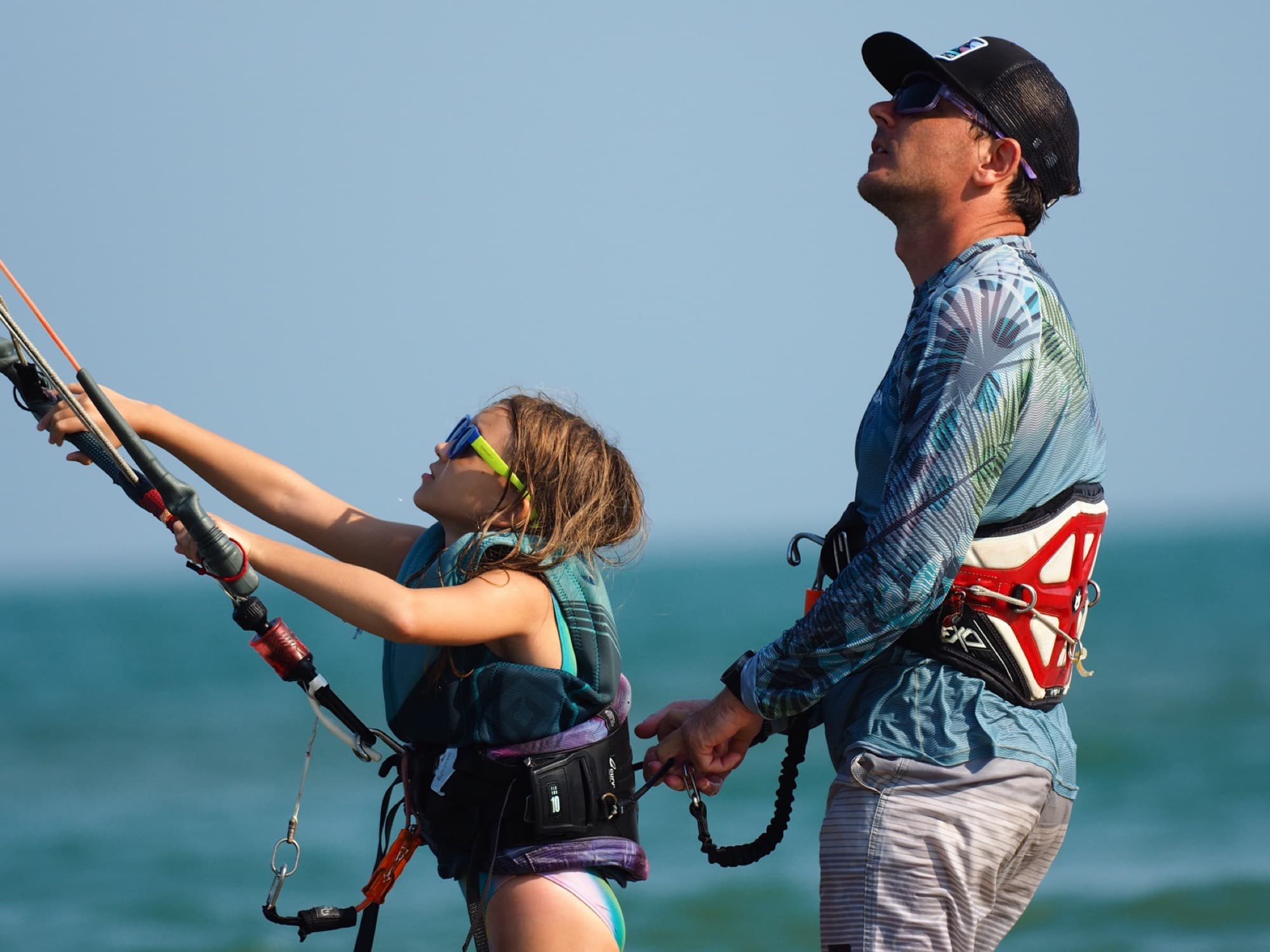
Fitness for kitesurfing: which muscles work and how to prepare before the season
Kitesurfing loads your core, not your arms. From the shore it looks like the rider is dragged along on arm strength — in reality the pull runs through the harness onto your core, and your hands only steer the kite. So the smart way to prepare for the season isn't to "pump your biceps" but to build stamina, core and grip.
22 July 2026 · JollyKite
Which muscles actually work in kitesurfing
Kitesurfing isn't a burst of strength — it's long, steady, whole-body work to hold the pull and stay balanced. Let's break it down by area.
Core and abs. The main working zone. Through the harness the kite's pull lands right on your belly and lower back, and you keep your core tight the whole time, passing the force into the board. A strong core means a stable stance, less lower-back fatigue and clean board control.
Back. Works together with the core. Your lats and the muscles along the spine hold you leaning back against the pull. A strong back protects the lower back and lets you ride longer without twinges.
Forearms and grip. You hold the bar the whole tack. Hands and forearms are among the first to tire — especially for beginners who grip the bar in a death clench out of habit. An enduring grip means you don't have to let go of the bar and end your session early because of pumped arms.
Legs. Thighs, glutes and calves work on balance, absorbing chop and steering the board. Your legs soak up the bumps of the water and hold your course. The front leg gets extra load when you weight the board against the pull.
Shoulders and arms. They work less than you'd think, but they get their share: you steer the kite across the sky and hold the bar up. The shoulder is a vulnerable area — a sudden pull on cold muscles easily leads to trouble. So shoulders matter less for "pumping" and more for warming up and protecting.
Why stamina and core beat "the gym"
Raw strength barely helps in kiting. What helps is stamina, a stable core and the ability to work your body long and steady. You can be a bench-press athlete and run out of gas in twenty minutes, because your body isn't used to long, even load in the wind.
A kite session is a couple of hours on the water: wind, sun, constant work from your core and legs. You tire not from "not enough strength" but from not enough general stamina and stability. That's exactly why cardio, planks and core work do more for your riding than heavy presses and bicep curls.
And an important point: fatigue isn't only about comfort, it's about safety. Pumped arms and a dead core mean worse control, slower reactions and a higher chance of a mistake. We've written separately about the basic safety rules: /blog/bezopasnost-na-obuchenii-kajtu.
The exercises: at home and in the gym before your trip
Nothing complicated and no mandatory gym. The goal is to wake up the right muscles and raise general stamina. If you have chronic issues or any health doubts, check with a doctor first and build the load up gradually.
Plank (core). The base of bases. Hold your body in a line, core tight, lower back not sagging. Start at 20–30 seconds, work up to a minute, add side planks for the obliques. Do 3–4 sets.
Rows (back). Bent-over dumbbell rows, band rows or pull-ups if you have a bar. Teaches the back to work against pull — exactly what you need in the leaned-back stance. 3 sets of 8–12 reps.
Back extensions (lower back and spinal erectors). Protects the most loaded area in kiting. At home you can do "supermans" on the floor. Smooth, no jerking, 3 sets of 12–15.
Squats (legs). Regular squats and lunges for thighs and glutes. Give you a stable stance and cushioning. 3 sets of 15. Advanced: squats with a pause at the bottom.
Grip (forearms). Hand gripper, dead hangs on a bar, holding a dumbbell. A cheap exercise that genuinely saves energy on the water. Hang from a bar for 20–40 seconds, a few sets — and your grip will stop giving out first.
Cardio (stamina). The most important thing for long sessions. Running, cycling, swimming, jump rope — anything that keeps your heart rate up for 20–40 minutes, 2–3 times a week. Swimming is a bonus: it also prepares shoulders and core.
You don't have to fit all of this into one workout. Two or three sessions a week of 30–40 minutes — a bit of core, some back and legs, plus cardio — is enough to noticeably change how you feel on the water.
How preparation speeds progress and cuts fatigue and injury
A prepared body learns faster. When your muscles don't quit after half an hour, you stay on the water longer, make more attempts per session and build the skill quicker. And in kiting, progress is mostly about hours logged and repetitions.
Less fatigue means fewer mistakes. A fresh core and a living grip keep control of the kite, while a tired body loses it. So there are fewer falls and fewer risky moments.
Strong muscles and a warm-up protect your joints. A strong back and core take load off the lower back, and the habit of warming up shields shoulders and wrists from sudden pull. It's not a guarantee — injuries happen in any sport — but sensible prevention noticeably lowers the risk of pulling something out of nowhere. We've written separately about warm-up and cool-down here: /blog/rastyazhka-razminka-pered-kajtom.
How long before the season to start
Ideally 4–6 weeks. That's enough to raise stamina, wake up the core and grip and arrive for the season in shape — without fanaticism or overtraining. Start earlier and it's even better, just don't burn out: your body should come to the trip fresh, not tired.
If time is short, even 2 weeks of regular cardio and planks beats nothing. And if you didn't manage to prepare at all — don't worry. To repeat: special fitness isn't required to start, we put people of any fitness level on the board. Preparation just makes the first days on the water easier and more pleasant.
Most of all, don't turn preparation into stress. A couple of short workouts a week, cardio for fun, some core and grip. That's enough to come to us and get the most out of every windy day.
Let's go riding?
Write to us — tell us your fitness, experience and plans for the season. We'll suggest what to prepare for and pick a training format. You can book and see the formats on the /obuchenie page. WhatsApp +66 98 367 9769, Telegram bot @JollyKite_kite_bot.
FAQ
Which muscles work in kitesurfing?+
Most of all — core and abs: through the harness the kite's pull lands on your belly and lower back. Next comes the back (holding the leaned-back stance), forearms and grip (you hold the bar the whole tack), legs (balance and board control) and, to a lesser degree, shoulders. It's a sport of whole-body stamina, not arm strength.
Do I need fitness to start riding?+
No special preparation is needed — we put people of any fitness level and any age on the board. But basic stamina, a strong core and a living grip noticeably ease the first days on the water: you tire less and progress faster.
What exercises should I do at home before the kite season?+
Planks for the core, rows and back extensions for the back, squats and lunges for the legs, dead hangs or a gripper for the grip, plus cardio for stamina. Two or three sessions a week of 30–40 minutes is enough.
Why does stamina matter more than strength?+
A kite session lasts a couple of hours, and the body tires from a lack of stamina and stability, not a lack of strength. You can be strong and run out of gas in twenty minutes. That's why cardio and core work do more for your riding than heavy presses.
How long before the season should I start preparing?+
Ideally 4–6 weeks of regular training. If time is short, even 2 weeks of cardio and planks help. The main thing is to arrive in shape but fresh, without overtraining.