
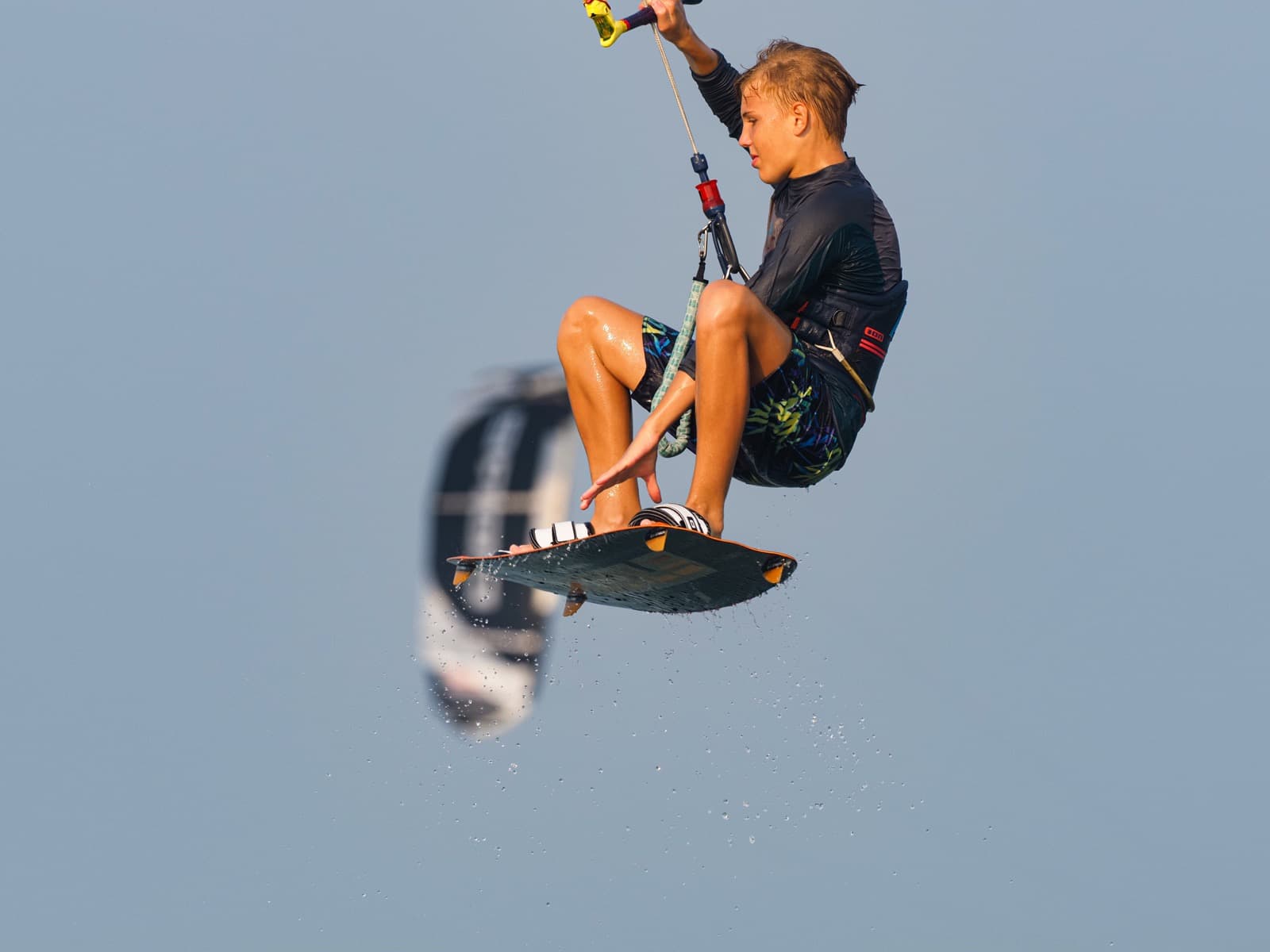
CORE Fusion and Choice boards: carbon, who they're for, and how to size them
CORE has two carbon twin-tip boards: the Fusion and the Choice. Both are premium, both are carbon, and beginners often get confused about which to buy. The difference is simple once you grasp one idea: the Fusion is a comfortable all-rounder with a big-air character; the Choice is a more charged board for freestyle and powered riding, often in boots.
22 July 2026 · JollyKite
What carbon is in these boards
Both the Fusion and the Choice are built on CORE's carbon — proprietary Cartan Carbon over a wood core in a sandwich construction. What that gives you on the water, and why carbon at all:
- lightness — carbon is lighter than fibreglass for the same strength, so the board "hangs" less on your feet in a jump;
- precise flex — the carbon weave works lengthwise and in torsion to damp chop yet return a strong pop;
- durability — carbon and a quality rail hold their shape for a long time.
Carbon isn't for show — it's specific behaviour on the water: the board is more responsive, lighter and livelier than an ordinary glass one. The one downside is price. A carbon twin-tip costs more, and that's the price of a premium character.
CORE Fusion: a comfortable all-rounder with big air
The Fusion is CORE's flagship carbon all-rounder. It's positioned as an allround/freeride board, but with a strong lean towards big air and board-off jumps.
Who it's for. For freeriders who want comfort and control but also explosive pop for high jumps. It's a board for riding "everything": relaxed freeride, upwind, big air, basic hooked freestyle. It forgives, and it grows with the rider.
Character (by construction). The Fusion has CORE's signature Vee Rocker — more rocker underfoot, less in the tips. That's a balance: good grip and upwind, but soft landings and control in chop. The base is a double concave with channels and "katana" channels in the tips, giving grip and confident tracking without extra drag. The flex is balanced — not stiff like a pure wakestyle board, nor soft like a beginner one. The carbon damps chop and returns a strong pop at the same time.
Sizes. The Fusion comes in a wide range — roughly 129 to 144 cm in various widths, plus light-wind sizes of 154 and 159 cm. That spread covers light and heavy riders and light-wind sessions alike.
CORE Choice: a charged board for freestyle
The Choice is also a carbon board on Cartan Carbon, but with a different emphasis. It's more charged and aggressive than the Fusion, aimed at powered freestyle and big air, often for riding in boots.
Who it's for. For riders who ride overpowered, love a hard edge, explosive pop and powerful tricks — with straps or boots. It's a less "comfortable," more "sporty" board: it delivers maximum grip and return, but demands more active riding.
Character. The Choice is stiffer and more aggressive in flex, with strong tip grip — the Choice is where CORE first used the "katana" channels that later migrated in a softer form to the Fusion. It's a "locked-on-edge" board: it bites into the water when you load the rail and returns a huge pop. There's less comfort in chop than on the Fusion — a deliberate trade for the charge. The Choice is usually offered in mid sizes, without light-wind "doors."
Fusion or Choice: what's the difference
In short:
| CORE Fusion | CORE Choice | |
|---|---|---|
| Purpose | Freeride / all-round + big air | Powered freestyle + big air |
| Character | Comfort, control, forgiving | Charge, grip, demands activity |
| Flex | Balanced | Stiffer, more aggressive |
| Boots | Possible, more often straps | Often for boots |
| Comfort in chop | Higher | Lower (traded for pop) |
| Sizes | Wide range + light-wind (154/159) | Mid sizes, no light-wind |
| Best for | Most riders | Charged freestylers |
A simple rule: if you're torn between them, take the Fusion. It's the more versatile board, suiting most people, with both comfort and big air built in. The Choice makes sense once you already know you ride powered, overpowered, love a hard edge and maybe boots.
How to size the board: weight, level, style
Board size matters more than the choice between Fusion and Choice — even the best board won't ride if it's the wrong size. The logic is the same as for any twin-tip.
By weight. The heavier the rider, the longer and wider the board needs to be for the same pull and early planing. A freeride guideline:
- ~50–60 kg — ~131–134 cm
- ~60–70 kg — ~134–137 cm
- ~70–80 kg — ~137–140 cm
- ~80–90 kg — ~140–142 cm
- ~90+ kg — ~142–144 cm
These are guidelines, not law — the final choice depends on wind and style.
By level and wind. If you're learning or often ride in light wind, take the upper end of your weight range: a slightly bigger board planes earlier and goes upwind more easily. If the wind is steady and strong, you can go smaller for more manoeuvrability. If your wind is regularly light, look at the Fusion's light-wind sizes (154/159 cm) — they ride where an ordinary board sinks.
By style. Freeride and big air — standard size by weight on a Fusion. Powered overpowered freestyle — riders often take a slightly smaller, stiffer board (this is where the Choice comes in). How width, rocker and fins change a board's behaviour is detailed in "How to choose a kiteboard".
Test-rider verdict (our experience)
Honestly, first-hand. The Fusion is our workhorse for freeride and big air. What we like: the board is explosive off the water, yet landings are soft thanks to the double concave, and in chop it doesn't punish the knees the way stiff wakestyle boards do. Upwind and speed are excellent, and there's enough grip to confidently load the edge into a jump. And the Fusion is friendly enough that a less experienced rider can get on it too — a rare mix of comfort and charge.
We recommend the Choice when someone already rides powered and wants maximum grip and pop, especially if they're drawn to boots. It's a more demanding board: it's great once your technique is ready, but too early for a beginner — less comfort, a stiffer character.
A separate word on CORE pads: in our experience they're among the most comfortable on the market, and CORE offers genuinely small sizes — important for shorter riders and those with smaller feet. We covered this in the kiteboard choosing article.
And the main thing: you don't have to guess from a text. During lessons and rentals you can try different boards and sizes in person before buying your own. That's the best way to work out whether it's a Fusion or a Choice for you, and which size.
Further reading: the CORE kite range review, how to choose a kiteboard and — if you're thinking of buying — where to buy CORE and how to choose used.
Let's go riding?
Send us your weight, level and style — we'll advise whether it's a Fusion or a Choice for you and which size, and let you try it on the water. Booking and prices are on the /obuchenie page. WhatsApp +66 98 367 9769, Telegram bot @JollyKite_kite_bot.
FAQ
Are the CORE Fusion and Choice carbon boards?+
Yes, both are built on CORE's proprietary carbon (Cartan Carbon) over a wood core in a sandwich construction. Carbon gives lightness, precise flex (the board damps chop and returns a strong pop) and durability. These are premium twin-tips, pricier than ordinary glass boards.
Which to choose: CORE Fusion or Choice?+
If you're unsure, take the Fusion: it's a versatile freeride/big-air board, comfortable and forgiving, suiting most people. The Choice is more charged and stiffer, aimed at powered freestyle and big air, often for boots, and demands more active riding. People take the Choice once they know for sure they ride powered and overpowered.
How to size a CORE board by weight?+
A freeride guideline: 60–70 kg — about 134–137 cm, 70–80 kg — about 137–140 cm, 80–90 kg — about 140–142 cm. For learning and light wind take the upper end; for strong steady wind you can go smaller. If your wind is often light, the Fusion has light-wind sizes of 154 and 159 cm.
Does the Fusion come in a light-wind size?+
Yes, the Fusion has large light-wind sizes — 154 and 159 cm. They plane very early and pull you through wind lulls, so they're great for light wind and learning. The Choice usually has no light-wind sizes — it's a mid-size board for powered riding.
Is the Fusion suitable for a beginner?+
The Fusion is a premium board, and buying it at the very start is usually too early: during lessons the board is part of the gear and the instructor picks the size for you. But as a progression board the Fusion is friendly — it forgives mistakes and grows with the rider up to big air. Many take it as their first own board once they ride independently.
Can you ride the Fusion or Choice in boots?+
The Choice is designed with boots in mind — its stiff flex and strong grip allow it. The Fusion is more often ridden with straps (pads), but it's boots-compatible too. If you're planning boots and powered freestyle, the Choice is closer in character.