
Cheap flights to Thailand: when to buy, which routes, where to fly from
The flight is the biggest single cost of a trip to Thailand — and the easiest place to save. The gap between a smart booking and a careless one can easily reach a couple of hundred dollars per person. Three things decide it: when you buy, which route you fly, and how flexible you are with dates.
22 July 2026 · JollyKite
Are there direct flights?
Yes, with caveats. Direct flights to Bangkok run from major hubs, and in winter charter programmes to Bangkok and Phuket are added. In summer and the shoulder season direct flights are fewer, irregular and noticeably pricier than connecting ones.
Closer to the winter season (November–March) direct flights multiply — it's high season for both demand and weather. That's when most travellers come, and when a nonstop flight is genuinely catchable.
Direct flights arrive mostly at Suvarnabhumi (BKK) — more on the airport difference below.
Takeaway: want to fly direct and fuss-free? Plan a winter trip and book early. In summer it's simpler and cheaper to connect.
Connecting routes: where to find cheap fares
Most travellers reach Thailand with one stop. It's longer, but almost always cheaper than a nonstop, with far more dates to choose from. Reliable hubs:
- Istanbul — Turkish Airlines. The classic route through Turkey, smooth connections, sensible prices.
- Dubai and Abu Dhabi — Emirates, flydubai, Etihad. Through the Gulf, one of the best-worn routes into Southeast Asia.
- Doha — Qatar Airways. Another Gulf hub, often strong service at a fair price.
- Central Asia — via Tashkent, Almaty or Astana, connections here are frequently the cheapest.
- Chinese hubs — Beijing, Shanghai, Guangzhou, a steady presence on the Bangkok route.
Sometimes it's cheaper to build the trip from two separate tickets rather than one: a flight to a nearby country plus a budget carrier to Bangkok. Just leave a time buffer — if the first flight is late, a missed self-transfer is on you.
How to search: in Google Flights or Skyscanner set "your city → Bangkok", enable connections and flexible dates across the whole month. The tool will show which hub is cheapest for your dates.
When to buy
The main rule — don't leave it to the last minute, but don't book too early either. For long-haul flights to Thailand the sweet spot is usually 2–6 months out. Closer to the date prices climb; a year ahead there's little on offer.
Season guides:
- Low season (roughly May–October) — watch prices early and buy 2–4 months ahead, catching dips in the low-fare calendar.
- High season (December–March, holidays) — book 4–6 months ahead, especially for a nonstop, New Year or school holidays.
On winter specifically: booking winter tickets is historically cheapest in the window from mid-July to late August — months before the season, when schedules are open but demand hasn't yet driven prices up.
Days matter too: Monday–Wednesday departures are often cheaper than weekends. And flexibility almost always helps — shifting a day or two can drop the price noticeably.
Expensive vs cheap: seasons by price
The ticket price depends a lot on when you fly:
- Most expensive — mid-December to early January (New Year, Christmas), plus January–February at the peak of the dry season, and July–August when global demand is high, even though Thailand is in its rainy season then.
- Cheapest — the "green season", roughly May to September/October. Lower demand, cheaper flights and stays. The lowest fares often fall in May, June and September.
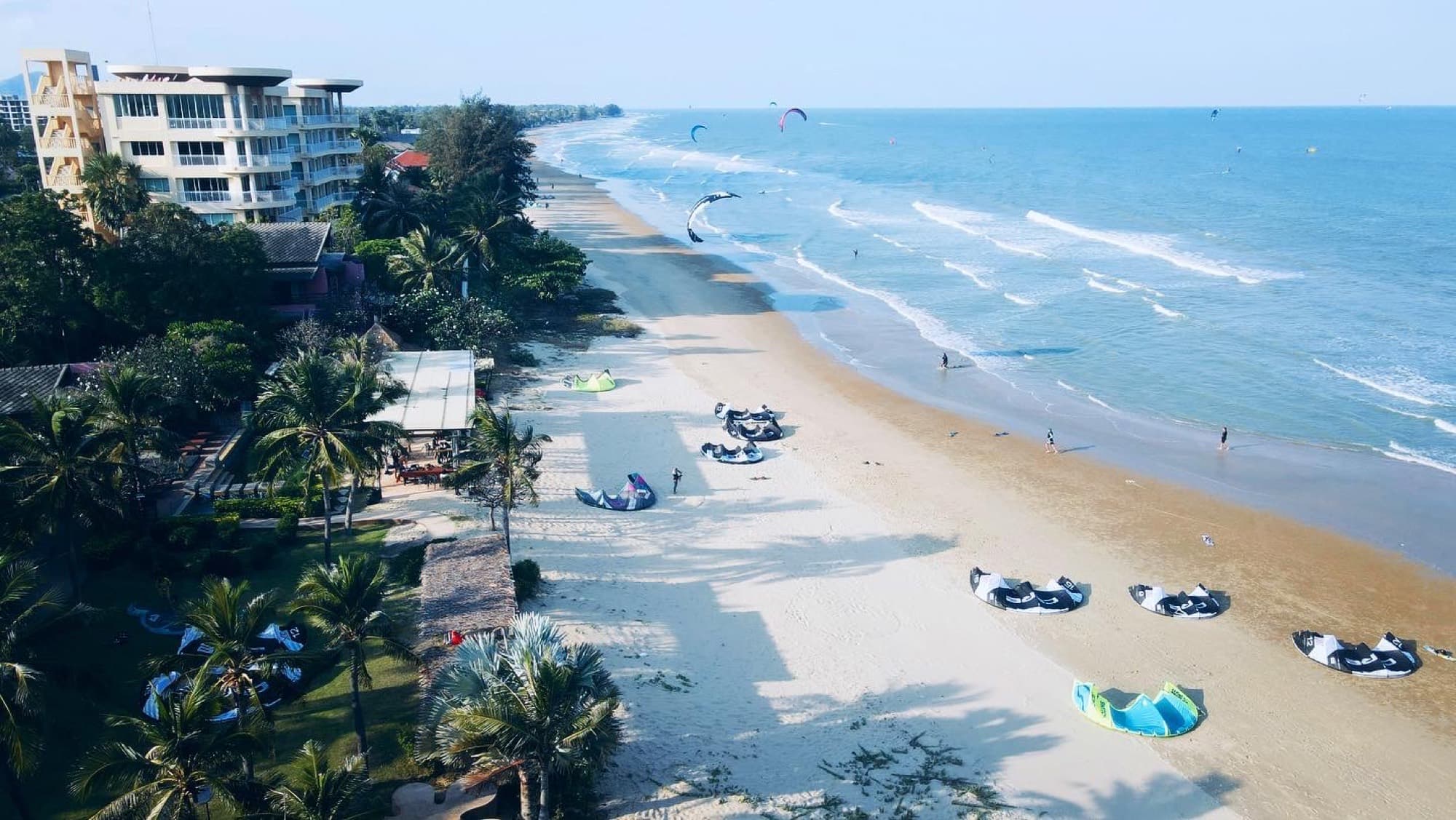
There's a catch. Cheap tickets mean low season for weather and wind. Our kite season in Pak Nam Pran runs from mid-November to late April, partly overlapping the high price season. If your goal is to ride, plan around the wind — and save on flights through early booking and flexible dates rather than by moving the trip to summer.
Baggage for a kite: count it in
A separate point for those bringing their own gear. A kite, board and harness add size and weight, and here a "cheap" budget-airline ticket can end up costing more. On low-cost carriers baggage and sports equipment are charged separately, and excess weight hurts.
Before buying, compare not just the fare but the baggage rules: how many pieces are included, what weight, how sports gear is counted, what a kite bag surcharge costs. Sometimes a slightly pricier ticket with proper baggage beats a low-cost fare with endless add-ons.
How to pack it all, stay within limits and avoid excess fees — covered in a separate article: how to fly with a kite. And if you'd rather not haul your own kit, we have everything on site.
Which airport: BKK or DMK
Bangkok has two airports, and for a trip to us it matters:
- Suvarnabhumi (BKK) — the main international airport, where most international flights land. It's the most convenient starting point for the coast: direct buses, easy transfers and taxis.
- Don Muang (DMK) — the second airport, mainly Asian low-cost and domestic flights. You usually reach it via an in-Asia connection.
Heading for Hua Hin or Pak Nam Pran? Aim for Suvarnabhumi (BKK) — it has the most onward options. Building a two-ticket route through an Asian hub? Check which airport you land at, so you don't cross Bangkok afterwards.
Onward to the coast
Landing in Bangkok isn't the finish. Our JollyKite kite school sits in Pak Nam Pran (Pranburi district), about 230 km south of the capital, past Hua Hin. No domestic flights needed — the whole coast is a two-to-three-hour drive overland.
You can travel by minivan, bus, train, taxi or private transfer. All the options, with times and price guides, are in how to get from Bangkok to Hua Hin. From Hua Hin it's another 30 km, about half an hour. The easiest thing is not to think about logistics: JollyKite arranges a transfer from the airport or from Hua Hin straight to the spot — especially handy with kite gear.
Before you travel, sort the formalities too: visa for Thailand in 2026 and the TDAC arrival card, now filed online before departure. Planning a whole season? See our guide to wintering in Hua Hin.
Let's go riding?
Send rough dates and your departure city — we'll suggest the cheapest way to get here and arrange an end-to-end transfer to Pak Nam Pran. WhatsApp +66 98 367 9769, Telegram bot @JollyKite_kite_bot. Full details on the /obuchenie page.
FAQ
Are there direct flights to Thailand?+
Yes. Direct flights to Bangkok run from major hubs, with winter charter programmes added. In summer and the shoulder season they're fewer and pricier than connections. A nonstop to Bangkok takes around 9–9.5 hours from Moscow. Check current services on aggregators.
When is it cheaper to buy tickets to Thailand?+
The sweet spot is 2–6 months out. In low season (May–October) buy 2–4 months ahead; in high season (December–March), 4–6 months. Winter tickets are historically cheapest to book in July–August. Monday–Wednesday departures are usually cheaper than weekends.
How do I fly to Thailand as cheaply as possible?+
A connecting flight through Istanbul, Dubai, Abu Dhabi, Doha, Central Asia or a Chinese hub is usually cheapest. Sometimes two separate tickets — a flight to a neighbouring country plus a budget carrier to Bangkok — win. Search with flexible dates across the whole month.
Which Bangkok airport should I fly into for the coast?+
Suvarnabhumi (BKK) — the main international airport with the most flights and easy onward travel. Don Muang (DMK) mainly serves Asian low-cost carriers.
Which season is cheapest to fly?+
The low "green" season, roughly May to September/October, with the lowest fares often in May, June and September. But that's rainy season with weak wind. Our kite season runs mid-November to late April, so plan around the wind and save via early booking.
How much is a return ticket to Thailand?+
Guides for July 2026: deep-discount connecting fares from around 20,000–30,000 RUB, a working range of roughly 35,000–60,000 RUB from Moscow, and direct or New Year fares often 60,000–100,000 RUB and up. All figures are estimates — check current prices before buying.