
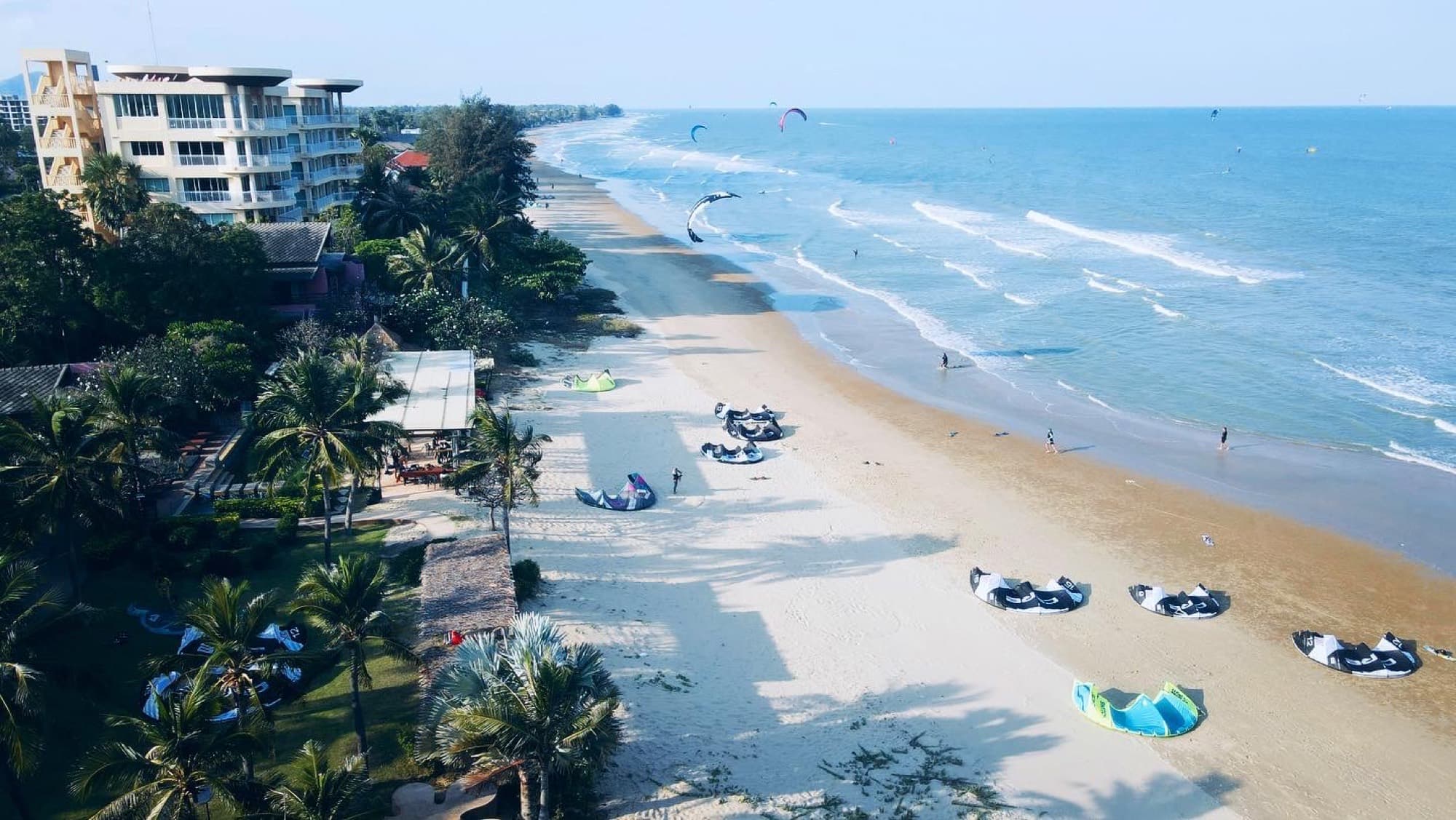
Downwinding on a kite: how to plan your first one
A downwinder is a wind-driven run from point A to point B along the coast, not laps back and forth by one kite station. You start in one place, ride long tacks downwind and land a few kilometres further down the shore. That's the whole appeal: new places, long smooth tacks with no fight for upwind, and the feeling of a small adventure instead of the usual "square" by the school.
22 July 2026 · JollyKite
What to know BEFORE your first downwinder
A downwinder is an add-on to confident riding, not something you pick up "along the way." You can leave the shore once your base won't fail you at an awkward moment. Before your first downwinder you need:
- Confident upwind. Not just "surviving" a reach, but genuinely going upwind and gaining ground. That's your margin: if the wind shifts or the route doesn't work out, you can cut toward shore instead of heading out to sea.
- Self-rescue and board recovery. A confident deep-water relaunch, a body-drag upwind after your board, and knowing how to pack the kite and swim in. Far from the start this isn't theory — it's how you actually save yourself in a breakdown.
- Endurance. A downwinder is one to two hours of continuous riding with no breaks at the shore. Body and arms must hold that load, and your head must stay fresh for decisions. Getting tired mid-route, where there's no exit, is a bad spot to be in.
- Stable turns. Jibes and turns without falling let you hold your downwind line and not lose the group. Every fall on a downwinder means drift and lost time.
If any of this is raw, finish your base first. The logic is the same as learning from scratch: learning kitesurfing from zero builds exactly these skills, and an under-learned upwind or self-rescue costs the most on a downwinder.
Planning: route and shuttle
A good downwinder is 80% prepared on the beach. Here's what you settle before entering the water:
- Wind direction. For a first downwinder the safest is cross-onshore or side-onshore wind: any problem carries you toward shore, not out to sea. Side-offshore, and certainly offshore, wind is not for a first time — it pulls you off the beach. How to read the forecast and not misjudge direction is in a separate piece, how to read a wind forecast.
- Entry and exit points. Map out the start (roomy, no obstacles upwind) and the finish — a beach reachable from land where a car can pull up. Plus intermediate "bail-out" points: beaches where you can exit early if something goes wrong. No sections where landing is impossible — rocks, ports, heavy shorebreak.
- Transport back. The wind only takes you forward, so plan the shuttle to the start in advance: a car or a driver at the finish. Without a return plan a downwinder turns into a long walk with a kite under your arm.
- Buddy system. You don't do a first downwinder alone. Ride as a pair or three, stay together, and let the slowest set the pace — that way nobody falls behind or ends up alone in a problem. Agree on signals beforehand.
- Phone in a drybag, and water. Keep the phone in a drybag attached to your body, not in a harness pocket. For a long or hot run, bring some water. A whistle for signalling boats and partners doesn't hurt.
Put it all into one picture beforehand: where I start, where I land, who's with me, how I get back, what if I break down halfway. When all five are covered, you can go.
The risks of a downwinder
A downwinder is riskier than normal riding precisely because you move away from the start. The main risks and how to defuse them:
- Being blown out to sea. Cause: offshore wind, a wind shift during the session, or a sudden squall. The fix is direction (cross-on or side-on only), checking the forecast for a wind shift, and a sensible distance from shore.
- Gear failure far from shore. Broken lines, a burst bladder, a failed bar — all of it kilometres from the start. What saves you is a pre-session gear check, confident self-rescue, and backup from the group, a boat or comms.
- No beach exit. Long stretches of rocks, ports, shipping channels or nasty shorebreak with nowhere to land. The fix is a map beforehand: mark usable beaches and no-go zones, and don't commit to sections with no safe exit.
- Boat traffic. Collision with boats, buoys, other riders. Don't ride through shipping channels or harbour entrances, keep clear of anchored boats, and don't count on being avoided.
The general rule is simple: always keep a real way to get back to land and to help yourself in a breakdown. As long as that way exists on every part of the route, the risk is manageable.
The role of a guide and support
A guide on your first downwinder isn't a luxury — it's a way to remove nearly all of the above risks at once. What support gives you:
- Spot knowledge. The guide knows the exact safe start and exit points, hidden hazards, currents, reefs and typical wind shifts. He already knows where a beach exit is impossible — which a beginner only learns once in trouble.
- Ready logistics. Shuttle or support boat, meeting points, timing, a briefing on signals and what to do in a typical breakdown — all sorted before the water.
- Real-time decisions. The guide sees conditions deteriorating and cuts the route short before a problem. In a serious situation — injury, lost kite, breakdown — he coordinates help faster.
- Coaching on the move. Tips on pace, line management, staying with the group and not drifting far from shore.
That's why your first downwinder is best done with support: what you really pay for is the removed risk, and thinking about the riding instead of the worry. We run this as a separate service — a kite guide and support at the spot: the guide plans the route, rides alongside and handles the shuttle logistics.
Why the first downwinder is best with a guide
Let's pull it together. A first downwinder is at once a new format (leaving the shore), new logistics (shuttle, exit points) and new risks (blow-out, breakdown far off, no exit). Taking all of that on the first time means learning from your own mistakes where a mistake is expensive.
A guide removes three of the four variables: the route, logistics and reading the conditions are on him, and the riding is on you. It's both faster (you don't spend a season scouting the shore by trial and error) and safer (someone alongside who spots the problem before you do). Safety on a downwinder isn't over-caution — it's the condition that keeps the adventure an adventure and not a rescue.
This article is a planning overview, not a substitute for live support. A first downwinder along an unfamiliar shore is best done with someone who already knows that shore.
What's next
If your base is still coming together, start there: learning kitesurfing from zero and the general block on safety while learning to kite cover the upwind, self-rescue and water rules a downwinder can't skip. Forecast and wind direction are in how to read a wind forecast. And an overview of our shore and neighbouring spots is in the kite spots of Hua Hin and Pranburi.
A first downwinder along the coast near Pak Nam Pran we do with a guide: we plan the route for the day's wind, ride alongside on the water and sort the shuttle back. Formats, support and booking are on the /obuchenie page.
Let's go riding?
Send us your dates and level — we'll plan the route for the wind, arrange support and the shuttle, and plan your trip end to end. WhatsApp +66 98 367 9769, Telegram bot @JollyKite_kite_bot.
FAQ
What is a downwinder on a kite?+
It's a wind-driven run along the coast from one point to another: you start in one place, ride long tacks downwind and land a few kilometres further down the shore. The upside is new places, long smooth tacks with no fight for upwind, and the feeling of an adventure instead of laps by the school.
What do you need before your first downwinder?+
To ride confidently upwind and gain ground, do self-rescue and recover the board with a body-drag, hold the load for one to two hours without breaks, and complete turns stably without falling. A downwinder is an add-on to confident riding — if upwind or self-rescue are raw, finish your base first.
How do you plan a first downwinder?+
Choose cross-onshore or side-onshore wind (so a problem carries you toward shore), map the entry and exit points plus intermediate bail-out beaches in advance, plan the shuttle back (car or driver), ride with a buddy at one pace, and bring a phone in a drybag and water.
What wind is safe for a downwinder?+
For a first time — cross-onshore or side-onshore: any problem carries you toward shore, not out to sea. Offshore and side-offshore wind pulls you off the beach and isn't for a first downwinder. Always check the forecast for a shift in direction and for squalls.
Why is a first downwinder best done with a guide?+
A guide knows the safe start and exit points, hidden hazards and wind shifts, handles the logistics and shuttle, spots deteriorating conditions before you do and coordinates help faster in a breakdown. That removes nearly all the risks of a downwinder at once and saves a season of scouting the shore.