
CORE XR Pro vs XR8: do you need ALUULA, and who is it for
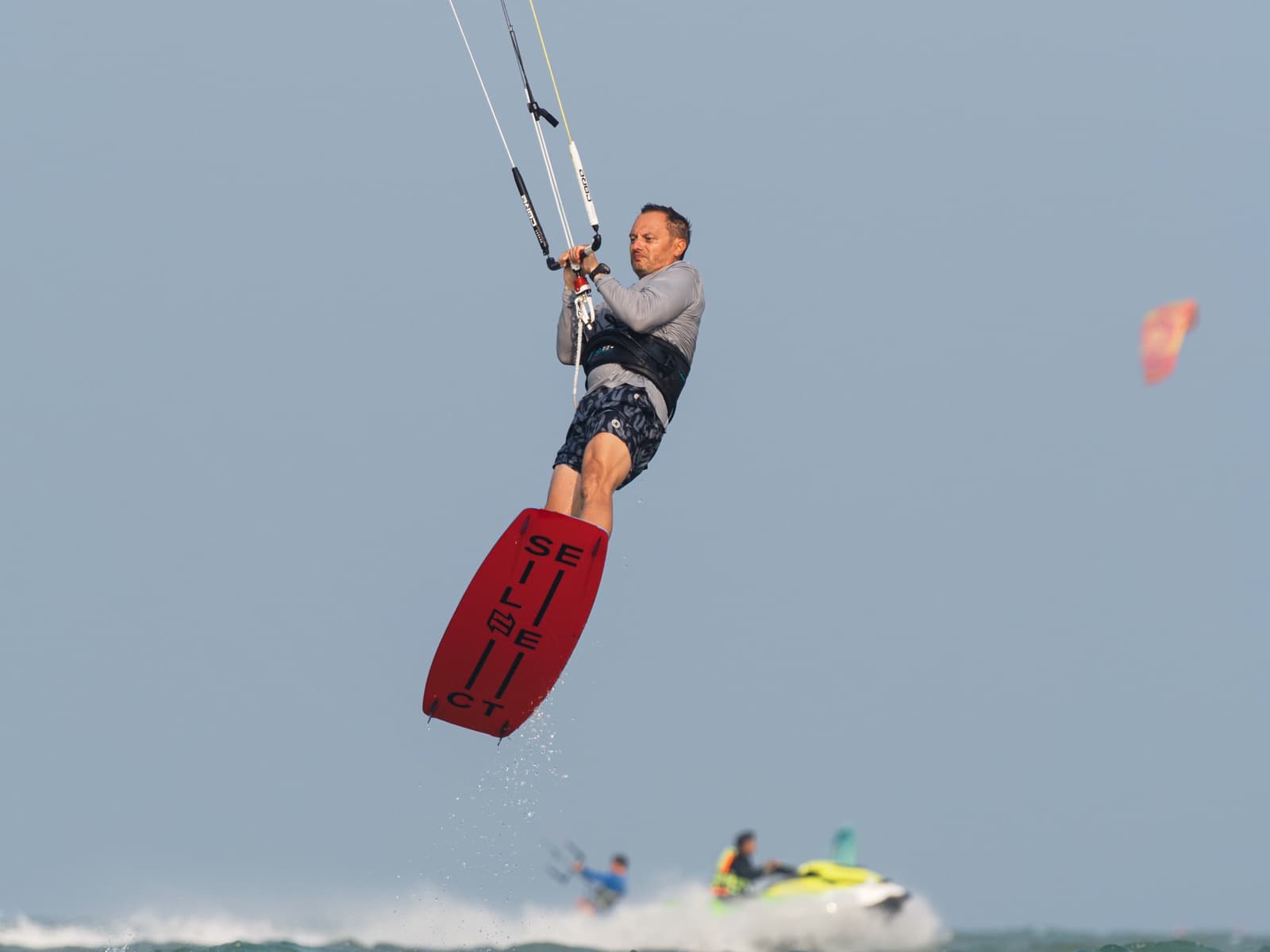
XR is all about big jumps. It's CORE's legendary booster, one of the benchmarks for big air and powered loops. Today it comes in two versions: the standard XR8 on Dacron and the XR Pro on the ALUULA composite. The price gap is real, and the buyer's question is simple: pay up for the Pro, or take the XR8 and not worry.
22 July 2026 · JollyKite
The short version
Boiled right down:
- XR8 is the same legendary booster, but on Dacron. Forgiving, versatile, easier on the wallet. A great kite for big air, freeride and progression.
- XR Pro is a redesigned version on ALUULA: a stiffer, lighter frame, sharper response, better stability at the very top of the range, thinner leading edge. A tool for advanced big air and technical loops — and noticeably pricier.
The XR Pro is not "an XR8 wrapped in different cloth". CORE redesigned the frame around what the material allows: a narrower outline, flatter profile, revised bridle. Both stay five-strut, high-aspect delta kites — same character, but the Pro's is sharpened.
Further reading: our separate CORE XR8 review and the full CORE range breakdown if you want to see where the XR sits among the other models.
What ALUULA is
ALUULA isn't fabric in the usual sense — it's a composite laminate. At its core is UHMWPE fibre (ultra-high-molecular-weight polyethylene, a Dyneema relative), with polymer films fused to it at a molecular level. It's used for the leading edge and struts — the load-bearing frame. The canopy usually stays conventional.
By the numbers:
- Roughly half the weight of Dacron as a frame cloth: about 75–82 g/m² versus 155–165 g/m² for Dacron.
- Roughly twice as stiff a frame at working pressure.
- Noticeably stronger in tear — the material itself is very tough.
The whole kite isn't half the weight (ALUULA is only in the frame, not the canopy), but the difference is real. Per CORE, the XR Pro is about 10% lighter than the XR8 across all sizes.
The key isn't weight so much as stiffness. A stiff frame barely deforms under load: the kite holds its profile in a gust, steers more precisely and lets designers run a thinner leading edge and struts — less drag, more speed.
XR8: Dacron and what it means on the water
Dacron is a polyester cloth proven over twenty years. It "breathes" a little under load: the frame flexes slightly, dampens jerks, forgives mistakes. For the XR8 that's not a flaw but a character.
The XR8 gives you:
- smooth, progressive turning — clear and predictable;
- a damped, forgiving feel in gusts and with imperfect timing;
- excellent boost and hang time — still a top-tier big-air kite;
- a broad audience — from confident intermediate to expert.
If you want one kite "for everything" — big jumps, freeride and mixed riding — the XR8 covers it and leaves money in your pocket.
XR Pro: what ALUULA changes on the water
The XR Pro feels like a charged version of the same kite. The stiff, light frame shifts the XR's character into a sharper, faster, more precise register.
What you feel:
- A more direct, snappier response. The kite reacts to the smallest bar input almost instantly.
- Faster, tighter loops. The frame doesn't fold in the loop, so the kite enters cleanly and catches just as cleanly on the way out.
- Stability when overpowered. When it's really blowing, the Pro holds its shape and doesn't crease at the outline — confidence to send big when fully lit.
- Lighter in the sky. Less mass means easier drift and recovery after a mistake, and a slightly earlier low end.
- A higher ceiling. More aggressive pop off the water and efficient glide in hang time — if the rider can use it.
The flip side of the same coin: the Pro is less forgiving. It demands precise timing and edging, punishes mistakes more honestly and can feel "too twitchy" to anyone who hasn't got their big air dialled in.
The real on-water difference: XR8 vs XR Pro
| XR8 (Dacron) | XR Pro (ALUULA) | |
|---|---|---|
| Frame | Dacron | ALUULA (LE + 5 struts) |
| Weight | Standard for a 5-strut booster | ~10% lighter than XR8 (CORE) |
| Stiffness | Good, some flex under load | Noticeably higher, barely deforms |
| Response | Smooth, progressive, forgiving | Direct, fast, sharp |
| Loops | Mellower, for learning and freeride | Tighter and faster, for technical loops |
| High-end | Excellent, but outline flexes at the limit | Outstanding stability when overpowered |
| Boost / hang time | Excellent and accessible | Higher ceiling for advanced riders |
| Who for | Intermediate–expert, a do-it-all kite | Advanced big air, competition |
| Price | High, "normal" top-tier | ~30% premium (typical for ALUULA) |
Who the XR Pro upgrade is for
The upgrade pays off if you're already advanced and focused on big air. Specifically:
- you chase height and technical loops, going for personal bests;
- you ride strong, gusty wind, where frame stiffness genuinely works;
- you feel the technique — precise send timing and edging — and want the kite to answer instantly;
- stability when overpowered matters to you, and confidence in megaloops.
In those conditions ALUULA delivers a real gain: sharper, faster, more stable up top. You'll feel the difference and you'll use it.
Who doesn't need the XR Pro
Most riders will do fine with the XR8 — and that's a smart call, not a compromise.
- Beginners and intermediates find the Pro excessive and even distracting: its sharpness catches mistakes, while forgiving Dacron helps you grow. Learning to jump is easier on the XR8.
- Mixed riders (big air + freeride + everyday sessions) get more out of the XR8 day to day.
- Budget buyers. Paying extra for a material whose benefits you can't yet extract is money to the wind. Better spent on the right size or a second kite in the quiver.
- Anyone rough with their gear. More on that below — an expensive frame doesn't like carelessness.
Not sure the Pro is your level? Easier to try both in real wind once than to guess. On the water with us that's doable — see our notes on gear rental in Pak Nam Pran and learning from scratch.
The downsides of ALUULA, honestly
The marketing paints ALUULA as flawless. We'll name the other side too.
Price. The main downside. ALUULA kites cost noticeably more than Dacron ones — a premium around 30%, and on bigger sizes that really adds up.
"Fragility" — really about care. The material itself is stronger than Dacron in tear. But the kite is engineered closer to the limit: thinner leading edge and struts, higher working pressure. And a stiff laminate dislikes sharp creases and impacts on the seams — riders report whitish crease marks on the leading edge and questions about seams on early units. It doesn't "tear out of nowhere", but it "won't tolerate carelessness".
Costly repairs. Fixing ALUULA is harder and pricier than Dacron, and technicians with the right material and experience are fewer.
A sharp character isn't for everyone. The direct response and higher bar pressure demand better control. To anyone not dialled in, the Pro will feel twitchy.
The takeaway on downsides is simple: ALUULA isn't fragile, but it's demanding on your budget and your care. The XR8 is more relaxed on both.
How to choose for yourself
The material is only half the question. The other half is size for your weight and wind. Get the size wrong and no ALUULA will save you. We have a separate article on that: "How to choose a kite size by weight and wind". Still unsure about the kite type itself? Start with the basics: "How to choose a kite".
One more thing: the XR is a powerful strong-wind kite, so the bar and safety system matter as much as the model. We ride the XR on CORE's own bar — more in our CORE Sensor bar review.
Our verdict
For the vast majority of buyers the XR8 is the right choice: the same legendary boost, a forgiving character, sensible money. It grows the rider and doesn't punish mistakes.
Buy the XR Pro deliberately — when you're advanced, focused on big air and technical loops, riding strong wind, and ready to pay and treat the kite with care. Then ALUULA earns every cent.
And the best way to decide is to try both on the water. Come and ride: we'll match the kite, size and wind to you.
Let's go riding?
Send us your weight, level and preferred dates — we'll match a kite to the wind, let you try the XR and advise whether the XR8 or the Pro is right for you. Booking and prices are on the /obuchenie page. WhatsApp +66 98 367 9769, Telegram bot @JollyKite_kite_bot.
FAQ
How is the XR Pro different from the XR8?+
The XR Pro is a redesigned XR8 built on the ALUULA composite instead of Dacron. The frame is stiffer and about 10% lighter, the response is more direct and faster, loops are tighter, high-end stability is better and the leading edge is thinner. The XR8 stays on Dacron: forgiving, versatile and cheaper. Both are five-strut delta boosters for big air, but the Pro is sharpened for advanced riders and competition.
What is ALUULA in plain words?+
ALUULA is a composite laminate on UHMWPE fibre (a Dyneema relative) with fused polymer films. It's used for a kite's leading edge and struts. As a frame cloth it's about half the weight and twice the stiffness of Dacron, and stronger in tear. A stiff frame holds its profile under load, gives a sharp response and stays stable in strong wind.
Is the XR Pro worth the extra money?+
Yes, if you're an advanced rider focused on big air and technical loops, riding strong gusty wind, with a feel for edging and timing. Then ALUULA gives a real gain in sharpness, speed and stability. Beginners, intermediates, mixed riders and budget buyers don't need the upgrade — the XR8 is more useful day to day.
XR Pro or XR8 for a beginner?+
Definitely the XR8. Its forgiving Dacron frame helps you learn to jump and forgives mistakes, while the sharp, demanding XR Pro only stresses a beginner. And the XR isn't a first-steps kite anyway — it's a powerful strong-wind booster. Better to start on an all-rounder and during lessons, where the instructor picks the kite.
Is ALUULA fragile? Is it easy to break?+
The material itself is stronger than Dacron in tear. But the kite is engineered closer to the limit: thinner leading edge and struts, higher pressure, and a stiff laminate dislikes sharp creases and seam impacts. Repairs also cost more. So ALUULA isn't "fragile" but demanding on care — treat it carelessly like cheap Dacron and it punishes you in money.
How much lighter is the XR Pro than the XR8?+
Per CORE, the XR Pro is about 10% lighter than the XR8 across all sizes. The ALUULA frame cloth itself is around half the weight of Dacron, but since the canopy stays conventional, the whole kite drops less. The difference is still felt: lighter in the sky, better drift and a slightly earlier low end.
Can I try the XR before buying?+
Yes — in Pak Nam Pran you can get on the water with CORE kites and feel the difference in real wind before you buy. That's more honest than any review: you'll know whether the Pro suits your level or the XR8 is the smarter pick. Send us your weight, level and dates and we'll match model, size and timing to the wind.