
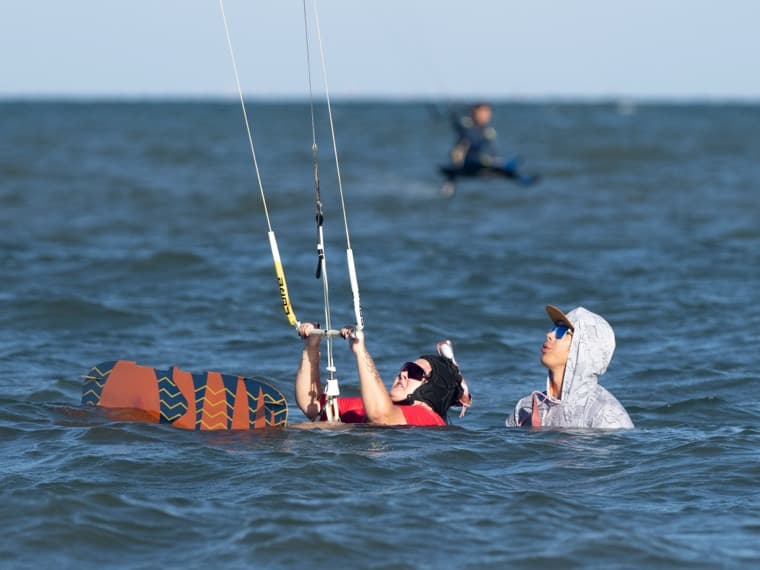
Бодидраг: движение в воде без доски (и как вернуться к доске)Body drag: moving through the water without a board (and how to get back to it)
Кайт уже слушается вас на земле — значит, пора на воду. И первое, что вы там делаете, — вовсе не катание на доске. Сначала вы учитесь перемещаться в воде на одной только тяге кайта, без доски. Этот навык называется бодидраг (от англ. *body drag* — «таскать тело»), и в методике JollyKite это обязательный шаг между управлением кайтом и водным стартом.The kite already obeys you on land — so it's time to go on the water. And the first thing you do there isn't riding the board at all. First you learn to move through the water on the kite's pull alone, without a board. This skill is called body dragging, and in the JollyKite method it's a mandatory step between kite control and the water start.
27 июня 202627 June 2026 · JollyKite
Что такое бодидраг и зачем он нуженWhat body dragging is and why you need it
Бодидраг — это перемещение в воде на тяге кайта без доски. Вы лежите в воде, держите кайт в нижней части ветрового окна и плавными махами создаёте тягу, которая тащит вас вперёд. Тело работает как руль: меняя его положение, вы задаёте направление.Body dragging is moving through the water on the kite's pull without a board. You lie in the water, hold the kite in the lower part of the wind window and, with smooth strokes, create the pull that drags you forward. Your body works as a rudder: by changing its position, you set the direction of travel.
Зачем это нужно? Причин несколько, и все практические:Why do you need it? Several reasons, all practical:
- Вы учитесь чувствовать тягу в воде. На земле кайт ведёт себя иначе, чем когда вы лежите в воде с трапецией. Бодидраг даёт телу привыкнуть к нагрузке в комфортных условиях — без доски под ногами, о которой пока рано думать.You learn to feel the pull in the water. On land the kite behaves differently than when you're lying in the water with a harness. Body dragging lets your body get used to the load in comfortable conditions — without a board underfoot, which is too early to worry about.
- Вы закрепляете «махи» кайтом. Те самые плавные движения вверх-вниз по краю окна, которые на следующем этапе дадут импульс для водного старта. Бодидраг — идеальная площадка, чтобы отработать их без лишних задач.You lock in the kite strokes. Those smooth up-and-down movements along the edge of the window that, at the next stage, give the impulse for the water start. Body dragging is the perfect place to drill them without extra tasks.
- Вы получаете обязательный спасательный навык. Это главное. На водном старте доску почти всегда сносит: вы падаете, теряете её из ног, и она остаётся где-то за спиной или в стороне. Не умеете к ней вернуться — катание превращается в бесконечную погоню за уплывающей доской. Бодидраг против ветра решает эту задачу: вы целенаправленно смещаетесь в нужную сторону и забираете доску.You gain a mandatory rescue skill. This is the main thing. On the water start the board almost always drifts off: you fall, lose it from your feet, and it ends up somewhere behind or to the side. If you can't get back to it, riding turns into an endless chase after a drifting board. Upwind body dragging solves this: you deliberately move in the needed direction and collect the board.
Так что бодидраг — не формальность и не разминка перед интересным. Это фундамент, на котором держится вся ваша самостоятельность на воде.So body dragging isn't a formality or a warm-up before the fun part. It's the foundation that all your independence on the water rests on.
Базовый бодидраг по ветруBasic downwind body drag
Начинают всегда с простого — движения по ветру (downwind). Задача не вернуться куда-то, а просто почувствовать, как кайт тащит вас, и научиться рулить телом. По шагам:You always start with the simple version — moving downwind. The goal isn't to get back somewhere but simply to feel how the kite drags you and to learn to steer with your body. Step by step:
- Зайдите в воду и лягте на неё. Кайт в этот момент держите в зените (12 часов) — там он почти не тянет, и вы спокойно устраиваетесь в воде.Get into the water and lie down on it. Hold the kite at the zenith (12 o'clock) — there it barely pulls, and you can settle calmly into the water.
- Опустите кайт в одну сторону нижней части окна — например, влево, примерно на «10 часов». Кайт начнёт тянуть, и вы почувствуете движение вперёд.Drop the kite to one side of the lower window — for example, to the left, to about "10 o'clock". The kite will start pulling and you'll feel yourself moving forward.
- Делайте плавные махи кайтом. Мягко ведите кайт вниз и обратно в пределах одной стороны окна — каждый мах добавляет тяги. Не дёргайте: движения спокойные и контролируемые.Make smooth kite strokes. Gently steer the kite down and back within one side of the window — each stroke adds pull. Don't jerk it: the movements are calm and controlled.
- Расслабьте тело и дайте себя везти. Корпус вытянут, ноги вместе. Вы движетесь по ветру, туда, куда направлен кайт. Это и есть базовый бодидраг.Relax your body and let it carry you. Body extended, legs together. You move downwind, where the kite points. That's the basic body drag.
- Поменяйте сторону. Выведите кайт обратно в зенит, опустите в другую сторону окна и повторите. Так вы привыкаете управлять кайтом обеими руками и в обе стороны.Switch sides. Bring the kite back to the zenith, drop it to the other side of the window and repeat. This is how you get used to controlling the kite with both hands and in both directions.
Главное на этом шаге — почувствовать связь: положение кайта → тяга → движение тела. Когда она становится понятной и комфортной, переходят к самому важному.The main thing at this step is to feel the link: kite position → pull → body movement. Once it's clear and comfortable, you move on to the most important part.
Бодидраг против ветра — как вернуться к доскеUpwind body drag — how to get back to the board
Ключевой навык всего этапа. Бодидраг против ветра (upwind body drag) позволяет смещаться не вниз по ветру, а в сторону и против ветра — то есть туда, где осталась уплывшая доска. От базового он отличается одной важной деталью: вы превращаете своё тело в киль.The key skill of the whole stage. The upwind body drag lets you move not downwind but to the side and against the wind — that is, toward where the drifted board is. It differs from the basic one by one important detail: you turn your body into a keel.
- Заведите кайт в одну сторону нижней части окна и держите его ближе к краю окна, а не в силовой зоне по центру. У края кайт тянет мягче и стабильнее — это то, что нужно.Bring the kite to one side of the lower window and keep it closer to the edge of the window, not in the power zone in the centre. At the edge the kite pulls more gently and steadily — exactly what you want.
- Вытяните одну руку вперёд, как киль. Если кайт слева, вытягивайте вперёд по направлению движения противоположную, ведущую руку и плечо. Эта рука врезается в воду и работает как киль яхты: создаёт боковое сопротивление, которое уводит вас против ветра.Extend one arm forward, like a keel. If the kite is to the left, extend your leading arm and shoulder forward in the direction of travel. This arm cuts into the water and works like a yacht's keel: it creates the sideways resistance that drives you upwind.
- Разверните корпус под углом к ветру. Тело не лежит по ветру, а стоит наискосок: голова и вытянутая рука направлены выше по ветру, ноги — ниже. Именно этот угол заставляет вас смещаться в сторону, а не просто вниз.Angle your body to the wind. Your body doesn't lie downwind but sits diagonally: your head and extended arm point higher upwind, your legs lower. It's this angle that makes you move sideways rather than just down.
- Слегка махайте кайтом у края окна. Хватит небольших аккуратных махов. Сильные махи в центр окна загонят кайт в силовую зону и потащат вас вниз по ветру — ровно туда, откуда вы пытаетесь уйти.Stroke the kite gently at the edge of the window. Small, careful strokes are enough. Strong strokes toward the centre will drive the kite into the power zone and drag you downwind — exactly where you're trying to leave.
- Смотрите выше по ветру и держите направление. Вы почувствуете, как вас несёт в сторону. Корректируйте угол тела и руки, чтобы держать линию на доску.Look upwind and hold the line. You'll feel yourself being carried sideways. Adjust the angle of your body and arm to hold the line toward the board.
- Меняйте руку и сторону по необходимости. Чтобы уйти против ветра в другую сторону, выведите кайт в зенит, переведите его в противоположный край окна и смените ведущую руку. Умение делать это в обе стороны и есть полноценный навык.Switch arms and sides as needed. To go upwind on the other side, bring the kite to the zenith, move it to the opposite edge of the window and change your leading arm. Being able to do this both ways is the complete skill.
Уверенно смещаетесь против ветра в обе стороны — значит, вернётесь к доске практически из любой ситуации. Ради этой страховки всё и затевалось.Once you move upwind confidently on both sides, you can get back to the board from almost any situation. That's the safety net this whole thing was for.
Бодидраг с доской в рукеBody dragging with the board in hand
Финальная часть — забрать доску и довести её до точки старта. Вы подошли к уплывшей доске бодидрагом против ветра; остаётся подобрать её и двигаться дальше уже с ней.The final part is to collect the board and bring it to the starting point. You've reached the drifted board with an upwind body drag; all that's left is to pick it up and keep moving with it.
- Возьмите доску одной рукой — той, что ближе к ней, обычно за середину или за ножную петлю. Свободной рукой и планкой управляете кайтом.Take the board in one hand — the one nearer to it, usually by the middle or by a foot strap. With your free hand and the bar you control the kite.
- Прижмите доску к корпусу или держите перед собой. Не вытягивайте её далеко в сторону: так она создаёт лишнее сопротивление и тормозит вас.Press the board to your body or hold it in front of you. Don't stretch it far out to the side: that creates extra drag and slows you down.
- Продолжайте бодидраг против ветра той же техникой: корпус под углом, кайт у края окна, аккуратные махи. С доской держать направление чуть тяжелее, поэтому движения должны быть особенно спокойными.Keep body dragging upwind with the same technique: body angled, kite at the edge of the window, gentle strokes. With the board it's a little harder to hold direction, so the movements should be especially calm.
- Дойдите до удобной точки и готовьтесь к старту. Оказавшись там, откуда хотите стартовать, вы переходите к следующему этапу — водному старту, где доска уже надевается на ноги.Reach a convenient spot and prepare to start. Once you're where you want to start from, you move on to the next stage — the water start, where the board now goes on your feet.
Частые ошибкиCommon mistakes
Почти все трудности на этом этапе сводятся к нескольким типичным ошибкам. Зная их заранее, вы пройдёте бодидраг заметно быстрее:Almost all the difficulties at this stage come down to a few typical mistakes. Knowing them in advance, you'll get through body dragging noticeably faster:
- Заводят кайт в силовую зону. Самая частая ошибка в апвинд-бодидраге: вместо мягких махов у края окна человек тянет кайт к центру. Кайт резко набирает тягу и стаскивает вниз по ветру — то есть от доски, а не к ней. Держите кайт ближе к краю окна.Driving the kite into the power zone. The most common mistake in the upwind body drag: instead of soft strokes at the edge of the window, you pull the kite toward the centre. The kite suddenly gains pull and drags you downwind — that is, away from the board, not toward it. Keep the kite closer to the edge of the window.
- Теряют кайт из виду. Когда всё внимание уходит в воду и на доску, легко забыть про кайт и потерять контроль. Поглядывайте на него: вы всегда должны знать, где он.Losing sight of the kite. When all your attention goes to the water and the board, it's easy to forget the kite and lose control. Glance at it regularly: you should always know where it is.
- Зажимаются. Напряжённое тело хуже скользит и плохо держит угол. Чем спокойнее корпус, тем чище идёт бодидраг.Tensing up. A tense body glides worse and holds the angle poorly. The calmer your body, the cleaner the body drag.
- Держат неправильный угол корпуса. Тело лежит по ветру — поедете вниз, как в базовом бодидраге. Против ветра нужен именно угол: рука-киль и плечи выше по ветру, ноги ниже.Holding the wrong body angle. If your body lies downwind, you'll go down, as in the basic body drag. To move upwind you need the angle: the keel arm and shoulders higher upwind, the legs lower.
Что дальшеWhat's next
Уверенно идёте против ветра и возвращаетесь к доске в обе стороны — этап бодидрага пройден. Дальше начинается самое волнующее: водный старт, когда вы впервые встаёте на доску и едете по воде стоя. Как соединить мах кайтом и работу ног, чтобы подняться на доску, мы разбираем в отдельном материале — водный старт: как встать на доску.Once you move upwind confidently and can get back to the board on both sides, the body-drag stage is done. Next comes the most exciting part: the water start, when you stand on the board for the first time and glide across the water on your feet. How to combine the kite stroke with footwork and get up on the board, we explain in a separate article — water start: how to get up on the board.
Если до уверенного управления кайтом вы ещё не дошли, начните с предыдущего шага — управление кайтом на земле. А когда поедете стабильно, загляните в Школу трюков JollyKite: там видно, что осваивать следующим.If you haven't yet reached confident kite control, start with the previous step — kite control on land. And once you ride steadily, look into the JollyKite Trick School to see what to learn next.
Все эти навыки мы ставим под контролем инструктора, с радиосвязью на воде, в безопасной плоской мелководной лагуне Пак Нам Прана — это резко снижает риски на старте. Подробнее о форматах и записи — на странице /obuchenie.We teach all these skills under an instructor's supervision, with radio comms on the water and in the safe, flat, shallow water of Pak Nam Pran — which sharply lowers the risks at the start. More on formats and booking is on the /obuchenie page.
Поедем кататься?Let's go riding?
Напишите нам даты и уровень — подскажем формат, подберём сезон под ваш ритм и посчитаем поездку под ключ. WhatsApp +66 98 367 9769, Telegram-бот @JollyKite_kite_bot.Send us your dates and level — we'll suggest a format, match the season to your rhythm and plan your trip end to end. WhatsApp +66 98 367 9769, Telegram bot @JollyKite_kite_bot.
Частые вопросыFAQ
Что такое бодидраг в кайтсёрфинге?What is body dragging in kitesurfing?+
Бодидраг — это перемещение в воде за счёт тяги кайта без доски. Вы держите кайт в нижней части ветрового окна, плавными махами создаёте тягу, а телом задаёте направление. Это второй этап обучения после управления кайтом на земле: он учит чувствовать тягу в воде и управлять движением.Body dragging is moving through the water on the kite's pull without a board. You hold the kite in the lower part of the wind window, create pull with smooth strokes, and set the direction with your body. It's the second stage of training after kite control on land: it teaches you to feel the pull in the water and to steer your movement.
Зачем нужен бодидраг против ветра?Why do you need upwind body dragging?+
На водном старте доску почти всегда сносит, и она остаётся за спиной или в стороне. Бодидраг против ветра позволяет смещаться не вниз по ветру, а в сторону и против него — туда, где осталась доска. Без этого навыка вы не сможете самостоятельно вернуться к уплывшей доске.On the water start the board almost always drifts off and ends up behind or to the side. Upwind body dragging lets you move not downwind but to the side and against the wind — that is, toward where the board is. Without this skill you can't get back to a drifted board on your own.
Как вернуться к доске с помощью бодидрага?How do you get back to the board with body dragging?+
Делать бодидраг против ветра: завести кайт ближе к краю окна, вытянуть одну руку вперёд как киль, развернуть корпус под углом к ветру (рука и плечи выше по ветру, ноги ниже) и слегка махать кайтом. Так вы смещаетесь в сторону доски. Меняя ведущую руку и сторону, можно идти против ветра в обе стороны.You do an upwind body drag: bring the kite closer to the edge of the window, extend one arm forward like a keel, angle your body to the wind (arm and shoulders higher upwind, legs lower) and stroke the kite gently. This moves you toward the board. By switching your leading arm and side, you can go upwind in both directions.
Сложно ли освоить бодидраг?Is body dragging hard to learn?+
Нет, это посильный навык. На базовый бодидраг по ветру и бодидраг против ветра в методике JollyKite обычно отводится около двух часов на воде. Главное — спокойное тело, правильный угол корпуса и кайт у края окна, а не в силовой зоне. Под контролем инструктора этап проходят уверенно и безопасно.No, it's a manageable skill. In the JollyKite method the basic downwind body drag and the upwind body drag usually take about two hours on the water. The keys are a calm body, the correct body angle and keeping the kite at the edge of the window rather than in the power zone. Under an instructor's supervision the stage is completed confidently and safely.
Что осваивают после бодидрага?What do you learn after body dragging?+
Следующий этап — водный старт: вы впервые встаёте на доску и едете по воде стоя. Здесь соединяются мах кайтом и работа ног. Бодидраг — необходимая подготовка к нему: и «махи» кайтом, и умение вернуться к доске понадобятся уже на старте.The next stage is the water start: you stand on the board for the first time and glide across the water on your feet. Here the kite stroke and footwork come together. Body dragging is the necessary preparation for it — both the kite strokes and the ability to get back to the board are needed right at the start.
Поедем кататься?Shall we go riding?
Напишите даты и уровень — посчитаем поездку под ключ и подберём формат.Tell us your dates and level — we’ll plan the whole trip.