
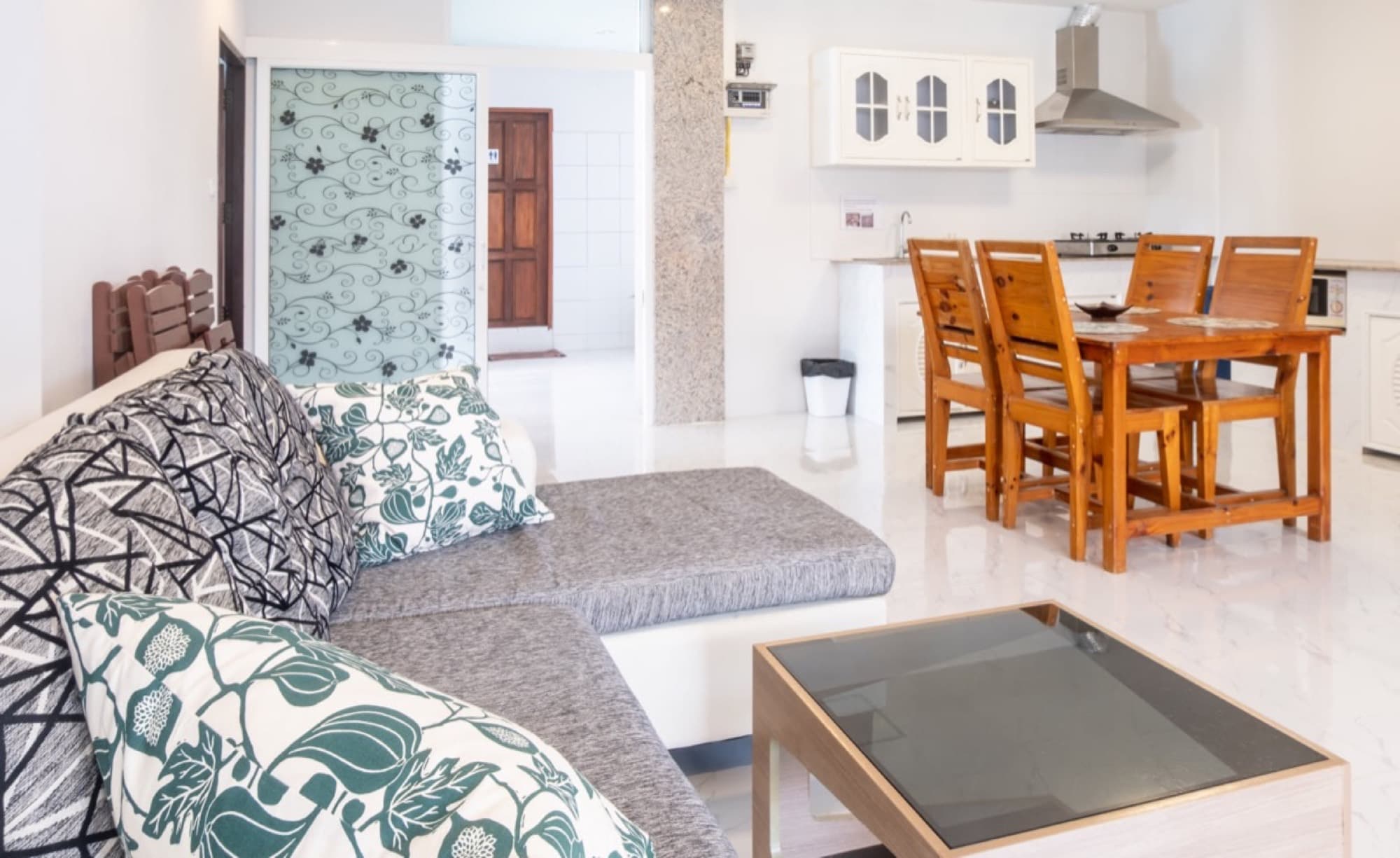
Renting a place for the season in Hua Hin and Pak Nam Pran: areas, prices, no middlemen
Renting a place for the season here is easier than it looks. Hua Hin and neighbouring Pak Nam Pran are among the most convenient spots in Thailand for a long winter stay: warm sea, a calm pace, decent infrastructure, and prices noticeably softer than on Phuket. We're the JollyKite kite school — we've lived and worked in Pak Nam Pran since 2014, and every season we help guests with the same question: where and how to rent a place without overpaying or getting caught by an agent's markup.
22 July 2026 · JollyKite
Types of housing: what people actually rent
There's plenty of choice — from a studio in a condo to a villa with a pool. Who fits what:
Condos and studios. The most popular format among winterers and solo remote workers or couples. Usually a studio or one-bedroom in a complex with a pool, security and grounds maintenance. Pluses: affordable, clean, shared pool, nothing to fix yourself. Minuses: small floor area, you hear the neighbours, and some owners set a higher-than-municipal electricity rate.
Houses and townhouses. A standalone one- or two-bedroom house is the choice for couples wanting more space and small families. Usually with a kitchen, a yard and space for a scooter. Quieter than a condo, but a pool only if it's private or shared in the development.
Villas with a pool. The format for families and those staying long and in comfort. Two or three bedrooms, a private pool, a plot. The most expensive, but full privacy. In Pak Nam Pran such villas are usually cheaper than in Hua Hin itself.
Guesthouses and short-term apartments. Not for the season, but for your first days — while you look for a permanent place on the ground. Many do exactly this: fly in, settle into a cheap guesthouse for a week or two, and calmly tour the areas from there.
Areas: by the sea or cheaper inland
The main trade-off is the same in both places: the closer to the sea, the more expensive. Further from the water it's cheaper, but you'll need a scooter.
Hua Hin. A big resort town with all the infrastructure: hospitals, malls, markets, cafés, nightlife. Housing by the beach and in the centre is the most expensive. Move a couple of kilometres inland, to areas like Soi 88 or closer to the highway, and the same studio costs noticeably less. People choose Hua Hin when shops, buzz and having everything at hand matter.
Pak Nam Pran (Pranburi district). A quiet village about 30 kilometres south of Hua Hin, right by our kite spot. It's calmer, greener and cheaper here: the same housing as in Hua Hin often costs 15–25% less. By the sea there are villas and condos; in villages a little inland, simple Thai houses at a very modest price. People choose Pak Nam Pran for the quiet, the clean beach, the sport and being close to the water. For more on everyday life in the area, see life in Pak Nam Pran.
Many winterers who come for kiting or calm settle in Pak Nam Pran and drive to Hua Hin for big shopping and errands — half an hour by scooter or car.
Monthly price guides
Important: everything below is a market guide for mid-2026 for long-term rentals (from a few months). The real price depends on condition, location and season, so check on the ground. We've used an average rate of about 36 baht to the dollar (rates change).
Studio / condo - By the sea: Hua Hin — roughly 10,000–25,000 THB/mo (≈$280–700), Pak Nam Pran — 8,000–15,000 THB (≈$220–420). - Inland: Hua Hin — 7,000–12,000 THB (≈$190–330), Pak Nam Pran — 6,000–10,000 THB (≈$170–280).
House with 1–2 bedrooms - By the sea: Hua Hin — 18,000–40,000 THB/mo (≈$500–1,100), Pak Nam Pran — 15,000–25,000 THB (≈$420–700). - Inland: Hua Hin — 12,000–20,000 THB (≈$330–550), Pak Nam Pran — 10,000–18,000 THB (≈$280–500).
Villa with a pool (2–3 bedrooms) - By the sea: Hua Hin — 40,000–80,000 THB/mo and up (≈$1,100–2,200), Pak Nam Pran — 35,000–70,000 THB (≈$970–1,950). - Inland: Hua Hin — 25,000–50,000 THB (≈$700–1,400), Pak Nam Pran — 20,000–40,000 THB (≈$550–1,100).
These are guides, not a price list. A yearly contract almost always works out cheaper per month than a seasonal one, and low season (April–October) is 10–30% cheaper than high season.
Seasonality: when to look and for how much
High season on the coast is roughly November–February, sometimes into March. Housing gets more expensive then, good options go fast, and owners are less willing to haggle. If you're coming specifically for a winter stay, the price will be closer to the top of the ranges.
Hence a simple takeaway: book ahead, especially if you need a specific format (a villa with a pool, a place by the sea). At the peak, choice melts before your eyes. But if you're flexible on dates and ready to come in the shoulder season, you'll get both a lower price and room to negotiate. In low season the same villa is often let 10–30% cheaper on a long-term contract.
How to rent without middlemen
Good news: renting directly from the owner is realistic, and it works out cheaper. Three methods that work:
1. Facebook groups. These are now the main channel for live listings. Search Hua Hin rentals, Hua Hin house for rent, Pak Nam Pran rentals, Pranburi house for rent, plus expat groups like Hua Hin Housing & Rentals. Listings come from both owners and tenants subletting. You can also post yourself: "looking for a house/condo for the season, budget X, area Y" — and people will reach out. Ask for "contact owner direct" or "no agency fee" if you want to skip agents.
2. Local agents. Avoiding agencies entirely in Hua Hin is hard: many owners hand keys to them. On long-term rentals the commission is more often paid by the owner, not the tenant, but sometimes it's simply baked into the price. The upside of an agent — they'll show several options and help with the contract and dealing with a Thai landlord. The downside — the margin in the price.
3. Search on the ground. The best-value method, especially in Pak Nam Pran. Fly in, settle into a guesthouse for a week or two, rent a scooter (how to rent a scooter) and tour the areas. Look for House for rent, Room for rent or the Thai ให้เช่า signs, and ask in cafés and with neighbours. Many owners let a house or part of one but advertise it nowhere — that's how the most interesting options are found. The downside — you come without a guarantee of finding a place right away. The upside — you see everything with your own eyes, not from photos.
Deposit, contract, meters
Deposit. On long-term rentals there's usually a deposit: studio/condo — 1–2 months, house or villa — 2 months, sometimes 3 for pricey villas. The move-in payment often adds up to 2–3 months' rent (deposit + a month upfront). On move-out, unpaid bills, non-wear-and-tear damage and sometimes cleaning are deducted from the deposit.
Contract. Sign in writing, English is fine. Spell out the term, the amount, the deposit, what's included, who pays for electricity/water/internet, and the conditions for returning the deposit. Verbal agreements have a way of being forgotten at the end of the season.
Meters. A key point newcomers forget. Electricity and water are usually paid separately by meter. The state electricity rate is about 3.5–5 THB per kWh, but many owners and condos set tenants their own rate, 5–8 THB and up. Ask the rate before signing. Typical use: a studio with one air conditioner — roughly 400–1,000 THB/mo; a house or villa with several units in active use — 1,500–4,000 THB/mo. Water is usually cheap, most often 50–300 THB/mo.
What to check when viewing
Before you put down a deposit, run through this list:
- Internet. Check the real speed, not the promise. For remote work this is critical. Ask whether internet is included in the rent or paid separately (a good fast plan is 800–1,000 THB/mo). For workspaces outside the home, see coworking in Hua Hin and Pak Nam Pran.
- Kitchen. Thais cook outside, and in many houses the kitchen is token or absent. If you plan to cook, check the stove, fridge and hood in advance.
- Air conditioners. How many, in what condition, when they were last cleaned. A dirty unit is both noisy and a meter-spinner.
- Noise. Listen to what's around: the road, construction, a nearby bar, roosters, dogs. Ideally, drop by at different times of day.
- Scooter parking. Is there a covered or at least fenced spot. The scooter is your main transport, and it's best kept in the shade and in view.
- Water and pressure. Check how the taps and shower run, and whether there's hot water (budget places sometimes have only an instant heater).
A quick word on money and moving
The full seasonal budget — housing plus food, transport and connectivity — is laid out in detail in wintering in Hua Hin. For a long stay, arrange medical insurance and sort out your visa in advance: rules in Thailand change often, so check the current conditions before your trip.
And if you're coming here not just to winter but to learn to kite — our JollyKite school is right on the spot in Pak Nam Pran. We'll help with the area, advise on housing, and get you on the water from scratch. How lessons go is covered in learning kitesurfing from scratch.
Want to winter near the spot and learn to kite?
Pak Nam Pran is both a quiet place by the sea and one of the best kite spots in Thailand at once. Our JollyKite school has been right on the spot since 2014: we'll help you get to grips with the area and housing, get you on the water from scratch, and set up a schedule that fits a winter stay and remote work. Get in touch — we'll tell you about renting, the spot and lessons. WhatsApp +66 98 367 9769, Telegram bot @JollyKite_kite_bot.
FAQ
How much does it cost to rent a place for the season in Hua Hin and Pak Nam Pran?+
Mid-2026 guides for long-term rentals: studio/condo — from 6,000–8,000 THB/mo inland up to 25,000 THB by the sea; a 1–2 bedroom house — 10,000–40,000 THB; a villa with a pool — from 20,000 to 80,000 THB and up. Pak Nam Pran is usually 15–25% cheaper than Hua Hin. These are guides; the real price depends on location, condition and season — check on the ground.
How do I rent without middlemen?+
Three methods that work: Facebook groups (Hua Hin rentals, Pak Nam Pran rentals, expat groups), local agents, and searching on the ground. The best value is to come, rent a scooter and tour the areas, spotting House for rent signs and asking owners directly. Many let places but advertise nowhere. In listings, ask for "contact owner direct."
What deposit and utilities should I expect?+
The deposit is usually 1–2 months for a studio/condo and 2 months for a house or villa. On move-in you're often asked for the deposit plus a month upfront. Electricity and water are separate by meter: the state electricity rate is about 3.5–5 THB per kWh, but owners and condos often set their own, 5–8 THB. Ask the rate before signing.
Where is it cheaper to rent — Hua Hin or Pak Nam Pran?+
Pak Nam Pran is usually cheaper — the same housing often costs 15–25% less than in Hua Hin. Further from the sea it's cheaper still in both places, but you'll need a scooter. People choose Hua Hin for shops and infrastructure, and Pak Nam Pran for the quiet, the clean beach and being close to the kite spot.
When should I book a place for the winter?+
Ahead of time. High season is roughly November–February; housing gets more expensive then and good options go fast, especially villas with a pool and places by the sea, with prices near the top of the ranges. If you're flexible on dates and come in the shoulder season (April–October), you'll get a price 10–30% lower and room to negotiate.
What should I check when viewing a place?+
Test the real internet speed (critical for remote work), the state of the kitchen and air conditioners, the noise around at different times of day, scooter parking, water pressure and whether there's hot water. And always clarify the electricity rate and what's included in the rent before putting down a deposit.