
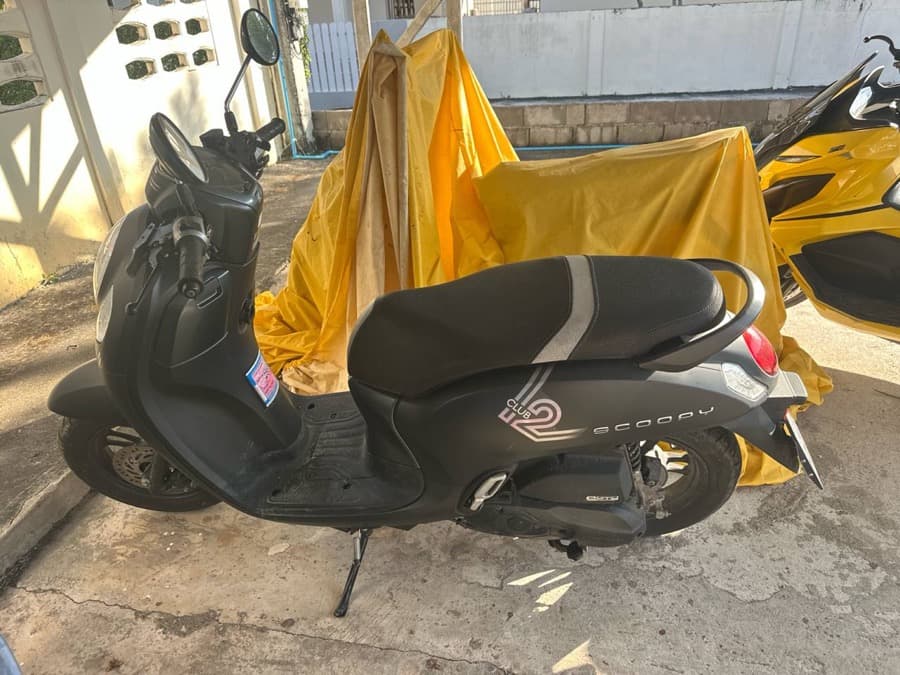
Renting a scooter in Hua Hin and Pak Nam Pran: prices, licence, deposit, safety
In Thailand a scooter isn't a luxury — it's how you get around. In Hua Hin and neighbouring Pak Nam Pran, without your own bike you're tied to taxis and timetables; with one, the sea, the market, a coworking space or the kite spot are all minutes away. That's why one of the first things almost every long-stayer does after checking in is rent a scooter.
22 July 2026 · JollyKite
Where to rent
There are three options, each with its own logic.
Rental shops. The most common choice. Hua Hin has dozens, along Naresdamri and the side streets, near markets and condos. They give you a contract, show the bike and explain the terms. Pak Nam Pran has fewer shops, but they exist, and many have worked with long-stayers for years.
Renting from your landlord or an agent. Often the condo or guesthouse offers a bike itself — convenient when you don't want to go looking. The price may be slightly above market, but it's all in one place with someone you already know.
Online services and aggregators. You can book a bike in advance through an app or site, with delivery to your place. Handy for the first days before you've found your feet, but for a long stay it's cheaper to arrange it locally.
The main rule is the same as with housing: the longer you rent, the cheaper the day. Daily is expensive; monthly is much better value. Coming for the season? Go straight for a monthly contract.
What it costs: ballpark prices
A caveat first: the figures below are a 2026 guideline, not our price list. The exact rate depends on the model, the bike's condition, the season and how well you negotiate. In high season (December–February) demand is higher and prices rise.
Daily. A basic 110–125cc automatic scooter (Honda Scoopy, Honda Click, Yamaha Fino) runs about 120–250 baht a day. More powerful, newer NMAX 155 or PCX 160 models run 250–400 baht a day. Maxi-scooters and motorcycles cost more.
Weekly. A weekly rate usually saves 20–30% versus seven separate days — roughly 1,000–1,500 baht a week for a basic scooter.
Monthly. Monthly rental is the best-value format for a winter stay. A basic scooter runs roughly from 2,500–4,000 baht a month; newer, more powerful models cost more, up to 8,000–12,000 baht for premium options. Low-season prices are lower.
If a scooter isn't for you, a car can also be rented monthly (roughly from 14,000–19,000 baht a month depending on season), but for one or two people it's noticeably pricier than a bike.
Prices are a guideline — check locally: the actual sum is always negotiated with the shop.
Documents, deposit and licence — honestly
There are two separate questions here: what the shop asks of you, and what the law requires. They aren't the same thing.
What the shop asks. Usually a passport copy and a deposit. A normal deposit is 1,000–2,000 baht in cash plus a passport copy. A good, reputable shop does not keep your original passport — that's a key sign they're trustworthy. If they ask you to leave the actual passport as a deposit, look elsewhere: without your document you're vulnerable, and getting it back can be awkward.
What the law requires. To legally ride a bike in Thailand you need a driving licence of the right category — ideally an International Driving Permit (IDP) plus your national licence. Thailand recognises the older-style IDP (under the 1949 Geneva Convention). One important nuance: to legally ride a motorcycle/scooter your licence must include the motorcycle category (A/A1). A car-only licence is technically not enough for a bike.
How it works in practice. Let's be honest: many tourists ride without a licence, or without the motorcycle category, and rental shops usually hand over the bike without checking. Police set up checkpoints from time to time — more often in Hua Hin's tourist areas — and check documents; the fine for riding without a licence is small but annoying, and you'll have to pay it. We're not encouraging you to break the rules: the right path is to get an IDP with the motorcycle category at home in advance. It's cheap and it settles things both with the police and — more importantly — with your insurer in case of an accident. More on that below.
What to check when inspecting the bike
Rental bikes vary — from nearly new to badly worn. Five minutes of inspection save you disputes at return and a breakdown on the road.
- Brakes. Roll the bike a couple of metres and test both. This is the main thing.
- Tyres. The tread shouldn't be bald, cut or bulging. On a wet road in the rain, this is your life.
- Lights. Headlight, brake light, indicators, horn — all must work.
- Lock and key. The steering should lock; the seat should open.
- Oil level and general condition. Leaks, odd noises or play are a reason to say no.
- Document the damage. Photograph every scratch and dent before you ride and show the shop, or they may pin them on you at return.
Check too whether a helmet is included — usually it is, but the quality can be token.
Fuel, helmet and traffic rules
Fuel. Refuelling is easy: big stations (PTT, Bangchak, Shell) and roadside bottles at small shops. A scooter's tank is tiny — a full one costs a few hundred baht and lasts a while. As a 2026 guideline, around 35–40 baht a litre; check locally, fuel prices move.
Helmet. Always wear one — for you and your passenger. It's both the law (riding without one is fined) and basic safety: most serious scooter injuries are to the head. On a long rental, many people swap the flimsy rental helmet for a proper bought one — it's cheap and the difference is real.
Traffic and riding style. Thailand drives on the left — keep that in mind the first few days, especially on turns and exits. Thai traffic is calmer than a big Russian city's but has its own logic: lots of bikes, sudden U-turns, locals riding "by feel". Keep your distance, don't speed, don't cut in. At night on the unlit stretches between Hua Hin and Pak Nam Pran, be extra careful.
Insurance and liability in an accident
This is the most underrated point, and exactly where people lose big money.
What the rental covers. A standard bike rental almost never includes proper insurance for you. At most there's the basic compulsory third-party insurance on the bike itself, which partly covers damage to others but not your medical care and not damage to the bike. In an accident, repairs to the bike almost always fall on the renter.
Your medical insurance. This is where it gets serious. Treatment after a scooter crash at a private hospital in Thailand is expensive, and with a serious injury — very expensive. Standard travel insurance often does not cover a motorbike accident if you don't hold a licence with the motorcycle category, or if the policy doesn't have a "riding a motorcycle/scooter" option enabled. This is the key point: before your trip, get insurance that explicitly covers riding a bike and check the terms. More in our piece insurance for Thailand.
If you have an accident. Don't leave the scene if anyone's hurt or there's a dispute. Photograph everything; for a serious incident call the police (191) and ambulance (1669), and notify the rental shop and your insurer. For a minor bump, it's often settled on the spot by agreement.
The takeaway is simple: a licence with the motorcycle category and the right insurance cost pennies compared with a single hospital visit. Don't cut corners here.
Pak Nam Pran specifics: distances
Pak Nam Pran isn't a mini Hua Hin — it's a village stretched along the sea in the Pranburi district, about 30 kilometres south of Hua Hin. And that changes the logic of having a bike.
Town is further than it seems. The big supermarkets (Makro, Lotus's), hospitals, the airport and the main infrastructure are in Hua Hin or Pranburi. From Pak Nam Pran to Hua Hin is about 30–40 minutes by bike. Fine for everyday errands, but budget the time — don't count on "nipping out in a minute".
Here a bike is almost essential. In central Hua Hin you can just about survive on taxis and Grab; in Pak Nam Pran everything is spread out — housing, cafés, the spot, shops. It's hard without your own transport, and worth factoring in when you choose where to stay. How life in the village works — see living in Pak Nam Pran.
The ride to the spot. Our kite spot is close, and a bike is the easiest way to reach the water. Many guests ride over for a lesson, park at the station and get on the water.
How to get to the area from the capital in the first place is a separate topic — we've covered it in how to get from Bangkok to Hua Hin.
While you're here — try kiting
Since you've got a bike and freedom to move, our spot in Pak Nam Pran is a couple of minutes down the coastal road. Steady wind, flat shallow water, a calm pace for a first lesson. A winter by the sea pairs perfectly with kiting: work on weekdays, ride in your free time. If you'd like to start from scratch, take a look at learning to kitesurf from zero — we'll find a time and format that suits you.
Want to combine your stay with kiting?
If your calm life by the sea calls for a little thrill, our JollyKite kite school is in Pak Nam Pran, a couple of minutes from the spot. Steady wind, flat water, a calm pace for a first lesson and a flexible schedule that fits remote work. Send us your dates and we'll advise on bikes, housing and timing. WhatsApp +66 98 367 9769, Telegram bot @JollyKite_kite_bot.
FAQ
How much does it cost to rent a scooter in Hua Hin?+
As a 2026 guideline: a basic 110–125cc scooter is about 120–250 baht a day, more powerful models (NMAX, PCX) 250–400 baht. Monthly is the best value: a basic scooter roughly from 2,500–4,000 baht, premium models more. Prices are a guideline, check locally — the exact figure depends on the model, season and negotiation.
Do you need an international licence to rent a bike?+
The shop usually hands over the bike on a passport copy and deposit without checking your licence. But by law you need an International Driving Permit (Geneva Convention) with the motorcycle category enabled. Without it, riding is technically illegal, police do check documents from time to time and fine you, and crucially — without a licence with the motorcycle category your insurance may not cover an accident. We recommend getting an IDP at home in advance.
What deposit do rental shops ask for?+
A normal deposit is 1,000–2,000 baht in cash plus a passport copy. A reputable shop doesn't keep your original passport. If they ask you to leave the passport itself, find another shop.
Do you need a bike in Pak Nam Pran?+
Practically yes. The village stretches along the sea, the infrastructure is spread out, and Hua Hin is about 30–40 minutes away. It's hard without your own transport, so plan for a bike from the start — it makes shops, cafés and the spot all easy to reach.
Does the rental include insurance for an accident?+
Usually not. Rentals rarely include proper insurance for the renter: bike repairs typically fall on you, and only your personal medical insurance covers treatment — and only if the policy has the motorbike-riding option and you hold a licence with the motorcycle category. Arrange that insurance before your trip.
What should you check when inspecting the bike?+
Test the brakes, the tyres (tread with no cuts), all the lights and the horn, the steering lock. Photograph every scratch and dent before you ride and show the shop so they aren't blamed on you at return. Make sure you're given a helmet.